
Geologists have known about the Mali well for nearly four decades, and for most of that time, they treated it as a curiosity. In 1987, workers drilling for water in the village of Bourakébougou, West Africa, accidentally struck a pocket of gas that turned out to be 98% pure hydrogen. The well was capped and largely forgotten. What that accident implied about what might be sitting beneath the rest of the planet would take decades to fully register in the scientific community.
The scale of what researchers now estimate is difficult to absorb. Earth’s total buried hydrogen reserves could amount to 6.2 trillion tons of gas. USGS geologists Geoffrey Ellis and Sarah Gelman, writing in their Science Advances paper, calculated that the recoverable portion of that hydrogen carries roughly twice the energy of all proven natural gas reserves on Earth. A significant chunk of it may sit directly beneath U.S. soil.
In January 2025, the U.S. Geological Survey published the first map of naturally-occurring geologic hydrogen in the contiguous United States – the first of its kind at continental scale anywhere in the world. The map suggested that America’s own backyard may be one of the most hydrogen-rich regions on Earth, and that the country’s energy picture could look dramatically different within a generation.
1. Gold Hydrogen Is Sitting Beneath at Least 30 States
Scientists have identified vast underground reserves of natural hydrogen, nicknamed “gold hydrogen,” beneath 30 U.S. states. The USGS map assigns each region a prospectivity score based on three factors: whether the geology produces hydrogen naturally, whether porous rock formations can hold it, and whether natural barriers exist to trap it underground before it escapes to the surface.
The map reveals areas of interest including a mid-continent region covering Kansas, Iowa, Minnesota, and Michigan, the Four Corners states of Arizona, Colorado, New Mexico, and Utah, the California coast, and areas along the Eastern Seaboard. At a more granular level, at least 30 U.S. states have the conditions needed for hydrogen to accumulate underground, with high potential across large swaths of the Midwest as well as along the California coast and Eastern Seaboard.
“Gold hydrogen” and “white hydrogen” are essentially two names for the same thing: naturally formed hydrogen gas found in the Earth’s subsurface, distinct from the manufactured hydrogen produced in industrial facilities. Unlike petroleum, which releases carbon dioxide when burned, burning hydrogen produces only water as a byproduct. For states like Michigan and Kentucky that have long relied on fossil fuel industries, that distinction carries real economic and environmental weight.
2. The Scale of U.S. Energy Reserves Could Dwarf Everything We’ve Found Before

USGS geologists Geoffrey Ellis and Sarah Gelman calculated the energy content of the estimated recoverable amount of hydrogen to be “roughly twice the amount of energy in all the proven natural gas reserves on Earth.” The USGS authors note that much of the global total is likely too deep, too far offshore, or in accumulations too small to be economically recoverable – but even a small fraction could meet global hydrogen demand for hundreds of years, according to the same paper.
The USGS prospectivity report states that geologic hydrogen exists in quantities large enough to make a significant contribution to the U.S. energy portfolio. Sarah Ryker, USGS associate director for energy and minerals, placed three decades of scientific consensus in perspective in the USGS’s official news release: “For decades, the conventional wisdom was that naturally occurring hydrogen did not accumulate in sufficient quantities to be used for energy purposes.” She added: “This map is tantalizing because it shows that several parts of the U.S. could have a subsurface hydrogen resource after all.”
3. The Chemistry Behind It Has Been Running for Billions of Years

Natural hydrogen doesn’t require a power plant or an industrial process. Hydrogen can be produced by splitting water or natural gas, requiring significant amounts of energy – or by natural processes within the Earth. The most important of those natural processes is called serpentinization, and it’s been happening quietly beneath our feet since long before humans existed.
Serpentinization occurs when water interacts with specific iron- and magnesium-rich rock types deep underground, triggering chemical reactions that release hydrogen gas. The Mali discovery in 1987 wasn’t the product of any engineered reaction – it was geology doing what it has always done, slowly and continuously.
A viable geologic hydrogen system requires three primary components: a source of natural hydrogen, a reservoir of porous rock to store it, and a competent seal to retain it and prevent leakage to the surface. When all three align in the same location, the USGS map identifies that zone as “highly prospective” – worth drilling.
4. There’s Already Proof It Works: A Village Has Been Running on It

The Mali well isn’t just a historical footnote. The village of Bourakébougou has been running on naturally occurring hydrogen for years – a real-world proof of concept that required no solar panels, no wind turbines, and no manufactured fuel. Scientific literature published years after the original discovery documented how the well’s hydrogen production had been utilized to supply the village’s electricity.
The Bourakébougou field demonstrated something researchers had long doubted: that natural hydrogen could accumulate in high enough concentrations to be practically useful. Those wells contain hydrogen at concentrations of 98% purity – purer than most industrially produced gas. The geological profile of highly prospective U.S. zones identified on the USGS map, including Michigan, eastern Kentucky, and southern North Dakota, shares important characteristics with the Mali basin where that original discovery occurred.
The well in Mali proves that natural hydrogen can flow to the surface, be collected, and generate electricity without exotic equipment. Scaling that model is a challenge, but it’s an engineering challenge, not a physics one – and the U.S. energy reserves picture suggests the raw material is there.
5. It Could Be Far Cheaper Than Any Hydrogen We Currently Make
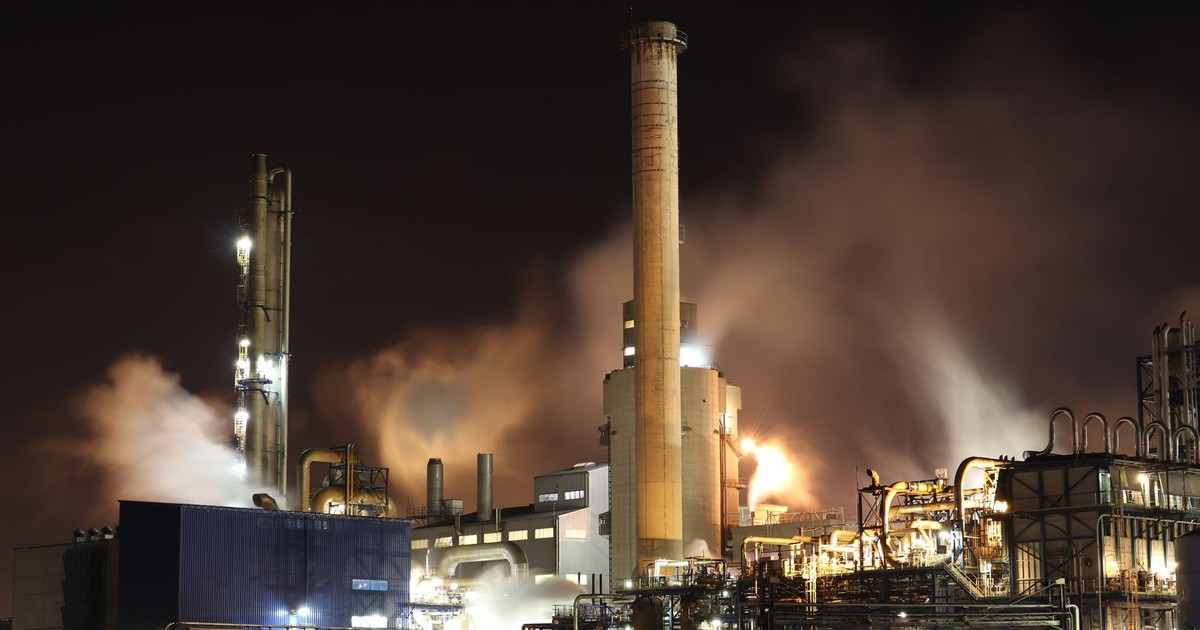
Hydrogen produced through conventional methods is expensive. The cost difference between tapping geologic reserves and manufacturing hydrogen from scratch is significant enough to reshape entire industry sectors.
Green hydrogen – produced by using renewable electricity to split water – currently costs between $3.50 and $6.00 per kilogram in 2026, according to industry data. Natural geologic hydrogen, by contrast, could be extracted for less than $1,000 per ton in the most favorable locations, making it substantially cheaper than any manufactured alternative. Converting units, that works out to roughly $1 per kilogram at the low end – a fraction of what it costs to produce green hydrogen today.
Industries that can’t easily run on electricity – steel manufacturing, heavy shipping, aviation – have been waiting for affordable clean hydrogen. If geologic hydrogen can be extracted reliably and at scale, the cost barrier that has slowed adoption across those sectors could collapse faster than most current energy models anticipate.
6. The Science Is Now Being Backed by Federal Research Dollars

Discovery and deployment are two different things, and the U.S. government has moved to close the gap. Federal agencies are now funding the foundational science required before any serious extraction can begin.
Dr. Rita Esuru Okoroafor at Texas A&M University was awarded $1.5 million by the Department of Energy’s ARPA-E unit to model the most efficient methods for producing hydrogen from subsurface ultramafic rocks – the foundational science required before any serious drilling can begin. ARPA-E’s geologic hydrogen program, the agency’s high-risk, high-reward research arm, has a track record of funding early-stage energy technologies that later become commercially significant. Its involvement signals that this isn’t fringe science.
Meanwhile, the IEA’s Global Hydrogen Review 2026 shows that low-emissions hydrogen production reached almost 1 million metric tons in 2025 and is projected to hit record growth in 2026. Installed electrolysis capacity doubled in 2025 to exceed 4 gigawatts globally. That broader momentum in clean hydrogen infrastructure makes geologic hydrogen easier to integrate, because the pipelines, storage systems, and fuel cell networks being built for manufactured hydrogen can also handle the natural variety.
7. Fuel Cell Technology Means This Hydrogen Can Power Almost Anything

Hydrogen’s value as a fuel depends on how cleanly and efficiently it can be converted into usable energy. Fuel cell technologies convert hydrogen and oxygen into electricity through a chemical reaction that produces only water vapor as a byproduct – no combustion, no carbon, no particulate emissions. That makes hydrogen compatible with vehicles, buildings, industrial equipment, and grid-scale power generation without modification to the fundamental chemistry.
Researchers project that hydrogen will account for up to 30% of the future energy supply in some sectors. That projection was made before the USGS map was published. With U.S. energy reserves of geologic hydrogen now understood to be potentially vast, those forecasts may prove conservative. The combination of a massive domestic supply and a mature fuel cell conversion technology creates a pathway that didn’t exist even five years ago.
USGS reports suggest that geologic hydrogen exists in quantities large enough to make a significant contribution to the U.S. energy portfolio, and the areas identified as most promising – Michigan, eastern Kentucky, southern North Dakota – are regions with existing industrial and energy infrastructure that could be repurposed or adapted. The biggest cost in any new energy system isn’t the fuel itself. It’s building the network to move it.
Read More: Scientists Discover Clean Energy Under USA That Could Power Earth for 170,000 Years
What This Means for You

The discovery of large-scale geologic hydrogen beneath U.S. soil doesn’t change your energy bill next month. Commercial extraction remains early-stage, and the USGS map identifies prospective zones rather than confirmed, drill-ready deposits. But the trajectory is moving faster than most people realize. When the USGS released its first Geologic Hydrogen Prospectivity Map in January 2025, it marked a turning point for a resource that had long been proven but remained at the margins of the geoscience industry. The map didn’t create the hydrogen – it revealed where to look for what was already there.
For health-conscious readers, the relevance is more direct than it might appear. Air quality, climate stability, and energy access are upstream factors in long-term health outcomes. A domestic clean hydrogen supply that costs less than any current alternative and emits only water vapor when burned addresses several of those factors simultaneously. Hydrogen is gaining recognition as a clean energy source, with researchers projecting it could supply up to 30% of energy needs in some sectors by mid-century. Extraction science is advancing quickly – and the gap between what’s in the ground and what’s in our pipelines is narrowing.
AI Disclaimer: This article was created with the assistance of AI tools and reviewed by a human editor.
Trending Products

Red Light Therapy for Body, 660nm 8...

M PAIN MANAGEMENT TECHNOLOGIES Red ...

Red Light Therapy for Body, Infrare...

Red Light Therapy Infrared Light Th...

Handheld Red Light Therapy with Sta...

Red Light Therapy Lamp 10-in-1 with...

Red Light Therapy for Face and Body...

Red Light Therapy Belt for Body, In...

Red Light Therapy for Shoulder Pain...
