
Owning a home outright doesn’t prevent you from worrying about money. A 2026 study from the University of Calgary surveyed Albertans aged 65 to 85 and found that more than one-third of homeowners – people who had technically “made it” by the traditional definition – were anxious about paying for basic home upkeep. Not rent. Not a mortgage. Just the ordinary cost of maintaining a property they already owned free and clear.
That finding runs directly against one of the most enduring assumptions in personal finance: that getting a roof over your head and paying it off means you’ve secured your retirement. For millions of older adults, the home equity retirement dream is real on paper and stressful in practice. The asset is there, locked in concrete and drywall, but the cash to live on doesn’t automatically follow. The costs do.
The pressures adding up against older homeowners aren’t subtle. Insurance, taxes, maintenance, aging infrastructure, and reduced income form a combination that even debt-free homeowners struggle to manage. Understanding exactly where the gaps appear is the first step to closing them.
1. Home Maintenance Costs Are Eating Fixed Incomes
The Finances, Aging, and Daily Experiences Study, conducted in January 2026 by University of Calgary sociologists Dr. Alex Bierman and Fahimeh Mehrabi in association with the Angus Reid Group, surveyed a representative sample of older adults in Alberta, Canada, aged 65 to 85. The results were stark. Fully 34.4% of respondents who owned their homes were worried about the costs of keeping up their homes, and 16.6% said they had considered selling their homes due to financial need.
“What we found was that homeowners were nowhere as close to financially secure as many people assume,” said Bierman. A home represents a locked-in financial asset because older adults still need a place to live. “You need a place to live, so you can’t easily gain the wealth you have accrued in your home,” Bierman explained.
The math behind that stress is straightforward. According to the Harvard Joint Center for Housing Studies, costs for homeowners without a mortgage – driven by insurance and property taxes – rose 28% between 2019 and 2023 alone. Annual maintenance and repair expenses commonly run about 1 to 3% of a home’s current market value. On a $500,000 home, that’s $5,000 to $15,000 annually before a single emergency arises – a leaky roof, a failed furnace, or a cracked foundation. For someone drawing a fixed pension, that bill doesn’t flex around their income. Their income has to flex around the bill.
2. Property Insurance Has Surged Beyond What Many Retirees Budgeted
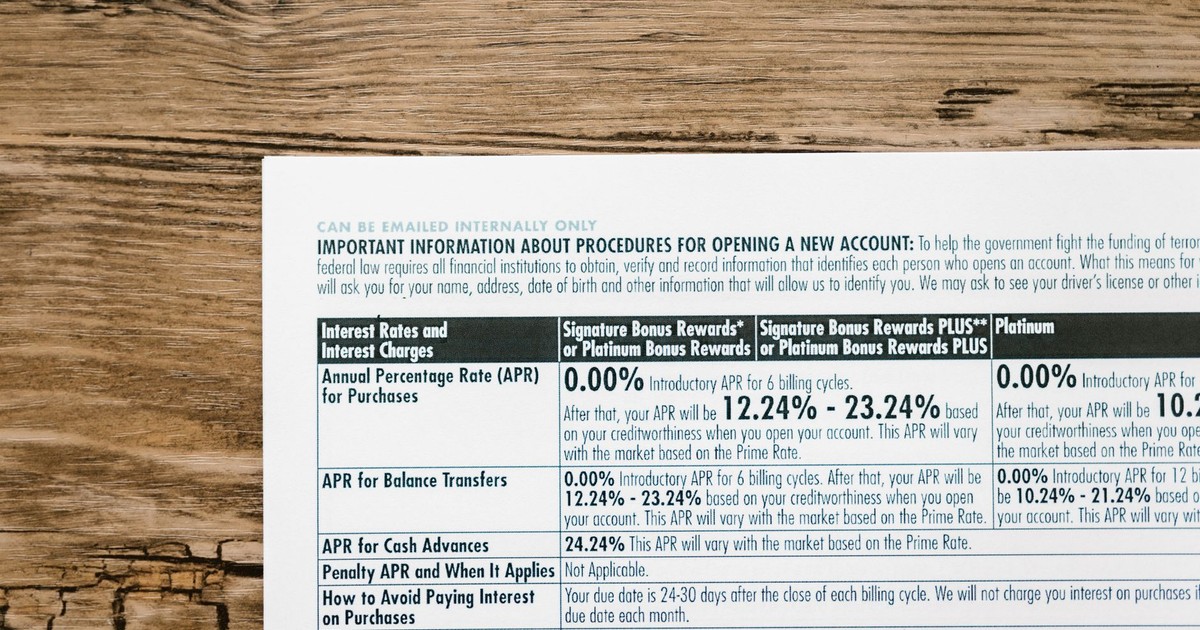
Paying off a mortgage doesn’t remove the monthly obligation of property insurance, and that cost has risen sharply in recent years. The Harvard Joint Center data shows that payments for mortgage-free homeowners have increased by 28% since 2019 – a figure that has blindsided retirees who locked in their retirement budgets years ago.
The same Harvard research found that median monthly costs for all homeowners rose 6% in 2023 alone to $1,327, with overall homeowner costs up 18% since 2019. Many people assume the paid-off home eliminates a major bill. In practice, the components of that bill simply change shape – and continue to grow.
Financial experts recommend that total housing expenses should not exceed 30% of overall retirement income. For a retiree in the lower-income bracket, staying under that threshold while insuring and maintaining a property is genuinely difficult, not just inconvenient.
3. Government Benefits Leave a Significant Income Gap

The foundation of retirement income for most Canadians involves CPP (Canada Pension Plan) and OAS (Old Age Security) – and those numbers don’t leave much room for unexpected home expenses. According to Canada Life, the average CPP benefit in 2025 was $803.76 per month. The Government of Canada’s OAS payments page shows the maximum OAS for those aged 65 to 74 was $727.67 per month in early 2025, rising to $800.44 for those aged 75 and over – with 2026 maximums now sitting at $742.31 and $816.54 respectively.
Approximately one-third of OAS recipients also receive the Guaranteed Income Supplement (GIS) – a top-up benefit for low-income seniors – indicating that a large slice of the older population has limited income beyond basic government support. According to the Fraser Institute, 2.6 million of the 7.5 million Canadians receiving OAS in 2025 also received the GIS. When housing, food, medications, and transportation are factored in, the margin is thin.
Canadians aged 65 and older devote the vast majority of their income to basic consumption – shelter, food, clothing, care, and transportation – leaving little buffer for home emergencies. A home equity retirement plan that assumes some cushion for unexpected costs may be built on shakier ground than its owner realizes.
4. Housing Cost-Burden Is Rising Even Among Homeowners

Being “cost-burdened” in housing terms means spending more than 30% of your income on housing – a threshold that signals financial stress. According to the Harvard Joint Center for Housing Studies, in 2023 over a third of older households (34%) were cost-burdened, representing a record high of more than 12.4 million households – an increase of nearly 2.3 million since 2019. Ownership status isn’t the protection it’s assumed to be.
Between 2019 and 2023, the cost-burden rate for older homeowners rose from 24% to nearly 28% – a meaningful increase over just four years. Renters face an even sharper squeeze: 58% of older renters were burdened in 2023, representing 4.5 million households.
Those numbers challenge the framing that homeownership automatically separates financially secure seniors from financially stressed ones. Owners are being burdened too – just by a different set of line items. Property taxes, insurance, utilities, and maintenance are pulling income past the 30% mark just as reliably as rent does for others.
5. Aging Homes Require Modifications Many Retirees Can’t Afford

Older adults who want to age in place – stay in their homes as their physical needs change – often face a second, less-discussed category of home expense: accessibility modifications. Grab bars, ramp installations, stair lifts, bathroom reconfigurations, and doorway widening aren’t cosmetic upgrades. They’re health and safety requirements that can prevent falls and hospitalizations.
The Harvard Joint Center’s Housing America’s Older Adults 2023 report found that fewer than 4% of US homes offered the three key accessibility features – single-floor living, no-step entry, and wide doorways – that older adults need. The financial gap is equally stark: roughly 34% of households headed by someone older than 50 lack the resources to cover the median cost of home modifications. That’s more than one in three.
The irony is compound: the home equity retirement asset that was supposed to fund a comfortable later life is the very property that now requires expensive modifications just to remain safely livable. Accessing that equity through a home equity line of credit or reverse mortgage carries its own costs and risks, and not all older adults qualify or feel comfortable taking that step.
6. Supporting Family Is Draining Retirement Savings Before Costs Hit

Retirement income pressure isn’t only coming from the house. According to the 2025 Aging and Affordability Insights Benchmark Report from Bloom Finance, 76% of Canadian grandparents aged 55 and older say that supporting family members is affecting their retirement savings, up from 65% the previous year. That’s not a fringe behavior. It’s the norm.
Among seniors helping family, 67% now contribute to everyday household expenses of family members – a significant rise from 55% the year before. These aren’t large gifts or one-time windfalls. They’re recurring transfers – groceries, bills, rent, childcare – that reduce the cash available to cover their own housing costs.
When a retiree is simultaneously managing rising home maintenance bills and subsidizing a family member’s living expenses on a fixed income, the home equity retirement cushion shrinks fast. The asset hasn’t moved. The pressure around it has intensified on two fronts at once.
7. The Equity Is Real, But It Isn’t Liquid

The core problem with relying on home equity in retirement isn’t that the value isn’t there. According to the Harvard Joint Center for Housing Studies, housing wealth among homeowners aged 62 and older rose 1.9% in the third quarter of 2025 to $14.66 trillion in the US alone – a record high. The wealth exists on paper. The challenge is converting it into cash without losing the home.
A home represents a locked-in financial asset, because it can be difficult to access equity when older adults still need a place to live. Selling solves the liquidity problem but creates a housing problem. A reverse mortgage resolves cash flow but adds debt, accrued interest, and eventual repayment obligations. A home equity line of credit requires income and credit qualification that not all retirees meet.
Researcher Bierman framed it directly: “We’re trying to challenge across the board this idea that if we get people to own their own homes, they will be financially secure. It’s not that simple, it turns out.” For those who planned their entire retirement around home equity as the backstop, discovering the limits of that strategy at 70 is a difficult moment to course-correct.
What to Do Now

The data points toward a single practical conclusion: home equity retirement planning requires treating the home as both an asset and an ongoing liability, not just a number on a net worth statement. Before retirement, the honest calculation includes maintenance reserves (budget 1 to 3% of home value per year), rising insurance premiums, property taxes, and the real possibility of accessibility upgrades. These aren’t surprises – they’re predictable costs that can be planned for with enough lead time.
For those already in retirement who are feeling squeezed, the first step is running a true housing cost number: add annual property tax, insurance, utilities, maintenance spending, and any recent repair bills, then divide by 12. If that monthly figure is pushing past 30% of after-tax income, the math is confirming what the stress already suggested. From there, options like a property tax deferral program, a municipal home repair grant, or a conversation with a fee-only financial planner about equity access tools become practical next steps – not last resorts. The home equity is probably still there. The plan just needs to account for what it costs to keep it.
Disclaimer: This information is not intended to be a substitute for professional financial advice, investment advice, tax advice, or legal advice, and is provided for informational purposes only. Always seek the guidance of a qualified financial advisor, accountant, or other licensed professional regarding your personal financial situation or investment decisions. Do not make financial, investment, or tax decisions based solely on information presented here. Past performance is not indicative of future results, and all investments carry risk, including the potential loss of principal.
AI Disclaimer: This article was created with the assistance of AI tools and reviewed by a human editor.
Read More: Got a $14,000 Social Security Demand Letter? Here’s What to Do
Trending Products

Red Light Therapy for Body, 660nm 8...

M PAIN MANAGEMENT TECHNOLOGIES Red ...

Red Light Therapy for Body, Infrare...

Red Light Therapy Infrared Light Th...

Handheld Red Light Therapy with Sta...

Red Light Therapy Lamp 10-in-1 with...

Red Light Therapy for Face and Body...

Red Light Therapy Belt for Body, In...

Red Light Therapy for Shoulder Pain...
