
If you have ever stood outside shaking a treat bag and calling into the dark, you have probably asked yourself, should I let my cat outside? It is one of those questions that does not have a simple yes or no answer. When a cat disappears, it can feel like rejection or like you somehow failed them. People wonder why cats run away from homes where they were fed and loved.
In most cases, a wandering cat is not making an emotional statement. It is just following instinct. Cats are not small dogs in different packaging. They do not anchor themselves socially in the same way. Even the cuddliest house cat still carries the biological wiring of a territorial hunter. That wiring does not switch off just because there is a warm bed and a full bowl. When some cats wander off and never return home, the reason usually comes down to biology, environment, and risk, not resentment.
Your Cat Did Not Leave You, It Followed Instinct
Domestic cats, Felis catus, evolved from the African wildcat. Thousands of years of domestication have made them social with humans, but it has not erased their core programming. They are still solitary hunters at heart who map territory, patrol edges, and respond strongly to scent. That territorial drive is one of the biggest reasons why cats run away.
Male cats, especially those who are not neutered, are the biggest example. Intact males can roam several kilometers searching for females in heat. Their hormones push behavior in powerful ways. A male cat might smell a female far away and follow that scent trail without hesitation, and in that moment, instinct overrides habit.
Females are not passive in this story either. An unspayed female in heat may attempt escape repeatedly. She may cry at doors, scratch at windows, or bolt when an opportunity appears. Hormonal cycles increase motivation in ways that surprise many owners.
Even neutered cats still explore. Neutering reduces roaming significantly, yes, but it does not erase curiosity. Cats investigate new smells and new animals. A new cat in the neighborhood, construction noise, or even wildlife passing through can activate patrol behavior.
Image credit: Shutterstock.
Owners sometimes assume that if a cat leaves, it must have been dissatisfied. Research in feline behavior does not support that idea. Roaming patterns correlate much more strongly with reproductive status, territory density, and environmental stimulation than with emotional contentment. A loved, well-cared-for cat may still wander simply because it is wired to explore.
Young cats, especially those between six months and two years old, are also more likely to roam. Adolescence in cats often comes with increased boldness. They test limits and move farther. It is not rebellion exactly, but it looks like it.
Prey drive also plays a role. Even indoor-raised cats display stalking behaviors. The sight of a bird or rodent can trigger focused pursuit. A chase that begins in the yard can extend farther than expected, and once beyond familiar scent boundaries, disorientation becomes possible.
Rain washes away scent markers, and traffic noise masks environmental cues. Urban areas fragment territory with roads and fences. A cat may not intend to leave permanently, but it can become lost in a landscape that feels suddenly unfamiliar.
So when people ask why cats run away, the answer is often simpler than they imagine. The cat followed a scent. Or a sound. Or a movement. One step too far. But instinct alone does not explain why some cats never return.
The Hidden Risks
Veterinary organizations consistently note that outdoor access increases exposure to danger. Outdoor cats face traffic accidents, predators, infectious diseases, parasites, toxins, and human interference. It sounds harsh, but it is realistic.
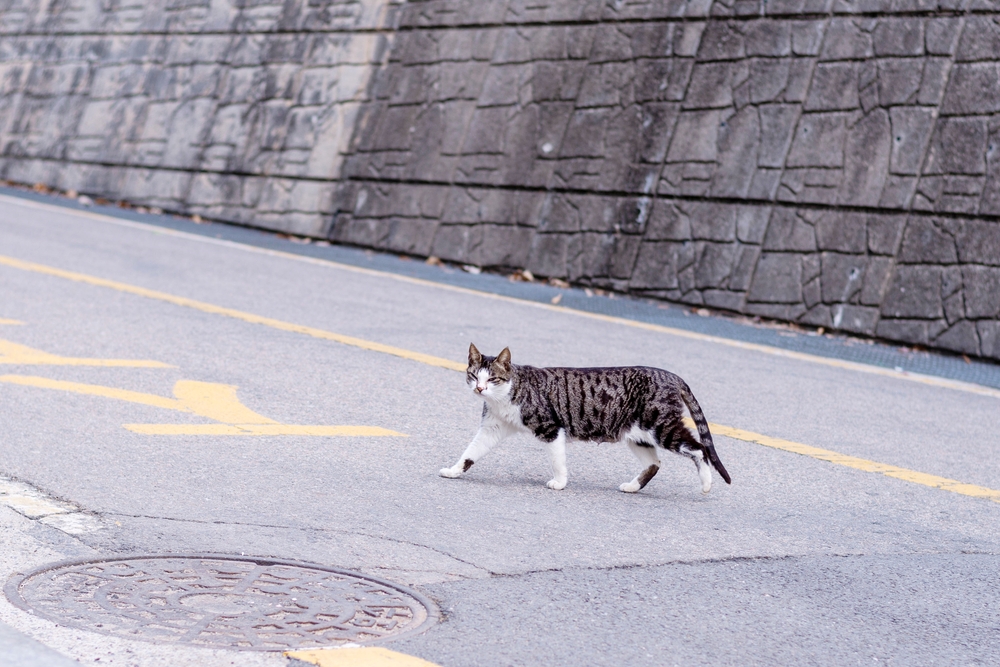
Traffic is one of the leading causes of death for free-roaming cats in urban and suburban areas. Cats are crepuscular, meaning they are most active at dawn and dusk. Those are also times when visibility can be lower for drivers, and a single misjudgment can be fatal.
Predators vary by region. In parts of North America, coyotes are a serious threat. People sometimes underestimate how quickly a predator can strike.
Then there is accidental confinement. This happens more often than many realize. Cats exploring sheds, garages, or storage units can become trapped when doors close. They may be only a few houses away, but inaccessible. Owners assume the worst while the cat is hidden nearby.
Human factors add another layer. Friendly cats sometimes charm neighbors, and a well-groomed, social cat may be assumed to be a stray or abandoned. Then someone starts feeding it, and the cat begins spending more time there. Over weeks, the territory shifts. It is not that the cat chose a better family, but it may choose the most reliable food source at the moment.
So, Should I Let My Cat Outside?
Some people argue that indoor vs outdoor cats is a false binary, that cats deserve freedom. Others point to lifespan differences. Studies generally show that strictly indoor cats live significantly longer on average than those allowed to roam freely. Outdoor enrichment can improve stimulation, but it also increases hazard exposure.
It is not just about why cats run away; it is about what happens when instinct meets modern infrastructure. Roads, cars, fences, toxins, and dense neighborhoods did not exist in the evolutionary blueprint of a wildcat. So when a cat fails to return, it is often not because it wanted to disappear. It encountered a risk it could not navigate.
Indoor vs Outdoor Cats, Lifespan, Enrichment, and the Hard Truth
On average, strictly indoor cats live significantly longer than free-roaming outdoor cats. Many veterinary sources estimate indoor cats often reach 10 to 15 years, sometimes even early twenties. Outdoor cats, especially those who roam unsupervised, often have much shorter average lifespans, sometimes closer to 2 to 5 years, depending on location.
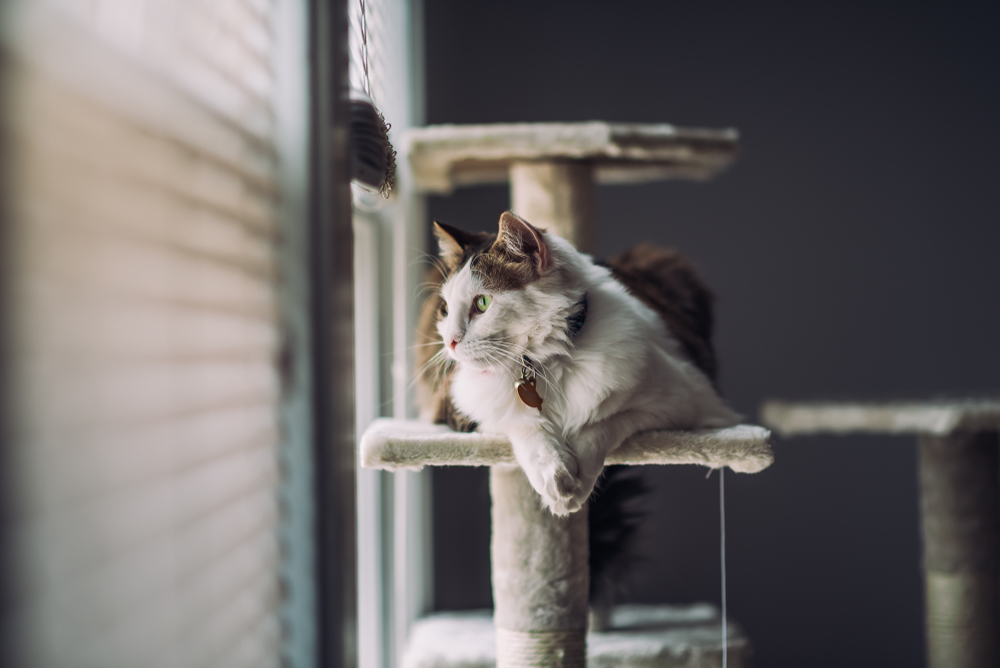
The reasons are not mysterious. Traffic accidents, disease exposure, parasites, fights with other cats, and predators all contribute. Outdoor cats are also more likely to contract feline leukemia virus and feline immunodeficiency virus through bite wounds. These infections can shorten life expectancy dramatically.
At the same time, it would be dishonest to pretend that indoor life automatically equals perfect well-being. Cats need stimulation, such as vertical space, hiding spots, play sessions, and mental engagement. Without enrichment, boredom can show up as overgrooming, aggression, or destructive behavior.
Some owners choose controlled outdoor access, such as enclosed patios called catio’s, supervised yard time, or leash training. These options reduce risk while still allowing sensory stimulation. They are not perfect solutions, but they lower exposure to traffic and predators.
Others decide that indoor life with strong enrichment is the safer route. That means interactive toys, climbing shelves, food puzzles, and daily play. It means understanding that a bored cat is not a bad cat; it is an under-stimulated one.
When people ask should I let my cat outside, what they are really asking is how much risk is acceptable. There is no universal answer. It depends on geography, traffic density, predator presence, and the individual cat’s personality. A timid cat in a high-traffic area faces different risks than a bold cat in a rural environment.
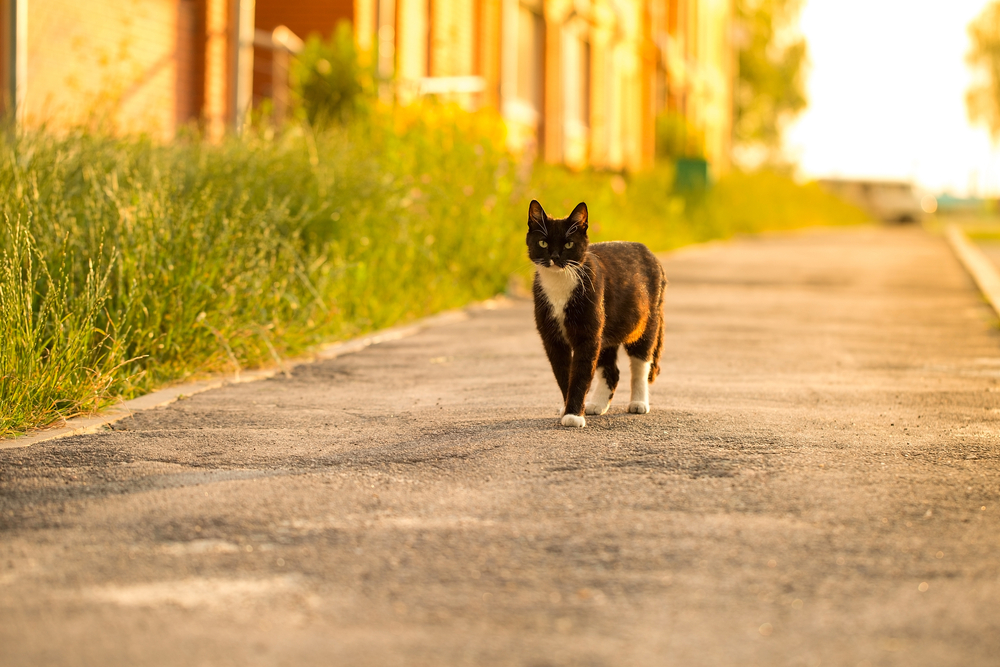
Image credit: Shutterstock.
Still, the statistics are hard to ignore. Outdoor access increases mortality risk. That does not mean every outdoor cat is doomed. It means the odds change. And sometimes, those odds explain why a cat never returns home.
Moving House, Moving Territory
Cats are deeply territorial, and their sense of security depends on familiar scent markers and mapped boundaries. When you move house, you remove the entire mental map. Every tree, every fence line, every hiding spot is gone. So, if a cat is allowed outside too soon after moving, it may attempt to return to its previous territory. Some cats travel surprising distances trying to find their old home, and many become lost in the process.
Veterinarians often recommend keeping cats indoors for several weeks after relocation to help them form new territorial bonds. Gradual introduction to the yard, if outdoor access will be allowed, is safer than immediate freedom.
This situation is often misunderstood, and owners think the cat is unhappy in the new home. In reality, the cat is disoriented and is responding to the absence of familiar scent markers. Relocation increases the risk more than many people realize. It is not about affection. It is about geography.
Illness, Hiding, and the Myth of Leaving to Die
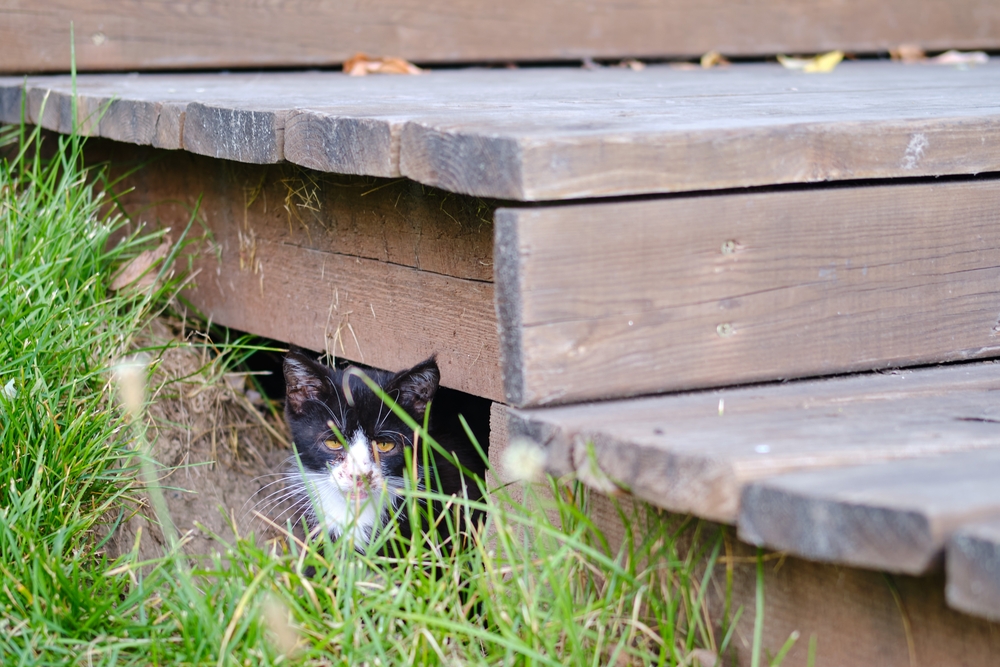
Research shows that cats instinctively hide when they are sick or injured. In the wild, visible weakness attracts predators, so hiding increases survival odds. That behavior persists in domestic cats. A sick cat may crawl under a porch, into dense bushes, or into a quiet shed. From the outside, it can look like an intentional departure, but in reality, it is defensive behavior.
Older cats with cognitive decline may also become disoriented. Pain or neurological issues can affect navigation, and an elderly cat might wander and fail to retrace its path. This doesn’t mean that your cat decided to run away from you because it’s unhappy, but a more accurate framing is that illness alters behavior. Hiding increases, and then orientation may decrease. The disappearance is not symbolic; it is biological.
Reducing Roaming Without Removing Freedom
If instinct drives roaming, the goal is not to shame the instinct. It is to manage it. Spaying and neutering remain the most effective ways to reduce long-distance roaming in cats. Hormones amplify territory expansion, so removing that hormonal influence lowers risk.
Microchipping dramatically increases the chance of reunion. Collars can fall off, whereas microchips remain. They do not prevent disappearance, but they help improve outcomes if a cat goes missing.
Environmental enrichment also matters more than people think. A cat with climbing structures, scratching posts, window perches, and daily interactive play is less likely to seek stimulation far beyond home. It is not a guarantee, but it reduces motivation.

Some owners use GPS tracking collars. These devices can reveal surprising roaming patterns. Many cats do not travel as far as imagined, and others travel much farther. For those committed to outdoor access, structured approaches such as catios or supervised time reduce risk. They do not eliminate it entirely, but they lower exposure to traffic and predators.
In or Out? It May Never Be Settled.
Cats are complex creatures. They are affectionate, independent, curious, and deeply territorial all at once. When one disappears, the grief feels deep and personal. People replay moments in their heads, wondering what they missed.
But most of the time, it is biology. Hormones, territory, prey drive, and environmental risk. The indoor vs outdoor cats conversation will probably never fully settle, as there are strong feelings on both sides. Still, the evidence is clear that outdoor access increases danger, even if it also increases stimulation.
Maybe the better question is not simply, should I let my cat outside? Maybe it is, but how can I respect my cat’s instincts while protecting its life? Finding a balance that works for you and your feline friend is key.
Read More: This Cat Sanctuary Has a Caretaker Who Lives On a Greek Island With 55 Cats
Trending Products

Red Light Therapy for Body, 660nm 8...

M PAIN MANAGEMENT TECHNOLOGIES Red ...

Red Light Therapy for Body, Infrare...

Red Light Therapy Infrared Light Th...

Handheld Red Light Therapy with Sta...

Red Light Therapy Lamp 10-in-1 with...

Red Light Therapy for Face and Body...

Red Light Therapy Belt for Body, In...

Red Light Therapy for Shoulder Pain...
