
We’ve all been there: you’re prepping for a picnic or making a batch of deviled eggs, you crack open a perfectly cooled shell, slice the egg in half, and instead of a vibrant, sunny yellow center, you find a murky, gray-ish green halo encircling the yolk. At first glance, it’s a bit off-putting. It looks like something that shouldn’t be there. Perhaps it’s a sign of spoilage or a “bad egg.” But before you toss those eggs in the compost bin, let’s take a deeper look into this culinary mystery. That green ring around hard-boiled eggs isn’t a sign of rot; it’s actually a fascinating bit of kitchen chemistry. Let’s look at why egg yolk turns green, the science behind the reaction, and answer the most important question: is the green ring on boiled eggs safe to eat? Once you understand that, we’ll outline a foolproof guide on how to prevent those pesky green rings so that your yolks stay golden every single time.
The Science: Why the Green Ring Appears
To understand why that green ring forms, we have to look at the anatomy of an egg through a microscope. Eggs, whether from a chicken, duck, or even turkey, are packed with proteins and minerals, and when you apply heat, you’re essentially kickstarting a series of chemical reactions. The culprits behind the green ring are two specific elements: Iron and sulfur.
Egg whites (also called the albumen) contain proteins that are rich in sulfur. As these proteins cook and denature, they release hydrogen sulfide gas. This is also the reason why sometimes cooked eggs have a bit of a funny smell. The egg yolks contain iron. When an egg is heated for too long or at too high a temperature, the hydrogen sulfide gas from the egg white migrates toward the center of the egg. When it reaches the surface of the yolk, it reacts with the iron found there.
This meeting of elements creates ferrous sulfide. Ferrous sulfide has a distinct grayish-green pigment. Because the reaction happens right where the white meets the yolk, it manifests as a thin, circular “halo.”
Why High Heat and Time Matter
Chemistry is all about energy. The longer you boil an egg, the more hydrogen sulfide gas is produced and pushed toward the yolk. Similarly, the higher the temperature of the water, the faster this reaction occurs. This is why the green ring is almost always a symptom of overcooking.
Is the Green Ring on Boiled Eggs Safe to Eat?
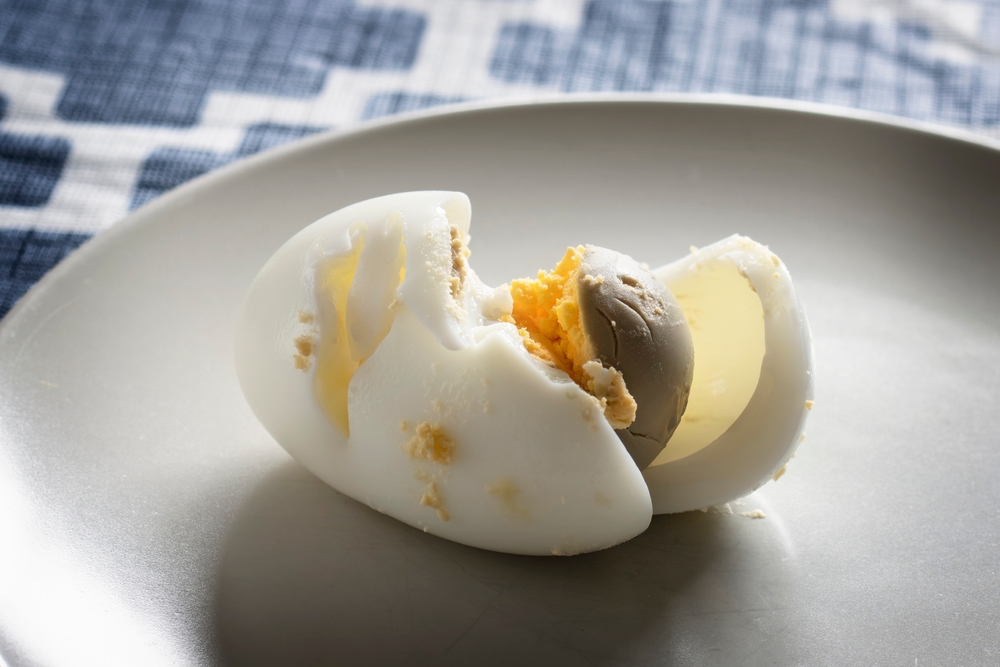
The short answer is yes, absolutely. While it might not be the most aesthetically pleasing sight on a breakfast plate, a green ring is completely harmless. It does not mean the egg is rotten (trust me, your nose would know if it was), nor does it mean it has lost its nutritional value. Ferrous sulfide is non-toxic.
There is, however, a trade-off in quality. If an egg has been cooked long enough to develop a dark green ring, the texture and flavor have likely suffered. Overcooked eggs tend to have some distinct characteristics. They are often more rubbery in texture, as the whites become tough and elastic. The yolks lose their creaminess and become dry and crumbly, making them chalky. You may also notice a stronger “eggy” smell, aka a sulfuric smell, which is just that hydrogen sulfide gas making its presence known. So while it’s safe for your stomach, it might not be a delight for your taste buds.
How to Prevent the Green Ring: The Foolproof Method
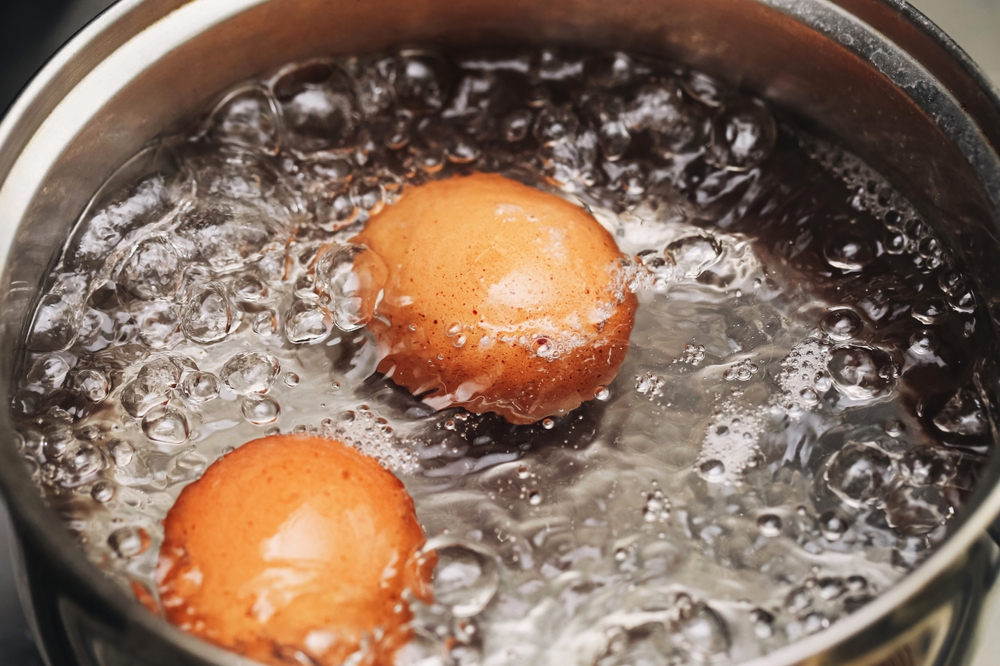
Image credit: Shutterstock
If you want to banish the green ring forever, you need to change your boiling technique. Most people make the mistake of keeping the eggs in a rolling boil for 10 or 15 minutes. This is a recipe for rubbery whites and green halos. Instead, use the “Still Water” or “Soft Start” method.
Step 1: Placement
Place the eggs in a single layer in a saucepan. This ensures even heating.
Step 2: Water
Cover with cold water to about one inch above the eggs. This starts the cooking process gently.
Step 3: Boil
Bring the water to a full rolling boil. This ensures that the water reaches the necessary peak temperature.
Step 4: Rest
Remove the eggs from the heat, cover them with a lid, and let them sit. The residual heat will cook the eggs without overshooting.
Step 5: Timing
Set a timer for 12 minutes for large eggs. This will allow the eggs to cook to the perfect balance of firm and creamy.
Step 6: The Shock
Once the time is up, immediately move the eggs to an ice bath. This stops the chemical reaction instantly. The ice bath is the “secret sauce” for perfect eggs. By rapidly dropping the temperature, you stop the hydrogen sulfide gas from migrating toward the yolk. It also shrinks the egg slightly inside the shell, making it much easier to peel.
Read More: Don’t Buy Eggs Without Checking These 5 Things First
Other Factors: Age and Water Chemistry
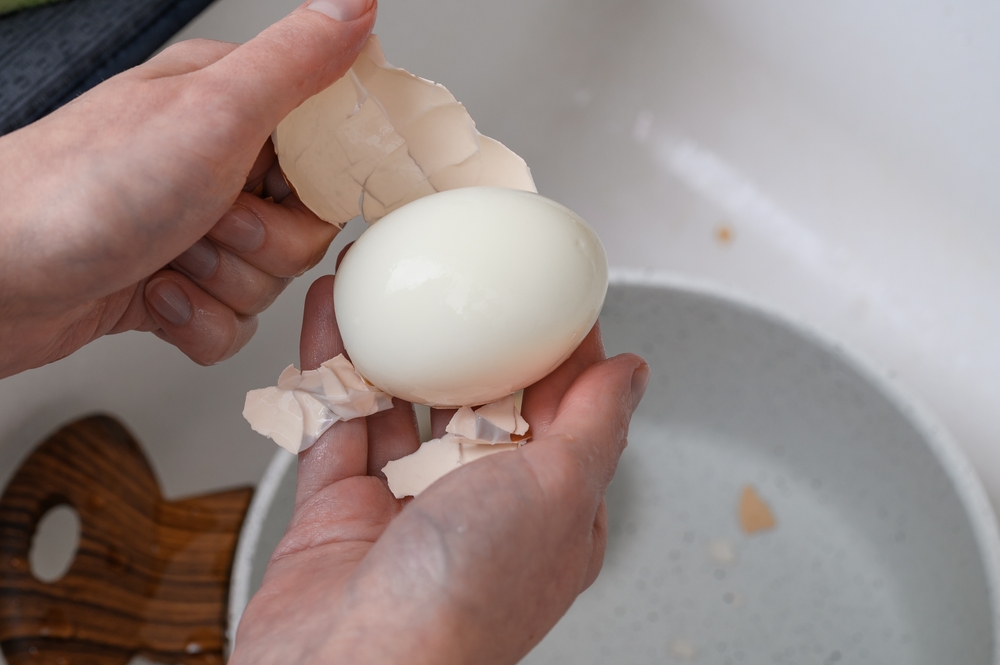
Image credit: Shutterstock
Believe it or not, the age of your egg and even your tap water can play a role in why egg yolks turn green. Older eggs have a higher pH level. A more alkaline environment actually speeds up the reaction between the sulfur and iron. If you’re using eggs that have been in the fridge for a couple of weeks, you might need to shave a minute off your “rest” time to avoid the ring. If your water is particularly high in iron, which is common in homes with well water, it can theoretically contribute to the reaction. The iron within the yolk itself, however, is still usually the primary driver of the reaction.
The Bottom Line
The mysterious green ring around your hard-boiled egg yolk is nothing more than a harmless chemical “handshake” between sulfur and iron. It’s a sign that the egg stayed in the heat a little too long, but it’s certainly no reason not to eat it. By mastering the “boil and rest” method and never skipping the ice bath, you can ensure your deviled eggs, salads, and snacks always feature that perfect, creamy, golden-yellow center. Cooking is a science, and now that you know the chemistry, you’re one step closer to becoming the master of the kitchen.
Read More: Should You Need to Wash Eggs Before Using Them?
Trending Products

Red Light Therapy for Body, 660nm 8...

M PAIN MANAGEMENT TECHNOLOGIES Red ...

Red Light Therapy for Body, Infrare...

Red Light Therapy Infrared Light Th...

Handheld Red Light Therapy with Sta...

Red Light Therapy Lamp 10-in-1 with...

Red Light Therapy for Face and Body...

Red Light Therapy Belt for Body, In...

Red Light Therapy for Shoulder Pain...
