
A lot of people want the health payoff of exercise, yet they get stuck on the time problem. Work runs long. Commutes eat the day. Even planning a gym session can feel like a project. “Exercise snacks” flip that script. They use tiny bursts of effort, placed inside normal life, to push fitness in the right direction. The idea is simple: you sprinkle short, purposeful bouts of movement across the day, then you move on. Researchers now have a name for the most intense version: vigorous intermittent lifestyle physical activity, or VILPA.
This is the kind of effort that makes breathing noticeably harder, even if it only lasts 30-90 seconds. The headline result is striking. In a large study of non-exercisers wearing activity trackers, small daily totals of vigorous movement linked to much lower mortality risk. The work does not prove cause and effect, yet the signal is hard to ignore. This article explains what exercise snacks are, why 1 minute can be enough, and how to use them safely. It also covers what the studies actually measured, and where the limits are. You will finish with a practical plan that fits real days.
What “exercise snacks” really mean, and why they work in normal life
The term sounds trendy, but the core idea is old. Short, hard efforts can train the heart and muscles quickly. The difference is placement. Exercise snacks sit inside your routine, not outside it. You do them between tasks, not in a separate workout window. Cleveland Clinic describes exercise snacking as brief, high-intensity movement done at different points in the day. The goal is consistency, because random bursts once in a while do not add up to much. The University of British Columbia’s Beyond site explains the same concept with a cleaner mental frame. Dr. Matthew Stork calls it flexible and user-led, not schedule-led. He says, “You’re restructuring exercise into your day.” That line captures the whole advantage. You keep the day intact, and you attach movement to moments you already have.
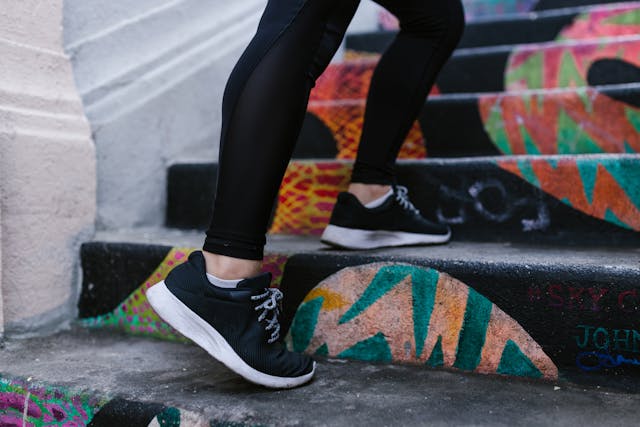
This helps because most barriers are practical, not philosophical. People often understand that activity helps health. They just cannot protect a long block of time. When the unit becomes 20–120 seconds, the barrier shrinks. You can climb stairs hard, then return to your desk. You can carry shopping with intent, then keep walking, or add a fast hill to a normal route, then continue. These bouts can be planned, but they can also be opportunistic. Intensity is the key lever. Many exercise snacks aim to raise heart rate and breathing rate, then stop. That mirrors interval training, but the rests are long because life creates them. Cleveland Clinic notes that, compared with classic HIIT, exercise snacks are spread out with extended rest between bouts. That spacing can also make the effort easier to tolerate. You can go hard for a minute, because you know recovery is built in.
However, “hard” should still be defined safely. Vigorous effort often means you can speak only a few words at a time. You sweat sooner. Breathing becomes loud. If that level sounds risky, you scale down. The structure still works with moderate snacks, yet the strongest longevity data focuses on vigorous bursts in people who otherwise do not exercise. The point is not perfection. It is repetition across weeks. If you do a single minute once, nothing changes. If you stack several minutes across most days, the body adapts. Aerobic capacity improves. Muscles get used more often. Blood sugar handling improves. The nervous system gets more movement signals, which helps reduce the long sitting stretches that dominate modern work. And because each snack is small, it is easier to keep going when life gets messy.
And because each snack is small, it is easier to keep going when life gets messy. You also gain a practical bonus: you stop treating movement like an “all or nothing” decision. A missed gym session can derail motivation, yet a 1-minute stair push is still available. Over time, those small wins build confidence and make vigorous efforts less intimidating. Many people also notice better energy during the day, because short movement breaks can reduce the mental fog that comes with long sitting. The real advantage is momentum. Once exercise snacks become automatic, they often lead to wider choices too, like walking more or adding a full workout, without forcing it.
The longevity evidence for VILPA, and what the big study actually found
The most cited mortality findings come from wearable data, not self-reported exercise logs. That matters because people misremember movement. In the Nature Medicine paper led by Prof Emmanuel Stamatakis, researchers used accelerometers from UK Biobank participants who reported no leisure-time exercise. The team then looked at mortality outcomes over follow-up. The analysis focused on vigorous intermittent lifestyle activity, done in short bouts during daily living. One line from the PubMed record captures the headline in plain language: “These results indicate that small amounts of vigorous nonexercise physical activity are associated with substantially lower mortality.” That is an association, not a guarantee. Yet it is still meaningful, because the group studied was non-exercisers. They did not suddenly become runners. They simply did brief, vigorous bursts as part of normal days.
The dose in the paper is also not extreme. The PubMed summary reports that a median VILPA duration of 4.4 minutes per day is linked with a 26%–30% reduction in all-cause and cancer mortality risk, plus a 32%–34% reduction in cardiovascular mortality risk. Those numbers describe relative risk differences between groups in an observational design. They do not mean you can “buy” a fixed percent by doing a fixed minute count. Still, the dose is small enough to be realistic for many people. The Nature Medicine paper also models dose response. It reports hazard ratios for increasing daily duration and frequency of bouts up to 1 minute or 2 minutes. The curves show benefit appearing at low volumes, then continuing as volume increases. Importantly, the authors analyze VILPA in bouts because lifestyle activity arrives in spurts.
You sprint for a bus or climb stairs quickly. You carry something heavy. That pattern can be captured by a wearable, even if you never call it exercise. A common summary you will hear online is “3 short bursts a day.” That framing comes from the bout-based nature of the data. It is also easy to remember. In practice, the study shows ranges. Some people did almost none. Some did for several minutes. The most useful takeaway is not the exact count. It is the principle that vigorous minutes in daily life can correlate with major outcome differences, even when formal workouts are absent. You should also hold the caveats firmly.
Observational studies can be confounded. Healthier people may naturally move more. Researchers adjust for many factors, yet no adjustment is perfect. Reverse causation can also play a role, because illness can reduce movement before diagnosis. Even with those limits, the pattern aligns with decades of physiology. Vigorous effort stresses the cardiovascular system, then drives adaptation. The new piece is that the stress dose can be tiny, and still show up in long-term data when repeated frequently. Still, you can act on the takeaway without overpromising. Pick 1 daily moment that allows a hard 30–60 second push. Track it for 4 weeks. If breathing gets easier, you have improved fitness. That change likely reflects real physiology, not hype. Then add another snack, but keep recovery generous between bouts.
Cancer risk, “huff and puff” intensity, and why vigorous minutes stand out
Cancer outcomes make people cautious because claims can be exaggerated. A helpful source here is the World Cancer Research Fund discussion of VILPA research. It names the lead investigator and institution, and it explains the logic in everyday terms. It states that Prof Emmanuel Stamatakis and his team at the University of Sydney studied short bursts of vigorous activity, called exercise snacking, under the VILPA label. WCRF defines vigorous effort in a way most people can self-check. Additionally, it says vigorous activity raises the heartbeat and can make you sweat or feel out of breath. That gives you a practical intensity target without needing a heart rate strap. If you can talk in full sentences, you are probably below vigorous. If you can only speak in short phrases, you are closer. This kind of “talk test” is not perfect, but it is workable.
The WCRF article also includes a quote that nails the intensity message. Prof Stamatakis says, “the more the better” applies to day-to-day physical activity that makes you “huff and puff.” The phrase matters because it is concrete. This is not abstract “wellness.” It is breathing hard. That is the stimulus that seems to deliver large returns per minute. It is also important to separate cancer incidence from cancer mortality. Different studies look at different endpoints. Some examine how activity relates to developing cancer. Others look at death outcomes. The Nature Medicine VILPA mortality paper includes cancer mortality analyses, alongside all-cause and cardiovascular mortality. Its wearable approach reduces recall bias, yet it still cannot prove causation. Mechanisms are plausible, though. Vigorous bursts can improve insulin sensitivity and glucose control, which influences growth pathways. They can reduce visceral fat over time, which changes inflammatory signaling.
They can also improve cardiorespiratory fitness, which supports immune function and resilience during illness. None of these mechanisms requires an hour-long session. They require a repeated signal. The “exercise snack” idea can also reduce the mental barrier around intensity. Many people avoid vigorous work because they imagine a punishing workout. A 45-second stair burst is different. It is hard, yet it ends quickly. That makes adherence more likely, especially for people who dislike gyms. WCRF underlines this population angle with another direct statement from Stamatakis: “Our study’s findings are especially pertinent to people who are not willing or keen on leisure-time exercise.” That is a large slice of adults. So, the cancer story is not magic.
It is a time-efficient way to accumulate vigorous effort, which is a powerful biological input. If you can place that input into daily life, you can keep it going for years. That long runway is where risk curves shift. The body rarely changes overnight. It changes because a small action repeats until it becomes normal. Another practical detail helps with consistency: choose a snack that is always available. Stairs at home, a steep driveway, or a short outdoor hill removes decision fatigue. Keep the effort sharp, but stop before form collapses. If you can repeat the same snack most days, you can compare progress week to week and stay motivated.
Muscle, blood sugar, and why post-meal “snacks” matter too
Longevity is not only about avoiding death. It is also about maintaining strength and function. That is where “activity snacks” research after meals becomes useful. University of Toronto researchers studied breaking up prolonged sitting with brief activity bouts. The report explains that the work was led by Daniel Moore, an associate professor of muscle physiology, and published in the Journal of Applied Physiology. Here, the intensity is often moderate, not all-out. Yet the benefit is still meaningful, because it targets a common modern problem: long sitting blocks. The U of T write-up states that short bouts like 2 minutes of walking or bodyweight sit-to-stand squats allow the body to use more amino acids from meals to build muscle proteins. That is a performance and aging issue, not just a fitness issue. If the body uses meal protein better, you protect muscle. If you protect muscle, you protect independence.
The report includes a clear quote on blood sugar handling. Moore says, “We know that prolonged sedentary periods impair the body’s ability to filter sugar from the blood following a meal.” That is concrete and easy to visualize. If you sit still after eating, glucose can stay elevated longer. If you move briefly, muscles take up more glucose. You get a smoother response. It then extends the idea with another quote that links action to outcome. Moore says, “Our results highlight the importance of breaking up prolonged sedentary periods with brief activity snacks.” The phrase “breaking up” is the operational word. You do not need a long workout to interrupt the sitting physiology. You need a small interruption, repeated. This matters because many people chase only cardio markers. Yet muscle mass and muscle quality predict health in later decades.
If exercise snacks help people keep muscle, they may support healthier aging even without formal training plans. They can also serve as a bridge into more structured exercise later, because they build confidence and capacity. You can apply this without making it complicated. After lunch, you can take a brisk walk for 2 minutes. After dinner, you can do controlled chair stands for a minute. In an office, you can use the stairs for 60 seconds. The key is to pair movement with an existing routine trigger, like meals or meetings. Once the trigger is stable, the snack becomes easier to repeat. These post-meal snacks can also complement vigorous VILPA. You might do 1 or 2 very hard bursts in a day, then add a few easier, muscle-supporting interruptions after meals. You do not need to measure everything. You need a plan you can keep.
A safe, realistic 1-minute plan you can start today

A good plan respects safety, consistency, and friction. It also avoids fantasy schedules. UBC’s Beyond article gives a practical intensity and duration frame. Dr. Stork says, “It can be as little as 20 seconds to a minute,” with the goal of elevating heart rate. That flexibility is useful because days vary. Some days you can do more. Some days you can only do one bout. You still keep the habit alive. Start with where you are. If you already train, exercise snacks can add extra stimulus and cut sitting time. If you never train, snacks can become your entry point. Use a simple rule for vigorous snacks: pick an activity that is safe, simple, and easy to repeat. Fast stair climbing is common because it needs no equipment. Brisk uphill walking also works if stairs bother knees. Stationary bodyweight movements can work at home, but you must keep your form solid.
Read More: The #1 Heart-Saving Exercise, According to a Cardiologist
UBC Okanagan researchers have studied how exercise snacks can fit into a workplace, especially through stair climbing. In their UBC Magazine piece, Dr. Matthew Stork explains a key risk factor in modern work. He says, “Sedentary behaviour and physical inactivity are two key factors that have been independently linked to premature morbidity and mortality.” That is not motivational fluff. It is the daily context that snacks are designed to fight. A realistic pattern is 1 snack in the morning, 1 in the afternoon, and another at any convenient point. You do not need to lock the times. You attach them to moments you already have, like arriving at work, a bathroom break, or finishing a call. If you use stairs, you can climb hard for 45–60 seconds, then recover fully. If you walk, you add a steep segment and push the pace until breathing is heavy.
Additionally, if you do squats, you keep them controlled and stop before form breaks. Safety rules keep this sustainable. If you have chest pain, dizziness, or known heart disease, get medical advice before vigorous bursts. If you have knee or ankle issues, choose lower-impact options. Build gradually, because tendons adapt more slowly than lungs. A gentler start still counts, because consistency creates capacity. Finally, keep the purpose clear. Exercise snacks are not a gimmick. They are a time-efficient way to stack minutes that drive adaptation. Over months, those minutes can accumulate into meaningful health protection, especially for people who never manage formal workouts.
A simple way to make the plan stick is to set “minimums” and “bonuses.” The minimum is 1 snack on any day you feel busy. The bonus is a second snack when the day opens up. This prevents the common trap where missing a perfect plan leads to doing nothing. Also, write down your safest alternatives. If stairs are crowded, walk a brisk loop outside. If the weather turns, do marching high knees indoors. Over time, you will also learn your best triggers. Some people have a snack after making coffee. Others use the walk to the car. When the trigger is consistent, the snack becomes automatic, and the day stops negotiating with you.
A.I. Disclaimer: This article was created with AI assistance and edited by a human for accuracy and clarity.
Read More: Study Finds 2 Exercises Most Effective for Lowering Blood Pressure
Trending Products

Red Light Therapy for Body, 660nm 8...

M PAIN MANAGEMENT TECHNOLOGIES Red ...

Red Light Therapy for Body, Infrare...

Red Light Therapy Infrared Light Th...

Handheld Red Light Therapy with Sta...

Red Light Therapy Lamp 10-in-1 with...

Red Light Therapy for Face and Body...

Red Light Therapy Belt for Body, In...

Red Light Therapy for Shoulder Pain...
