
In our hyper-connected, fast-paced world, the transition from a hectic day to a restful night’s sleep can often feel like an impossible leap. Many of us lie in bed with our minds racing, replaying the day’s events or worrying about tomorrow’s to-do list. While there are countless sleep aids on the market, experts are increasingly pointing toward a simple, cost-free, and ancient tool already at our disposal: our breath.
Specifically, the “4-7-8 breathing technique,” popularized by Dr. Andrew Weil, has gained significant attention as a “natural tranquilizer for the nervous system.” This method, rooted in the yogic practice of Pranayama, is designed to shift the body from a state of high alert into a state of deep relaxation. Let’s explore the science behind these four rhythmic breaths and create a step-by-step guide on how to perform them. By the end of this article, you will be fully equipped to reclaim your sleep.
Breathing Exercises for Sleep: Dr. Andrew Weil and the 4-7-8 Method
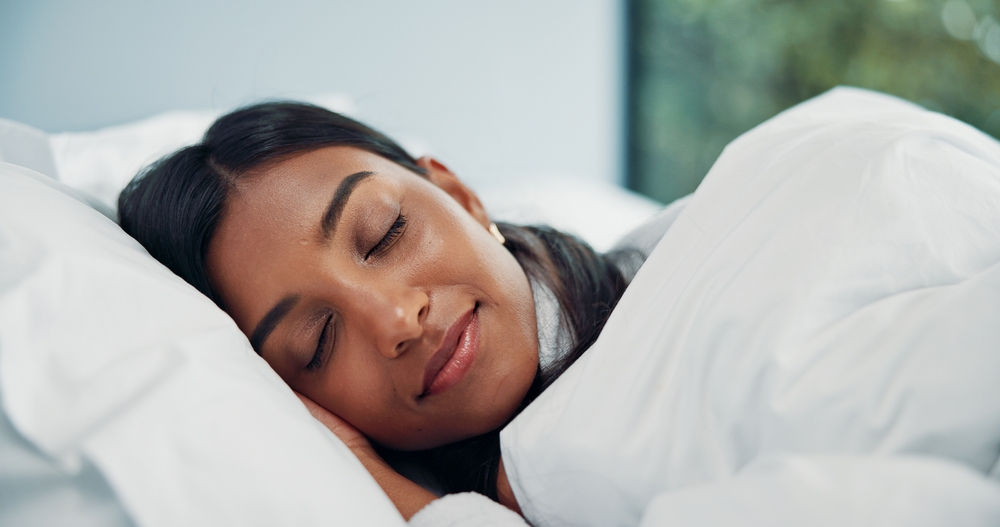
Image credit: Shutterstock
The 4-7-8 technique was brought into the mainstream by Dr. Andrew Weil, the founder and director of the Andrew Weil Center for Integrative Medicine. Dr. Weil describes this practice as a very simple exercise that requires no equipment and very little time. Despite its simplicity, its effects are cumulative; the more regularly you practice it, the more powerful it becomes in regulating your stress response.
The Four Breaths to Calm a Racing Mind Before Bed: How to Do It
The 4-7-8 technique is defined by its specific ratio. While the absolute time you spend on each phase can vary, the ratio of 4:7:8 must remain constant. To begin, find a comfortable position. While you can do this sitting up with a straight back, it is particularly effective when practiced lying down in bed.
The Setup
Place the tip of your tongue against the ridge of the tissue just behind your upper front teeth. Keep it there for the entire exercise. You will be exhaling through your mouth around your tongue.
Step 1: The Quiet Inhale (4 Seconds)
Exhale completely through your mouth, making a “whoosh” sound. Then, close your mouth and inhale quietly through your nose to a mental count of four.
Step 2: The Hold (7 Seconds)
Hold your breath for a count of seven. This is arguably the most critical part of the process, as it allows oxygen to fully saturate the bloodstream and provides a “pause” for the nervous system.
Step 3: The Whoosh Exhale (8 Seconds)
Exhale completely through your mouth, making an audible “whoosh” sound to a count of eight.
Step 4: The Cycle
This constitutes one breath. To complete the exercise, repeat the cycle for a total of four breaths. Experts recommend doing this twice a day, but never more than four breaths at a time during the first month of practice.
The Science: Why It Works
To understand why a simple breathing patterns can induce sleep, we have to look at the Autonomic Nervous System (ANS). The ANS is divided into two main branches: the Sympathetic Nervous System (the “fight or flight” response) and the Parasympathetic Nervous System (the “rest and digest” response).
Activating the Parasympathetic Nervous System
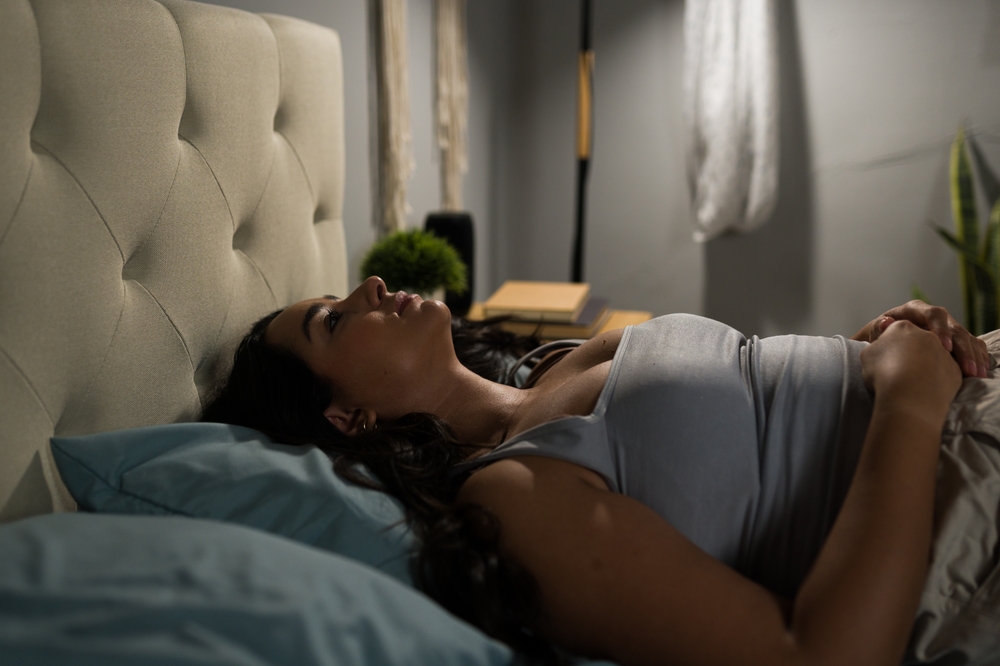
Image credit: Shutterstock
When we are stressed or anxious, our sympathetic nervous system is dominant. Our heart rate increases, our breathing becomes shallow, and our bodies are flooded with cortisol. The 4-7-8 technique works by manually overriding this system. By forcing the breath into a slow, rhythmic pattern, we stimulate the vagus nerve.
The vagus nerve is the main component of the parasympathetic nervous system. When it is stimulated through deep, diaphragmatic breathing, specifically during the long, 8-second exhale, it sends a signal to the brain that it is safe to relax. This leads to a decrease in heart rate and blood pressure, signaling to the body that it is time for sleep.
Improving Heart Rate Variability (HRV)
Some studies have shown that slow-breathing techniques like the 4-7-8 method can improve Heart Rate Variability (HRV). HRV is the measure of the variation in time between each heartbeat. A higher HRV is generally associated with better cardiovascular health and a more resilient stress response. By practicing these breaths, you are essentially training your heart and nervous system to recover from stress more efficiently.
Focusing the Mind
Beyond the physiological effects, the 4-7-8 technique serves as a mental anchor. The act of counting to 4, 7 and 8 requires just enough concentration to distract the mind from “ruminative thoughts” – the repetitive, anxious thinking that often keeps us awake at night. It acts as a form of “focused-attention meditation,” grounding you in the present moment.
Beyond Breathing: Tips for a Better Night’s Sleep

While breathwork is a powerful tool, it works best when supported by good “sleep hygiene.” Here are several expert-recommended tips to enhance your sleep quality:
1. Maintain a Consistent Schedule
Your body has an internal clock known as the circadian rhythm. Going to bed and waking up at the same time every day, including weekends, helps regulate this clock, making it easier to fall asleep and wake up naturally.
2. Optimize Your Environment
Your bedroom should be a sanctuary for sleep. This means keeping it cool, dark, and quiet. Most experts recommend a room temperature between 60-67°F (15-19°C). Use blackout curtains or an eye mask to block out light, which can interfere with melatonin production. Consider a white noise machine if you live in a noisy area.
3. Limit Blue Light Exposure
The blue light emitted by phones, tablets, and computers mimics daylight and inhibits the production of melatonin, the hormone responsible for sleep. Try to put away electronic devices at least one hour before bed.
4. Watch Your Intake
That is to say, watch your intake of caffeine, alcohol, and heavy meals. Avoid caffeine in the afternoon and evening, as its effects can least for several hours. While alcohol might help you fall asleep faster, it significantly disrupts the quality of your sleep. Alcohol often causes middle-of-the-night awakenings. Finally, try to finish eating at least two to three hours before bedtime to avoid indigestion.
5. Create a Bedtime Ritual
Engaging in a relaxing activity before bed signals to your brain that the day is over. This could include a warm bath, reading a physical book, or practicing the 4-7-8 breathing technique.
Read More: This 1-Minute ‘Exercise Snack’ Could Help You Live Longer — And It’s Backed By Science
The Bottom Line

The claim that four simple breaths can help you relax is not just anecdotal; it is supported by a growing body of neuroscientific and physiological evidence. By leveraging the connection between the breath and the nervous system, the 4-7-8 technique offers a practical way to “hack” your body’s relaxation response.
Like any skill, breathing exercises for sleep requires consistency. Dr. Weil emphasizes that the benefits of this breathing exercise are not always immediate but grow significantly over weeks and months of practice. If you find yourself struggling to find rest tonight, give the 4-7-8 method a try. It costs nothing, takes less than two minutes, and might just be the key to the deep, restorative sleep you’ve been looking for.
Disclaimer: This information is not intended to be a substitute for professional medical advice, diagnosis or treatment and is for information only. Always seek the advice of your physician or another qualified health provider with any questions about your medical condition and/or current medication. Do not disregard professional medical advice or delay seeking advice or treatment because of something you have read here.
Read More: Sleeping Trick? Why Sticking One Foot Out Actually Works
Trending Products

Red Light Therapy for Body, 660nm 8...

M PAIN MANAGEMENT TECHNOLOGIES Red ...

Red Light Therapy for Body, Infrare...

Red Light Therapy Infrared Light Th...

Handheld Red Light Therapy with Sta...

Red Light Therapy Lamp 10-in-1 with...

Red Light Therapy for Face and Body...

Red Light Therapy Belt for Body, In...

Red Light Therapy for Shoulder Pain...
