
Eggs are a kitchen staple, even in households that don’t like omelets or similar “egg-y” dishes. They’re a basic ingredient in most baked goods because of their binding and rising capabilities. You won’t taste them in a muffin or cake, but you will definitely notice their effect on the shape and fluffy texture. Eggs are also used in savory recipes, such as in many versions of meatballs or breaded chicken. Unless they are purposefully avoiding them, people enjoy eggs for their taste, versatility, affordability, and nutritional value. However, proper handling and storage is needed to make the most out of a carton. Which raises the question: Should you wash eggs before storing or using them? The answer depends on where they came from.
Commercial Eggs and the Risk of Salmonella
One of the main reasons to wash eggs is to prevent the spread of Salmonella bacteria. People who get Salmonella illness tend to suffer from stomach pain, fever, diarrhea, and vomiting for up to a week. In rare cases, the bacteria can infect the bloodstream and become life-threatening, warns Food Safety. After eggs are laid, they may touch bird droppings and contract the bacteria onto their shells. Fortunately, production companies are required to wash the eggs before shipping them to store shelves. For this reason, it’s not necessary to wash eggs purchased from a grocery store.
Outbreaks can occur if a farm or packing facility has poor sanitation practices. However, washing commercial eggs as a precaution can actually increase the risk of contamination. According to the USDA, “the wash water can be ‘sucked’ into the egg through the pores in the shell.” Therefore, commercial egg processors in the U.S. can use only FDA-approved compounds and temperatures that prevent the liquid from getting absorbed into the egg.
What About Countries Aside from the U.S.?
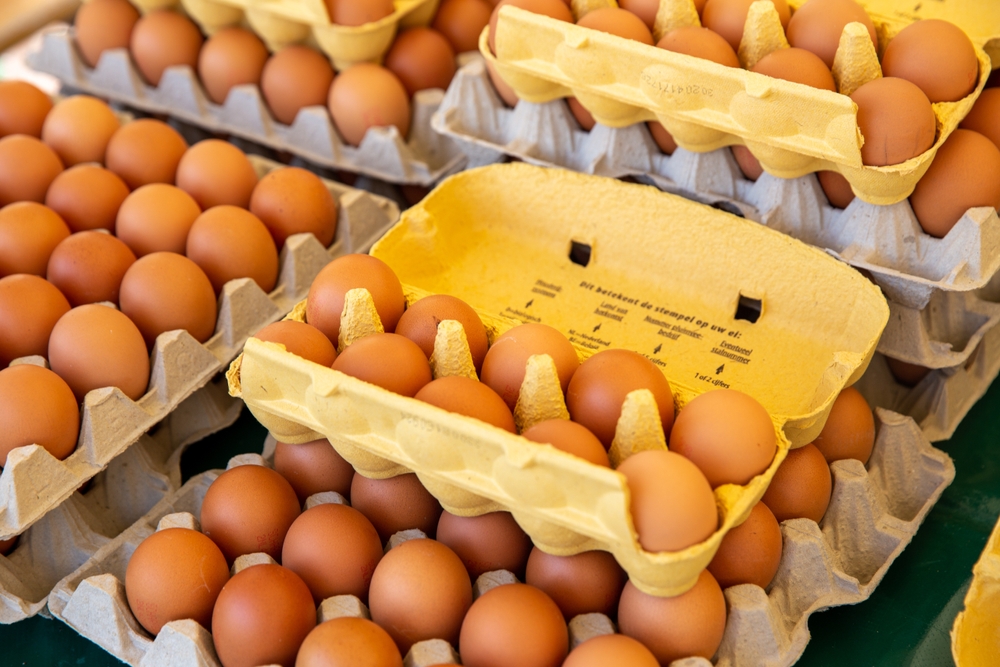
However, the commercial washing process isn’t used in most other countries. Americans visiting Europe might be shocked to see egg cartons stored on the counter. This is because these countries use a different distribution method. When eggs are laid, they have a natural coating on the shell. Known as the “bloom” or “cuticle,” this layer protects the egg from bacteria while allowing oxygen circulation. This bloom keeps the egg shelf stable. In American facilities, this layer is washed off, so the eggs need to be refrigerated to avoid fluctuating temperatures that can lead to bacteria-breeding condensation.
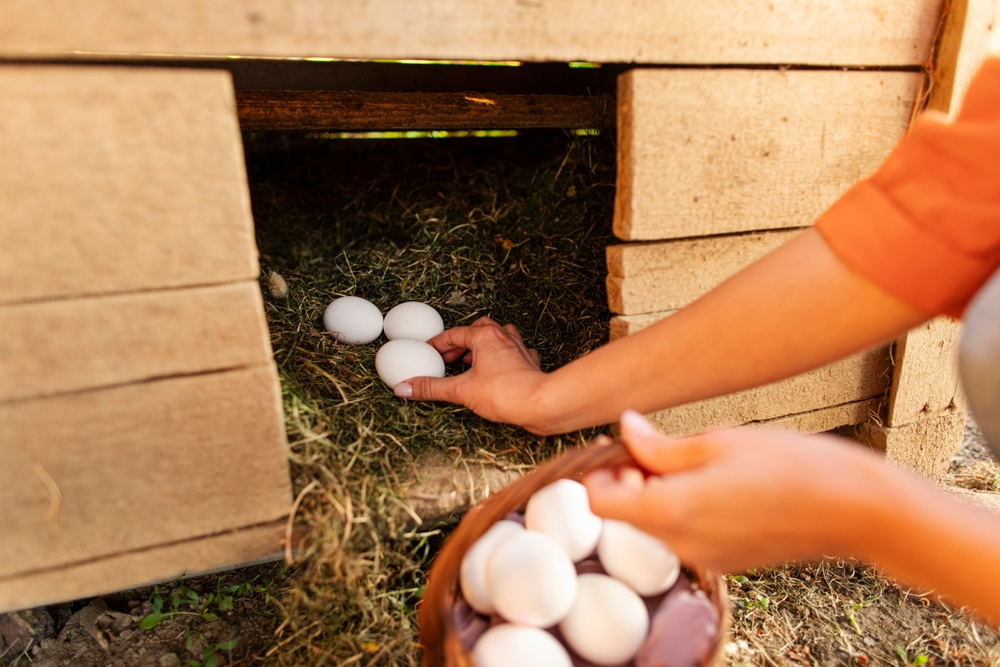
In most other countries, standardized production preserves the cuticle and quickly distributes the eggs to consumers. The emphasis is on quick. “Generally speaking, nest clean, unwashed, unrefrigerated eggs have a shorter shelf life than washed, refrigerated eggs,” says microbiologist Ada Hagan, PhD, to Business Insider. This also applies to unwashed U.S. eggs that come straight from the farm or from backyard chickens. They tend to stay fresh for up to two weeks. You can opt to put these eggs in the fridge to extend their shelf life, but once they are chilled, they cannot go back to the counter. “Once the eggs get cold, they must stay cold,” says Hagan.
How to Wash Fresh Eggs
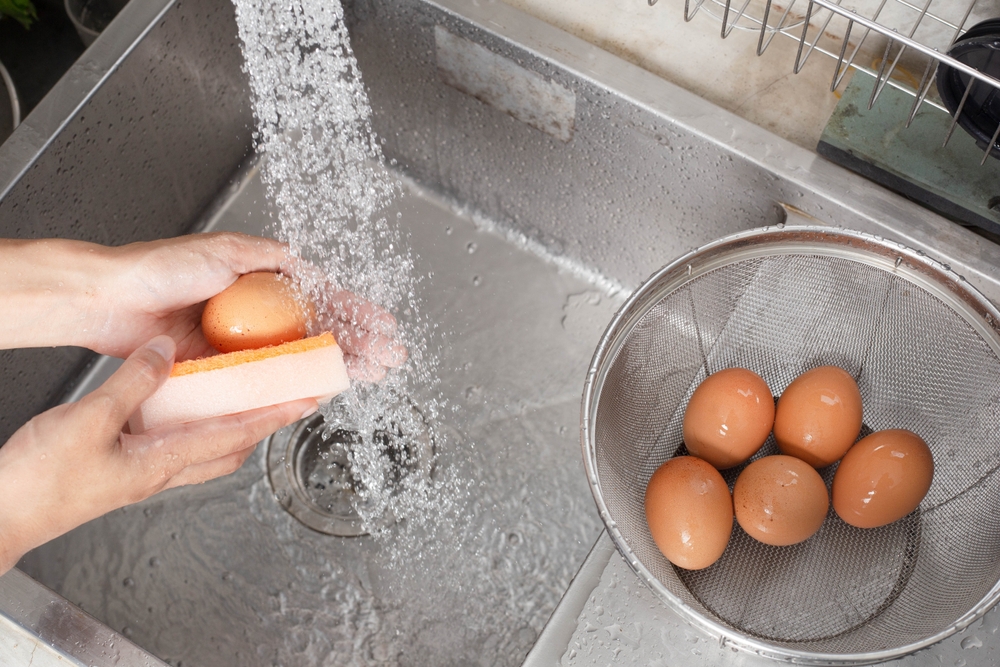
Lisa Steele, a fifth-generation chicken keeper from the U.S., explains how she cleans her hens’ freshly-laid eggs. “You want the water to be warmer than the egg so it doesn’t suck the bacteria in, and you want to do it under running water. You don’t want to put them in a bowl of water and then start washing them. It should be running water so they’re not sitting in the dirty water,” she said to Successful Farming. Gently rub off dirt with your fingers or a soft sponge. Use unscented soap if needed. Then dry them with a soft cloth and refrigerate them.
The Center for Food Security and Public Health (CFSPH) recommends sanitizing eggs after washing them. First, make a solution of 1 tablespoon of bleach in 1 gallon of water. Next, dip each egg into the solution before rinsing it off. Finally, dry them with a towel and refrigerate them. “Personally, I don’t wash my eggs until just before we eat them,” said Steele. This allows the cuticle to protect the egg and keep it optimally protected until use. She added that cleaning nesting boxes frequently is one of the best ways to ensure the eggs are clean. Also, collect eggs frequently to reduce the time they may be in contact with feces and other contaminated materials. If you want to keep the eggs on the counter, gently wipe off dirt with a dry brush or soft cloth. This dry-washing removes any debris while keeping the bloom intact.
How to Safely Handle Fresh Eggs
When asked about how to protect oneself from harmful bacteria, the CFSPH stated: “After cleaning or disinfecting eggs, make sure to sanitize all surfaces. After handling your eggs, make sure to thoroughly wash your hands. Safe cooking techniques prevent bacteria, such as Salmonella, from persisting in your eggs. Make sure to cook eggs until 160°F or until firm.” Remember, Salmonella doesn’t just infect eggs by permeating the shells. Diseased hens can lay eggs with the bacteria already inside. That’s why it’s recommended to ensure the eggs are fully cooked and to avoid eating cookie dough and other foods with raw eggs.
Read More: Households Advised to Hang Broken Eggshells in Garden for a Very Specific Reason
Trending Products

Red Light Therapy for Body, 660nm 8...

M PAIN MANAGEMENT TECHNOLOGIES Red ...

Red Light Therapy for Body, Infrare...

Red Light Therapy Infrared Light Th...

Handheld Red Light Therapy with Sta...

Red Light Therapy Lamp 10-in-1 with...

Red Light Therapy for Face and Body...

Red Light Therapy Belt for Body, In...

Red Light Therapy for Shoulder Pain...
