
Long COVID can linger long after the acute infection ends. People report fatigue, brain fog, dizziness, and poor sleep. Many struggle to work or manage basic chores. Some crash after small efforts, then lose days to recovery. Routine blood tests can look normal and misleading. The U.S. Centers for Disease Control and Prevention (CDC) states, “There is no laboratory test that can determine if your symptoms or conditions are due to Long COVID.” Clinicians, therefore, lean on timelines, exams, and exclusions.
Patients often cycle through referrals and repeated investigations. That cycle can drain money, time, and hope. Researchers face the same challenge when they recruit by symptoms alone. Mixed biology blurs trial results and slows treatment discovery. It can also fuel stigma when tests fail to explain disability. A blood test would not fix every problem. Yet it could confirm biology, support earlier care, and speed research for Long COVID. It could also reveal subgroups that respond to specific treatments.
The Diagnostic Gap
CDC stresses that “Long COVID is not one illness.” That framing changes the diagnostic job. Clinics see breathlessness, dysautonomia, clotting concerns, and disabling fatigue. Some patients show organ injury, so tests reveal clear damage. Others have normal results, yet they cannot function day to day. Clinicians rely on history taking and exclusions. They check for anemia and thyroid disease early. They screen sleep disorders and medication effects. They map symptom onset after infection and track triggers over weeks. They ask about delayed crashes after activity. They document functional decline at home and at work. Many clinicians also track heart rate changes during standing. Some use simple walking tests to document limits. Yet these tools cannot confirm Long COVID biology on their own. Patients can interpret normal tests as dismissal, even with supportive care.
Uncertainty keeps many patients on a treadmill of referrals. They repeat investigations, yet answers remain scarce. That cycle drains money, time, and trust. It can also raise misdiagnosis risk, because clinicians must work with limited signals. Research suffers for the same reason. Symptom-based enrollment mixes several mechanisms in one cohort. Then a treatment that helps one subgroup can look ineffective overall. A diagnostic marker could tighten recruitment and sharpen endpoints. It could also give patients objective support for accommodations. It could reduce repeated testing and shorten the path to care. It could help researchers separate subgroups and design targeted trials. Insurers often demand objective evidence before they fund extended support. Workplaces may require paperwork that clinicians struggle to justify. Objective results can also help families respect limits and prevent setbacks. It can change conversations in one visit.
The 2025 Study
The study was published in 2025 in the Journal of Translational Medicine by Hunter and colleagues. It aims to develop and validate blood-based diagnostic biomarkers for ME/CFS using an EpiSwitch platform. ME/CFS overlaps with Long COVID in some patients, especially after exertion-triggered crashes. Still, the paper studies ME/CFS directly, not Long COVID. In the paper’s own words, Hunter and colleagues report, “n = 47 patients with severe ME/CFS and n = 61 age-matched healthy control patients.” They describe a retrospective case-control design using stored blood samples. They also describe cases as severe and housebound, with specific inclusion and exclusion criteria.
Long COVID readers should focus on what the study can and cannot claim. Hunter and colleagues explicitly state, “There was no available data regarding … previous infection status, including … COVID.” So the model cannot define a post-COVID subgroup with certainty. It shows that 3D genomic markers can classify severe ME/CFS in this dataset. Disclosure details also shape interpretation. Hunter and colleagues write, “This work was funded by Oxford BioDynamics plc.” They also disclose conflicts, stating many authors “are full-time employees at Oxford BioDynamics plc.” Industry funding does not invalidate results, yet it raises the bar for independent replication. External labs should test the assay with preregistered protocols and blinded analysis.
3D Genomics in Blood
Most biomarker efforts measure proteins or antibodies in blood. This study looks at genome architecture inside blood cells. The authors describe chromosome conformations as regulators of gene expression. These 3D contacts can shift with immune activation and cell state changes. The EpiSwitch approach captures long-range DNA interactions and converts them into measurable markers. For clinicians, the appeal is practical and direct. A standard blood draw could capture a systemic signal that routine panels miss. Hunter and colleagues describe the approach as “3-dimensional genomic regulatory immuno-genetic profiling.” That language points to immune gene regulation, not a single downstream molecule.
This matters because major health agencies still describe immune changes as plausible drivers for some Long COVID patients. The World Health Organization (WHO) notes evidence pointing to altered immune responses and autoimmunity in some post-COVID cases. Therefore, an immune regulation readout could fit at least one Long COVID subtype. It could also support subgrouping across fatigue-dominant presentations. Even so, subgrouping still needs careful clinical phenotyping, because Long COVID can include organ injury patterns that differ from ME/CFS.
The 200-Marker Signature
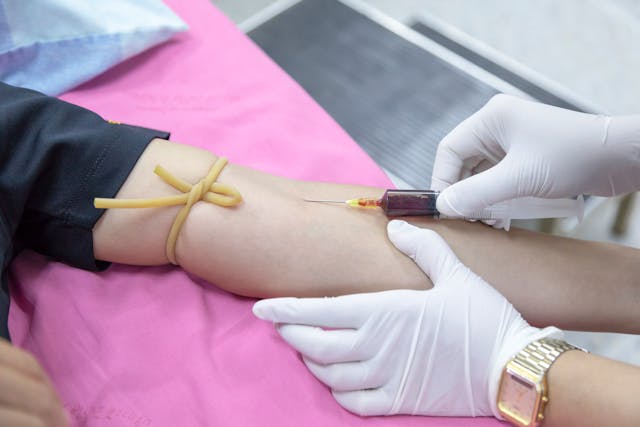
The study starts with a wide discovery sweep, not a single candidate marker. Hunter and colleagues state that the arrays “allow for the highly reproducible, non-biased interrogation of ~ 1.1 million anchor sites.” They also describe screening “10^6 of 3D chromosomal conformations (CCs).” That scale can capture broad immune regulation changes in circulating cells. It also raises the risk of overfitting, so feature selection must stay conservative. In the abstract, Hunter and colleagues report a “200-marker model” for ME/CFS diagnosis.
A 200-marker panel can capture a composite signature across cell states. For Long COVID, a composite panel could support subgrouping within a broad label. It could also reduce reliance on single readouts that vary across days. However, scale never replaces validation. Models can learn quirks of one dataset. They must prove stability across sites, seasons, and different patient mixes. Long COVID research especially needs that, because cohorts vary by geography, variant era, reinfections, and vaccination history.
Accuracy Under Pressure
Numbers typically drive media headlines, so accuracy deserves a proper look. Hunter and colleagues report “a sensitivity of 92% and specificity of 98% with overall diagnostic accuracy of 96%.” They describe this as performance in an independent validation cohort within their study design. Those figures are strong, yet they come from defined samples. The cohort focuses on severe, housebound ME/CFS with strict exclusions. That can strengthen signal separation, yet it can also limit generalisability. Long COVID clinics often include mixed severity and multiple comorbidities.
Diagnostic tests also face spectrum effects in real practice. A model can perform well in clear cases and stumble in borderline cases. WHO notes that post-COVID symptoms can range from mild to severely debilitating. So a Long COVID test must show performance across that spectrum. It must also prove consistency across laboratories and sample transport conditions. Researchers should compare against look-alike conditions seen in real clinics, including untreated sleep disorders and common autoimmune conditions. Prospective cohorts should enroll patients at first presentation after infection, then follow them over time. That design will show whether signatures track relapse and recovery.
Immune Signals and IL2
A diagnostic test gains value when it also points to biology. The study maps markers to genes and runs pathway analysis. In the abstract, Hunter and colleagues list immune and inflammatory routes, including interleukins, TNFα, toll-like receptor signalling, and JAK/STAT. Those pathways fit an immune dysregulation frame for severe ME/CFS. They also overlap with immune hypotheses in some Long COVID subgroups, as described by the WHO’s ongoing research summaries.
One signal receives special focus in the paper’s summary. Hunter and colleagues report “clear clustering in correlation to IL2.” IL-2 relates to T cell function and immune regulation. The authors also compare their pathway signals with networks linked to immunomodulatory therapies, including rituximab and glatiramer acetate. That comparison does not prove a treatment for Long COVID. Still, it supports a sensible research direction: identify a responder subgroup first, then test targeted therapies inside that subgroup using objective endpoints. For Long COVID, that approach could reduce failed trials that treat everyone as one uniform group.
Long COVID Crossroads

Long COVID has a clear definition, yet it shows up in many different ways across patients. The WHO states symptoms usually “start within 3 months of the initial COVID-19 illness and last at least 2 months.” WHO also notes these symptoms can limit work and household activities. That variability keeps diagnosis difficult, because people present with very different limits and trajectories. The U.S. National Academies report captures the current reality in plain language. It states, “LC can be diagnosed on clinical grounds.” The same report also states, “No biomarker currently available demonstrates conclusively the presence of LC.” Those sentences explain why many patients leave clinics with uncertainty and mixed advice.
WHO also links one Long COVID symptom cluster to ME/CFS concepts. WHO notes clusters that include dizziness and palpitations on standing, plus exercise intolerance. It also references “post-exertional malaise, or myalgic encephalomyelitis/chronic fatigue syndrome (ME/CFS).” That cluster resembles patients who worsen after modest activity. CDC uses similar ideas in its patient-facing guidance. CDC defines an “energy limit” as “The amount of energy a person has, taking into account the effort required to carry out different activities.” A validated blood test could help identify an exertion-sensitive subgroup earlier. It could also separate it from deconditioning or primary mood disorders, which can change management decisions.
The Validation Roadmap
A promising assay becomes useful only after careful validation. Long COVID cohorts need consistent entry criteria and clear timing. WHO states, “6 in every 100 people who have COVID-19 develop post-COVID-19 condition.” That scale demands tests that work across primary care and specialist clinics. Validation should start with prospective recruitment and careful phenotyping. Researchers should record reinfections and vaccination histories. Those factors can shift immune biology and alter signatures. Studies should stratify by symptom clusters, including exertion intolerance and autonomic complaints. Next, labs must lock down pre-analytics, including tube type, freezing rules, and storage times.
Large programs can support scale and standardisation. The U.S. National Institutes of Health (NIH) describes its RECOVER program this way: “RECOVER brings together clinicians, scientists, caregivers, patients, and community members to understand, treat, and prevent Long COVID.” That type of network can run multi-site biobanking and blinded testing. It can also help include diverse populations, which improves generalisability. Validation should also compare against look-alike conditions, not only healthy controls. Finally, teams should publish clear cutoffs and uncertainty ranges. Clinicians need to know what a borderline result means for decisions and referrals.
Read More: COVID’s Long Shadow: Signs the Virus May Still Affect You Years Later
Conclusion
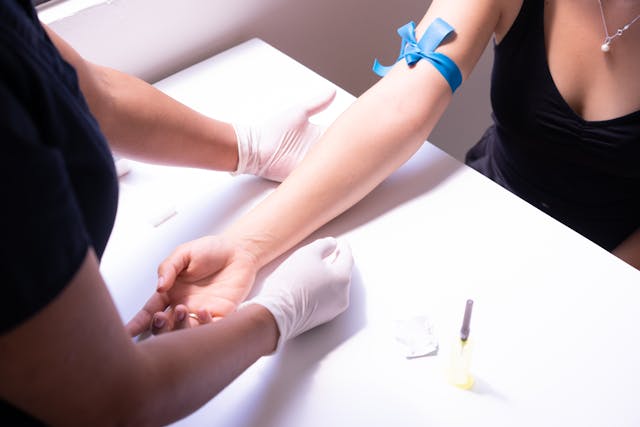
Long COVID care still runs ahead of the laboratory. CDC states, “There is no laboratory test that can determine if your symptoms or conditions are due to Long COVID.” Clinicians therefore diagnose from history, timing, and exclusions. That approach can work, yet it leaves room for doubt and delay. A 2025 study in the Journal of Translational Medicine offers a plausible technical path. Hunter and colleagues report that a blood-based 3D genomic signature can separate severe ME/CFS from controls, and they report “a sensitivity of 92% and specificity of 98% with overall diagnostic accuracy of 96%” in validation. However, they also state, “There was no available data regarding … previous infection status, including … COVID.” So the study cannot diagnose Long COVID today.
For now, validation and supportive care remain essential. Researchers need direct studies in well-defined Long COVID cohorts, with locked handling rules and multi-site replication. They should also compare against look-alike conditions common in clinics. If the signature holds, it can identify an exertion-sensitive subgroup earlier and sharpen trials. If it fails, that result still saves time by closing the wrong door. Either way, patients deserve transparent study designs and clear communication. Independent replication should include primary care patients, not only specialist cohorts. It should test stability across shipping delays and routine lab variation. Clear reporting on false positives, false negatives, and borderline results will protect patients. If validated, clinicians could pair results with pacing guidance and targeted trials at scale nationwide.
A.I. Disclaimer: This article was created with AI assistance and edited by a human for accuracy and clarity.
Read More: Doctors Warn of Rare Post-COVID Syndrome That Can Be Fatal
Trending Products

Red Light Therapy for Body, 660nm 8...

M PAIN MANAGEMENT TECHNOLOGIES Red ...

Red Light Therapy for Body, Infrare...

Red Light Therapy Infrared Light Th...

Handheld Red Light Therapy with Sta...

Red Light Therapy Lamp 10-in-1 with...

Red Light Therapy for Face and Body...

Red Light Therapy Belt for Body, In...

Red Light Therapy for Shoulder Pain...
