
Artificial intelligence now shapes work, media, finance, education, and public services. Yet public debate still swings between hype and panic. A better question needs attention. What happens when powerful systems scale inside a world already under pressure? That is where Dex Hunter-Torricke’s warning becomes useful. The former Google and DeepMind communications executive argues that AI is advancing during a period of inequality, political strain, and climate stress. He wrote, “We are not prepared for the world that is coming, and the path we are currently on leads to disaster.”
His concern is not only technical failure. It is social fragility meeting rapid deployment. This article examines AI risks and dangers through jobs, inequality, democracy, information control, energy demand, and policy choices. The warning lands because it focuses on conditions, incentives, and timing, not only on software capability. It asks who gains, who pays, and which institutions can still protect ordinary people. The goal here is clear language, grounded examples, and practical steps. The future is not fixed. However, delay favors concentrated power. Early planning can reduce damage, spread benefits, and keep public systems strong during rapid change. That is the urgent choice facing governments, workers, schools, and communities now.
What the warning actually says
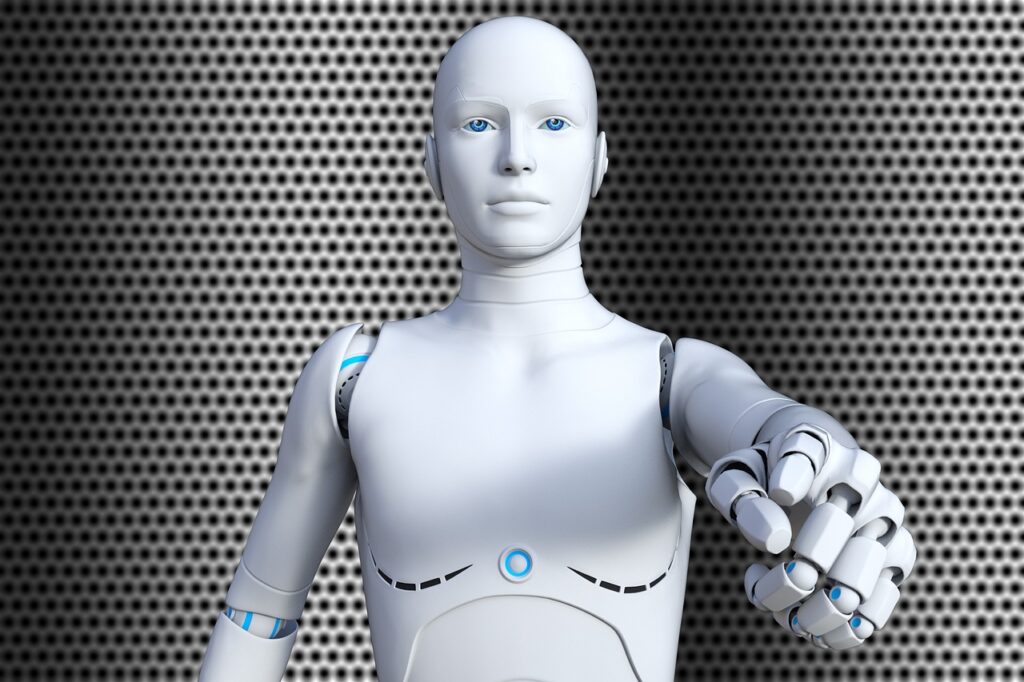
Hunter-Torricke warns that AI’s biggest danger comes from rapid deployment inside already fragile social, political, and economic systems, not from technology alone. Image Credit: Pixabay
Dex Hunter-Torricke is not warning about one chatbot mistake or one flawed product launch. He is describing a systems crisis. His main point is timing. AI may be improving fast, yet it is entering a world that is already unstable. In his essay, he calls AI “the most powerful general-purpose technology in human history.” He then pairs that line with a severe warning that society is unprepared for what comes next. That pairing is the center of his argument. He is not dismissing AI’s usefulness. He is saying the surrounding conditions will shape who benefits and who suffers. This shifts the conversation away from product features and toward readiness, institutions, and political choices. A powerful tool can increase prosperity in one setting and deepen inequality in another.
The difference usually comes from governance quality, labor protections, and whether public systems can absorb rapid change. His warning stands out because he worked near major technology leaders and watched strategic decisions move quickly under competitive pressure. He saw how urgency, messaging, and investor expectations can compress reflection time. That background does not make him automatically correct, yet it makes his argument harder to dismiss as outsider alarmism. He is pointing to a mismatch between technical acceleration and civic preparation. When that gap widens, even useful tools can produce harmful outcomes at scale. In plain terms, capability is rising faster than rules, institutions, and public trust can keep pace in many countries. That imbalance is his central warning today globally.
He sharpens the point by naming the environment AI is entering. He writes that the technology is arriving in “a world already ablaze with interlocking crises,” then points to inequality, democratic erosion, geopolitical fracture, and climate pressure. That framing helps because many AI debates isolate the technology from the social context, shaping outcomes. Deployment never happens in a vacuum. Systems enter workplaces with existing power imbalances. They enter politics with existing distrust and enter economies with existing concentration. They enter energy grids that are already strained in many places. This is why his warning reaches beyond the tech industry. It asks whether institutions can handle acceleration without widening damage that is already underway.
He also leaves room for a better path. He argues that with different choices, stronger frameworks, and real political will, decline is not inevitable. That final point matters because it prevents paralysis and fatalism. A severe warning can still be constructive when it names levers for action. His message, therefore, combines urgency with responsibility. Companies can slow reckless deployment in high-risk settings. Governments can build rules before harms become routine. Civil society can pressure institutions to protect workers and rights during transitions. The warning is frightening, yet it is also practical. It says the future will be shaped by decisions made under pressure during the next few years. If leaders treat AI as only a product race, they will miss the social conditions that determine whether progress lifts living standards or deepens instability for millions worldwide.
Jobs, wages, and uneven disruption
Employment fears dominate public conversations about AI, and those fears are not irrational. AI can automate tasks, compress timelines, and reduce staffing needs in some roles. It can also increase productivity without improving worker pay. Hunter-Torricke’s warning connects directly to that imbalance. He argues that under current conditions, AI may enrich a narrow group while many others lose security. His concern is not only job loss. It also includes bargaining power, work quality, and the speed of change. A worker can remain employed while earning less, facing tighter monitoring, and losing control over daily tasks because AI tools let management demand more output. That kind of disruption often receives less attention than dramatic headlines, yet it can still destabilize families and communities.
When income becomes less predictable, people delay housing plans, postpone medical care, and cut spending in local businesses. Career ladders can also break. Entry-level work may shrink if AI handles first-draft tasks that once required trained new staff. Mid-career workers may face constant reskilling pressure without paid time to learn. Hunter-Torricke captures the distribution risk when he warns that the current path may leave most people worse off while a wealthy minority gains more power. AI risks and dangers, therefore, appear in wage structures and job quality long before unemployment spikes show up in national statistics. The labor shock can arrive as slower erosion, not one sudden collapse, which makes it easier for leaders to ignore until anger builds quietly across many sectors.
The disruption is also unlikely to land evenly across sectors, cities, or countries. Large firms can buy systems, reorganize teams, and absorb transition costs. Smaller firms may struggle to compete and become dependent on outside platforms. Wealthier countries may capture more gains because they control capital, compute, and infrastructure. Lower-income countries may face pressure to buy expensive AI services built elsewhere. This can widen inequality within countries and across borders. Hunter-Torricke states, “I believe the current future that we are heading for will not deliver a good life for the vast majority of people or countries.” That line is severe, yet it points to a real distribution problem. Efficiency gains do not automatically spread. They move through labor law, tax policy, competition rules, education systems, and worker bargaining power.
If those systems are weak, productivity growth can coexist with broad insecurity and falling trust. That is why labor transition planning matters now, not after disruption becomes obvious in headline unemployment data. Governments need retraining linked to real vacancies, support for mid-career workers, and rules against abusive surveillance practices. Companies need to share productivity gains through wages, staffing choices, and training budgets. Without those protections, AI adoption may increase output while shrinking stability. The biggest risk may be a delayed response, because institutions usually move slowly, while deployment and management incentives move fast. By the time the damage looks obvious, many local employers, workers, and training systems may already be operating from a weaker position for years ahead economically.
Democracy, ethics, and amplified human harm
Another central concern is not machine rebellion. It is human misuse. That point appears clearly in Mo Gawdat’s public warning about AI. During his interview with Steven Bartlett, Gawdat said, “AI is going to magnify the evil that man can do.” He also argued that the greater danger may come from humans controlling powerful systems badly, not from AI controlling humans. That view aligns with Hunter-Torricke’s warning about extraordinary capability entering a damaged political environment. The issue is not only what AI can generate. It is who deploys it, with what incentives, and under what oversight. In a healthy civic environment, AI tools can support access, efficiency, and research. In a weakened civic environment, the same tools can lower the cost of manipulation, harassment, impersonation, and influence campaigns.
That is why governance quality sits at the center of AI risks and dangers. The conversation cannot stop at lab safety or model benchmarks. It must include institutions, media systems, legal enforcement, and the incentives driving attention markets. Without that wider frame, societies may underestimate how quickly civic harm can scale. Synthetic content can be produced in bulk, tested in real time, and targeted to vulnerable audiences cheaply. Bad actors do not need perfect models to cause damage. They need speed, reach, and weak guardrails. When institutions are already stretched, even low-quality deception can consume public attention, exhaust moderators, and make truth harder to verify during elections or crises. That pressure can break trust quickly at scale everywhere.
Gawdat makes the governance point even sharper when he says, “The challenges that will come from humans being in control outweigh the challenges that could come from AI being in control.” People may disagree with that ranking, yet the warning highlights a real gap. Many democracies already struggle with disinformation, intimidation, and online abuse. Generative AI can intensify each problem by increasing volume and reducing cost. It can also make responses harder by flooding channels with synthetic content faster than journalists, election agencies, and fact-checkers can react. Hunter-Torricke’s description of “interlocking crises” fits this pattern exactly. AI does not need to invent democratic erosion to worsen it. It only needs to accelerate existing actors and incentives. This is why policy delay is dangerous.
If safeguards arrive only after trust breaks further, repair becomes harder and more expensive. Election bodies need rapid response plans for synthetic media abuse. Courts need technical expertise to evaluate evidence and platform compliance. Schools need digital literacy that teaches verification habits, source checking, and context reading. Platforms need stronger transparency for labeling, moderation, and paid promotion systems. The clearest lesson is practical. AI harms in politics may spread first through human behavior and institutional weakness, not science fiction scenarios about autonomous takeover. Treating civic harm as a secondary issue would leave societies exposed during the exact period when cheap synthetic persuasion and intimidation tools become widely available to state and nonstate actors alike. That is a preventable policy failure if leaders act early.
Energy demand, climate pressure, and infrastructure strain
Energy demand is another area where AI risks and dangers become concrete very quickly. Training large models and running AI services at scale requires data centers, chips, cooling systems, and constant electricity. Data centers existed long before generative AI, but current demand growth has intensified concern about grid capacity, local resources, and emissions. Hunter-Torricke links AI expansion to a world already under climate pressure, and that link is practical. If deployment accelerates while energy systems remain strained, costs can shift to households, local governments, and vulnerable communities. The issue is not only total electricity use. It is also where demand rises, how fast it rises, and whether a cleaner supply expands in time.
When AI services scale quickly, infrastructure planning can lag. That creates a mismatch between computing growth and energy readiness. In some regions, that mismatch can trigger delays, emergency procurement, or heavier reliance on carbon-intensive generation. In other regions, it can drive price pressure and local political conflict over land, water, and permits. None of this means AI progress must stop. It means expansion without planning carries material risks that are easy to underestimate during a commercial race. Climate stress and infrastructure stress can combine to amplify inequality, because wealthier firms usually absorb rising energy costs more easily than households and small businesses. If governments ignore that distribution issue, public support for both digital innovation and climate policy may weaken at the same time. That would create an avoidable political backlash for years in many regions ahead.
The infrastructure challenge grows because computing projects often move faster than power systems. Companies can secure capital, hardware, and facilities quickly when demand is strong. New transmission lines, permits, substations, and generation upgrades usually take longer. That gap creates bottlenecks, and bottlenecks often produce short-term decisions with long-term costs. Hunter-Torricke’s call for “different choices, frameworks and political will” applies directly here. Energy policy, land use, and industrial planning now shape whether AI deployment deepens climate stress or supports a more stable transition. Better siting, stronger efficiency standards, transparent reporting, and cleaner procurement can reduce harm. Poor coordination can do the opposite. The challenge is not only technical. It is administrative and political.
Regulators need realistic demand forecasts, clear disclosure rules, and local consultation that starts before construction battles begin. Utilities need incentives to upgrade grids without shifting unfair costs onto households. Companies need to explain how they will manage water use, backup power, and emissions claims. When these pieces are missing, rushed expansion can deepen mistrust and delay the very projects firms want to build. The lesson is simple. AI and climate goals are not automatically incompatible, but speed without public planning can make an already difficult energy transition harder. That risk is exactly why climate policy, industrial policy, and digital policy can no longer be handled in separate silos by agencies that rarely coordinate under shared timelines. Coordination now will cost less than crisis management later in overloaded regions during peak demand seasons and droughts.
What a real course correction could look like
Hunter-Torricke warns that the window to change direction is closing fast, and he suggests there may be little more than 10 years to correct course. People can debate the exact timeline, yet the policy message is strong. Fast technologies can lock in market power, infrastructure choices, and regulatory habits that become difficult to reverse. Waiting for perfect certainty is therefore a decision, and it usually favors actors who already hold capital, data, and political access. A serious response starts with labor policy because workplace disruption is where many people will experience AI risks and dangers directly. Governments need transition plans before large-scale displacement or wage compression becomes visible in lagging statistics.
That includes retraining linked to real vacancies, support for mid-career workers, and stronger protections against abusive surveillance and unrealistic productivity targets. It also includes a competition policy that prevents a few firms from controlling essential infrastructure across models, cloud services, and data access. If gains remain concentrated, social trust will erode faster than productivity can compensate. Course correction must therefore focus on distribution, not only innovation speed. Hunter-Torricke’s warning is powerful because it connects technical acceleration to public legitimacy. A society can tolerate disruption when people see fair rules, credible safety nets, and real opportunity. It struggles when leaders promise future abundance while current insecurity keeps spreading across ordinary households. That is why policy timing matters almost as much as policy design during rapid technological transitions. Delay weakens trust before help arrives for many workers.
Read More: 9 Myths About Intelligence You Probably Still Believe
The response must also reach beyond labor markets. Public agencies need clear rules for high-impact AI use in health, education, policing, and social services. Systems affecting rights should face impact assessments, audit trails, and independent oversight before deployment, not after a scandal. Election authorities need plans for synthetic media abuse and fast coordination with platforms and newsrooms. Schools need digital literacy that teaches verification habits in an AI-saturated information environment. Energy regulators need better forecasting for computing demand and transparent reporting on power and water use. He writes that “the odds are certainly stacked against us,” yet he also argues that another future is possible with stronger frameworks and political will.
That is the most useful takeaway. The danger is serious, but it is not beyond human choice. AI risks and dangers grow when governance arrives late. They become more manageable when institutions plan early, enforce rules consistently, and protect people during transitions. The next decade may not decide everything, but it will decide far more than many leaders admit. Public planning will never remove all risk, yet it can prevent reckless deployment from becoming the default operating model for economies and democratic systems. The practical task now is to move from speeches and product demos toward budgets, staffing, enforcement, and timelines that match the speed of deployment in the real world. Without that shift, warnings will keep arriving after preventable harms have already spread through jobs, politics, infrastructure, and public trust. That outcome remains avoidable today with urgency.
A.I. Disclaimer: This article was created with AI assistance and edited by a human for accuracy and clarity.
Read More: Artificial Intelligence Offers New Look at Jesus Using Shroud of Turin
Trending Products

Red Light Therapy for Body, 660nm 8...

M PAIN MANAGEMENT TECHNOLOGIES Red ...

Red Light Therapy for Body, Infrare...

Red Light Therapy Infrared Light Th...

Handheld Red Light Therapy with Sta...

Red Light Therapy Lamp 10-in-1 with...

Red Light Therapy for Face and Body...

Red Light Therapy Belt for Body, In...

Red Light Therapy for Shoulder Pain...
