
What is a common phrase bestowed upon tombstones, in condolence messages, and amongst social media posts following the death of a loved one or a famous celebrity? The abbreviation “RIP” as “Rest In Peace” has become so ingrained in our vocabulary that many people accept it as its common meaning. However, according to teacher Laurie Knox, these three letters do not actually stand for what most people assume. The English language has many phrases that have been borrowed from our ancestors or taken from other languages. This caught many of Knox’s followers on social media by surprise, as they never assumed it had Latin origins.
RIP Isn’t What You Think
Laurie Knox, an English teacher popular on Instagram for sharing linguistic facts, shared a video explaining why “RIP” did not originally stand for “rest in peace” in English. When “RIP” first appeared on tombstones in England, it actually stood for “requiescat in pace,” a Latin phrase that translates to “may he or she rest in peace.” The English phrase “rest in peace” simply happens to share the same initials as its Latin predecessor. This linguistic coincidence has led generations to assume the abbreviation originated from English, when it actually predates the English interpretation by centuries.
Knox’s video prompted waves of surprised reactions. One follower commented, “RIP was a new one for me,” while another admitted, “I didn’t know RIP.” Some viewers pushed back, noting that the RIP meaning remains essentially the same regardless of language origin. However, the initialism of RIP being originally Latin is of significance to preserving its true origins.
From Roman Catacombs to English Churchyards

The origins of this phrase date quite far back in history, as far back as the 5th Century. An earlier version, “dormit in pace,” meaning “he sleeps in peace,” appeared in the catacombs of early Christians before the 5th century. Initially, these 3 letters were not formally put on the tombstones of other Christian denominations, but only on Catholics who were deceased. This inscription indicated that the deceased “died in the peace of the Church, that is, united in Christ.”
The full Latin phrase “requiescat in pace” began appearing on Christian tombstones around the 8th century. The word “requiescat” derives from the Latin verb “requiescere,” meaning “to rest after labor” or “to repose.” This prayer asked God to grant eternal rest and peace to the soul of the deceased. By the 18th century, the abbreviation R.I.P. had become common on Christian graves, particularly among Catholics, Anglicans, Lutherans, and Methodists.
RIP as Sacred Prayer

Early Catholic traditions held particular reverence to the meaning of RIP. RIP initially formed part of the Catholic Church’s liturgical prayers for the dead, and not just a simple epitaph. The full prayer appears in the Requiem Mass and burial services: “Requiem aeternam dona ei, Domine, et lux perpetua luceat ei. Requiescat in pace. Amen.” Translated, this reads: “Eternal rest grant unto him, O Lord, and let perpetual light shine upon him. May he rest in peace. Amen.”
Catholic teaching emphasizes that this phrase originated as a prayer for the departed requesting for the soul’s peaceful journey and acceptance through the afterlife. It does not merely connote to the deceased peaceful rest after being buried. The letters were meant to serve as an invocation of God’s mercy. Originally, R.I.P. appeared exclusively on the graves of Catholics who had departed in communion with the Church. The religious nature of these 3 letters has gradually faded as the phrase entered secular usage, though many religious communities still recognize its liturgical significance.
RIP Is Latin According to the Merriam-Webster Dictionary
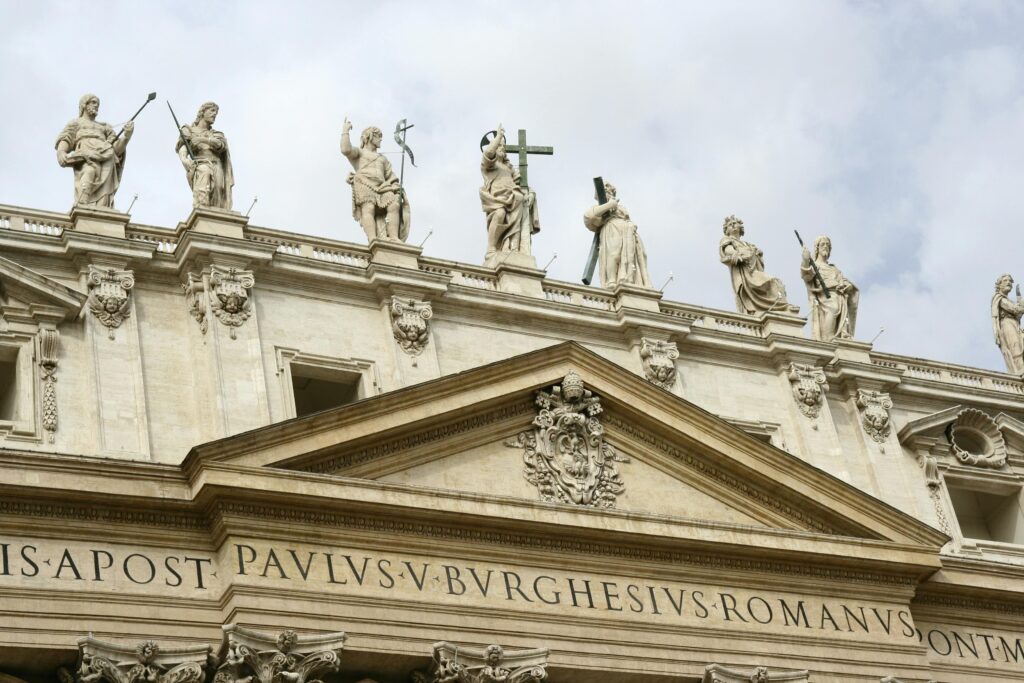
Merriam-Webster officially lists “requiescat in pace” as a Latin phrase, defining it as “may he/she rest in peace.” The dictionary notes its primary use on tombstones and provides the pronunciation as “reh-kwee-es-kaht in pah-chay.” This pronunciation differs significantly from how English speakers typically say “R.I.P.,” further highlighting the distinction between its modern usage and religious historical origins.
The Assassin’s Creed Effect

Interestingly, fans of the popular video game franchise Assassin’s Creed jumped into the conversation, being ahead of the curve on the origins of the phrase. In Assassin’s Creed II, the protagonist Ezio Auditore famously utters “requiescat in pace” after assassinating his targets. This Latin phrase became iconic among gamers, who learned its meaning through playing the game. One commenter on Knox’s video noted, “All the Assassin’s Creed gamers already knew what RIP stands for.” Another echoed this sentiment, stating, “Assassin’s Creed teaching Latin to a generation.”
Assassin’s Creed II is set within the Renaissance Italian era, where Latin was the prominent language in religious and formal contexts. Players speculated whether Ezio chose Latin intentionally as part of an ancient assassin tradition or simply because prayers during that era were commonly recited in Latin. Either way, the game inadvertently educated millions about the true origin of the RIP meaning.
The Correct Translation Debate

Linguistic purists will point out that the precise translation of “requiescat in pace” is not exactly “rest in peace” but rather “may he rest in peace” or “may she rest in peace.” The Latin verb “requiescat” appears in the subjunctive mood, expressing a wish or prayer rather than a command. This grammatical distinction transforms the phrase from a statement into an invocation. When we say “rest in peace” in English, the phrase inadvertently loses its religious sentiment.
The singular form “requiescat” addresses one deceased person, while “requiescant” serves as the plural form for multiple individuals. Latin syntax allows flexible word order, so variations like “in pace requiescat” carry the same meaning. These details matter to scholars and religious practitioners who value precision in sacred language. However, for everyday usage, the broader sentiment of wishing peace upon the deceased remains consistent across translations.

While RIP in its historical context holds significant cultural and religious reverence, its meaning has undergone a dramatic transformation in the age of social media. Social media platforms have adopted the abbreviation as a quick expression of condolence. We often see the hashtag #rip when a beloved public figure passes away as a way for fans to show their condolences. Users post tributes, share memories, and express sympathy using these letters.
However, some argue that its widespread usage has also diluted the phrase’s original solemnity. Some critics argue that casual social media posts lack the reverence of the original Latin prayer. The abbreviation now appears in contexts unrelated to actual death, sometimes used humorously to describe metaphorical endings or disappointments. Some social media users will use #rip maliciously, either to mock a deceased controversial figure or wishing ill upon other users.
Other Latin Phrases Hiding in Plain Sight

Most are aware that English is known as a “borrowed” language due to its etymology for many phrases and names for things originating from other languages. Some would say English is almost like the scrapbook of languages, composed of torn-out phrases and words, whole or in part. Yet it may still surprise some to discover there are other common abbreviations with hidden Latin origins. Many everyday terms can trace their origins back to ancient Rome, which even some of the most versed linguistic enthusiasts may be astonished to learn.
AM and PM

Contrary to our popular usage of AM and PM to determine the time of day, many are unaware of its Latin meaning. AM stands for “ante meridiem,” which is Latin for “before midday,” while PM means “post meridiem” or “after midday.” Some English speakers have created folk etymologies like “After Midnight” for AM or “Past Midday” for PM, but these interpretations came after the Latin originals were already established. The Romans used a 12-hour system which persists in our modern day timekeeping systems.
A.D.
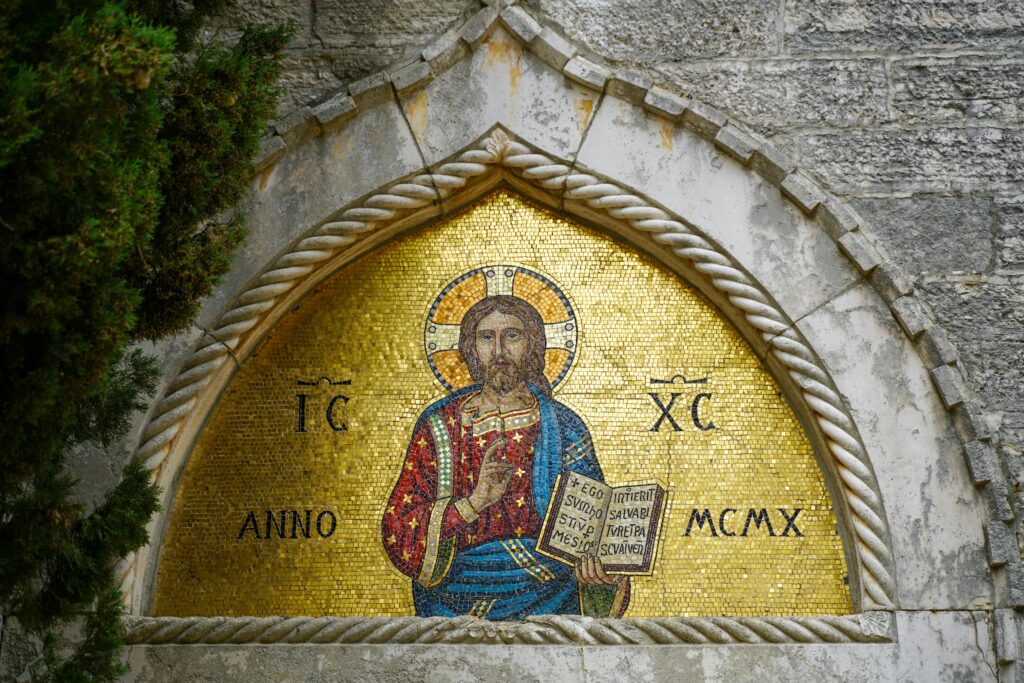
While A.D.’s meaning has been diminished to believe A.D. stands for “After Death,” referring to the years following Jesus Christ’s death. This misconception would create a problematic gap of approximately 33 years in our calendar system. The abbreviation actually represents “Anno Domini,” which is Latin for “in the year of our Lord.” A.D. counts years from Christ’s birth, not his death, which explains why A.D. 1 immediately follows 1 B.C. with no intervening gap.
SPQR

SPQR is an ancient Roman acronym that stands for “Senatus Populusque Romanus,” meaning “The Senate and People of Rome.” The phrase symbolized Roman governmental authority, appearing on monuments, coins, and military standards throughout the empire. SPQR remains visible throughout modern Rome, appearing on municipal infrastructure, manhole covers, and public buildings. Later generations created humorous reinterpretations, including the Italian joke “Sono Pazzi Questi Romani” meaning “Those Romans are crazy.”
Greek or Latin Of Origin

IHS, frequently seen on churches and religious artifacts, similarly confuses many observers. Some believe these letters stand for “Iesus Hominum Salvator,” Latin for “Jesus, Savior of Mankind.” Others suggest “In Hoc Signo” meaning “In This Sign.” The actual origin predates these Latin interpretations. IHS represents the first three letters of Jesus’s name in Greek: Ιησους (ΙΗΣΟΥΣ). The letters iota, eta, and sigma transliterate to I, H, and S in the Latin alphabet. The Latin explanations emerged later as Christians sought to assign meaning to already-existing symbols.
Other “English” Phrases That Are Morse Code

The famous distress signal , SOS, may be one of the most surprising examples of a backronym. Many people commonly claim SOS stands for “Save Our Souls” or “Save Our Ship.” However, SOS was never intended to become an acronym. German maritime authorities adopted this signal in 1905 purely because its Morse code pattern was simple and distinctive: three dots, three dashes and three dots. The memorable English phrases were invented afterward to fit the existing letters; however, SOS was given the meaning of an arbitrary word.
Read More: Why You Should Avoid Seat 11A on Your Next Flight – Here’s What You Didn’t Know
Language Preservation and Awareness

Understanding the true RIP meaning matters beyond mere trivia. Language carries cultural memory, connecting modern speakers to ancestors who shaped these expressions centuries ago. When we lose awareness of etymological origins, we risk severing these connections. The Latin roots of English vocabulary remind us that language never exists in isolation but rather flows through time, accumulating layers of meaning.
Educational awareness about Latin’s influence helps students appreciate the complexity of English. Approximately 60% of English vocabulary derives from Latin, either directly or through French. Learning these connections enriches vocabulary acquisition and improves comprehension of technical, scientific, and legal terminology that relies heavily on Latin roots. The RIP example demonstrates how even simple, everyday phrases contain hidden depths worth exploring.
Religious communities particularly benefit from understanding the sacred origins of “requiescat in pace.” The phrase represents centuries of Christian prayer tradition and carries theological weight that casual usage often obscures. Recognizing R.I.P. as an invocation rather than merely a statement transforms how mourners might approach its use. This knowledge invites more intentional, reverent engagement with language surrounding death and remembrance.
Conclusion

The two letters “RIP” carry far more history than most English speakers realize. From ancient Roman catacombs to medieval English churchyards to modern social media feeds, this phrase has journeyed through centuries while retaining its essential meaning. The fact that “requiescat in pace” and “rest in peace” share identical initials represents a remarkable linguistic coincidence that has confused generations into assuming English origins for Latin words.
Knox’s viral revelation serves as a reminder that familiar phrases often conceal fascinating histories. Whether carved into stone monuments or typed into smartphone screens, “RIP” connects us to a continuous tradition of honoring the dead that spans nearly two millennia. Understanding this heritage enriches our use of language and deepens our appreciation for how words travel through time. The next time you encounter those three letters, you’ll know they represent not just a wish but an ancient prayer: may they rest in peace.
Trending Products

Red Light Therapy for Body, 660nm 8...

M PAIN MANAGEMENT TECHNOLOGIES Red ...

Red Light Therapy for Body, Infrare...

Red Light Therapy Infrared Light Th...

Handheld Red Light Therapy with Sta...

Red Light Therapy Lamp 10-in-1 with...

Red Light Therapy for Face and Body...

Red Light Therapy Belt for Body, In...

Red Light Therapy for Shoulder Pain...
