
For years, Luke Taylor lived with a problem that kept returning, kept worsening, and kept being explained away. He was young, active, employed, and building a family life, so the reassurance probably sounded plausible at first. Headaches can come from many common causes, and most do not point to a brain tumor. Yet the harder truth sits inside stories like his. A symptom can look ordinary at the start, then turn dangerous when it changes pace, severity, or character. That is where this story becomes larger than one family’s crisis. Taylor, a civil engineer from Cheshire, spent about 10 years dealing with severe headaches before an MRI in 2025 revealed a haemangioblastoma in his brain. These tumors are noncancerous, but the Cleveland Clinic explains that they can still become dangerous because they may grow in the brain, spinal cord, or retina and press on nearby tissue.
The NHS also warns that headaches deserve medical review when they become different from usual headaches or keep getting worse over time. Around 13,000 people in the UK are diagnosed with a primary brain tumor each year, according to The Brain Tumor Charity, so the condition remains rare, but it is never trivial for the people facing it. Luke’s story, therefore, sits at the crossroads of two realities. Most recurring headaches are not brain tumor symptoms, and nobody should panic over every episode of pain. Yet progressive symptoms, vomiting, visual changes, balance problems, speech changes, or worsening morning headaches can signal rising pressure inside the skull and should not be brushed aside. The challenge for patients and doctors is not to treat every headache as a tumor. The challenge is to notice when an old label no longer fits the facts.
A Decade of Pain, Then a Sudden Collapse in Certainty
Luke Taylor’s account lands so hard because it began in such an ordinary way. He says he repeatedly sought medical help and was told he was healthy and dealing with migraines. For a long time, the explanation held. Then the symptoms changed. By July 2025, the headaches were becoming more intense, and he was being sick several times a day. In an interview with SWNS, “One day, I was fed up with my headaches – they were getting worse and worse – I wanted to cry with the pain.” That progression pushed his case out of the territory of familiar discomfort and into something more alarming. When the MRI finally came, it exposed a haemangioblastoma that had grown to the size of a golf ball. Doctors then told him that without emergency surgery, he might have had only days left to live.
Medical guidance helps explain why that turning point mattered. The NHS advises people to seek review if headaches feel different from usual headaches or are getting worse. The Brain Tumor Charity says headaches linked to brain tumors may become more frequent, more severe, worse in the morning, and worse with straining, coughing, or bending over. Cancer Research UK also notes that urgent referral may be considered when clinicians suspect a brain or central nervous system problem that is gradually worsening, including headaches with nausea and vomiting or headaches that wake someone from sleep. Those details do not mean a patient should jump to the worst conclusion. They do mean that change over time carries weight.
This is where Luke’s experience becomes painfully familiar to many families, even when their final diagnosis differs. Brain tumor symptoms often begin as symptoms that belong to countless benign conditions, too. Headache, nausea, tiredness, blurred vision, dizziness, and poor concentration can overlap with migraine, viral illness, exhaustion, medication effects, or stress. That overlap creates room for delay, especially in younger adults who do not fit an obvious high-risk image. A 2007 primary care study led by Professor Willie Hamilton found that although headache was associated with brain tumors, the risk of an underlying tumor remained very small in general practice records. A later 2019 study led by Fiona Walter found that people often had “multiple subtle changes and frequent GP visits” before diagnosis. Those findings do not prove negligence in any single case.
They show why diagnosis can become complicated even when symptoms are real and persistent. Still, complexity should never become an excuse for drift. A label such as migraine should be re-examined when the clinical picture changes. Luke’s story illustrates that point with brutal clarity. What seemed stable became progressive, and what seemed manageable became intolerable. Furthermore, what seemed familiar became urgent. In situations like that, the most important question is often not whether the first explanation was reasonable years earlier. The real question is whether it remained reasonable after the symptoms intensified. Luke’s case suggests that by the time he reached imaging, the answer had already changed. It also shows how dangerous slow escalation becomes when warning signs keep shifting.
What a Haemangioblastoma Is, and Why “Benign” Can Mislead People
The word “tumor” frightens people immediately, yet the word “benign” often lulls them too quickly. A haemangioblastoma is classed as a noncancerous tumor, and that description is medically accurate. Cleveland Clinic says it develops in the brain, spinal cord, or retina and arises from blood vessel tissue. However, the same source warns that it can still disrupt daily life and cause serious complications without treatment. In plain terms, a tumor inside the skull does not need to be malignant to become life-threatening. The skull offers no spare room. Once something grows there, pressure rises, nearby tissue gets compressed, and symptoms can escalate fast. That is why Luke’s diagnosis became an emergency. His tumor was reportedly the size of a golf ball, which meant location and pressure mattered as much as the pathology label.
Cleveland Clinic states that haemangioblastomas can affect balance, vision, and sensation, while NHS guidance on benign brain tumors lists headaches, nausea, vomiting, dizziness, eyesight changes, movement problems, speech problems, and balance issues among possible symptoms. Those symptom lists do not exist to frighten healthy people. They exist because the brain reacts to compression in predictable ways. A benign tumor inside the brain can interfere with vital functions simply by occupying space. In that sense, “noncancerous” describes the tumor’s biology, not its potential seriousness. Haemangioblastomas are also important because some occur on their own, while others are linked to von Hippel-Lindau disease, a hereditary condition that can cause multiple tumors and cysts. Cleveland Clinic notes that haemangioblastomas are the most common noncancerous tumors associated with that syndrome.
Not every patient with a haemangioblastoma has von Hippel-Lindau disease, yet the connection matters because it may affect wider assessment, family history, and long-term follow-up. Stories in popular media often stop at the dramatic moment of surgery. Real care rarely ends there. Once doctors identify the tumor type, they still need to think about recurrence, rehabilitation, surveillance imaging, and any broader syndrome that may sit behind the diagnosis. Luke’s case, therefore, exposes a problem in everyday language. People hear “benign” and imagine “safe.” Doctors do not mean that. They mean the cells are not cancer cells. A haemangioblastoma can bleed, block fluid pathways, compress structures, and trigger neurological decline if it grows in a critical area.
Cleveland Clinic puts it plainly when it says these tumors can “cause issues if they grow large enough to press on nearby tissues.” That short sentence explains why a young father could move from years of headaches to an emergency operation within one scan result. The pathology label sounded less threatening than the reality inside his skull. It also highlights why medical language must be understood in context, not taken at face value, because terms like benign can create false reassurance when location, size, and pressure ultimately determine the real level of danger inside the brain. It also underscores how critical timely imaging becomes when symptoms evolve beyond expectation, because early detection can dramatically change outcomes, reduce surgical risk, and prevent the kind of sudden life-threatening deterioration seen in cases like this.
The Scan That Changed Everything, and the Red Flags People Miss
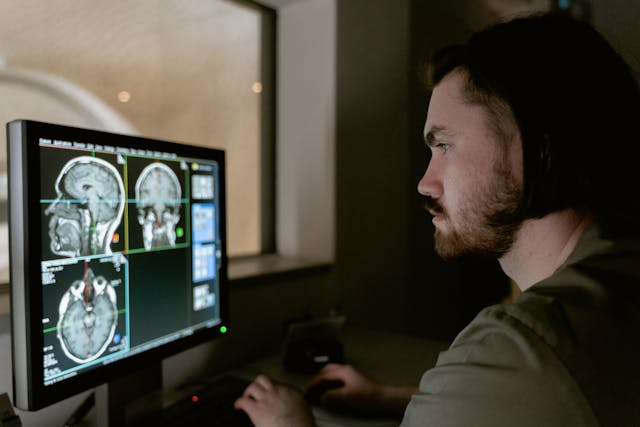
Luke said the diagnosis sent him inward at once. “I thought I was going to die,” he recalled after doctors told him he might have only days left without emergency surgery. That response makes complete sense. Patients often spend years fearing they are being ignored, then face the opposite shock in a single appointment. One day, they are being reassured. The next day, they hear words like brain tumor, emergency surgery, and life-threatening pressure. That violent change in perspective often breaks people long before treatment begins. A brain scan does not simply reveal a mass. It can also demolish the emotional scaffolding that helped someone cope during the uncertain years. MRI and CT scans play a central role in suspected brain tumor diagnosis because symptoms alone often overlap with common disorders.
NICE guidance on brain tumors in adults covers the diagnosis and management of primary brain tumors and brain metastases, while NICE suspected cancer guidance supports primary care decisions about investigation and referral. Cancer Research UK says urgent referral for brain imaging may be considered when clinicians suspect a worsening problem involving the brain or central nervous system. The NHS also tells patients to seek assessment for headaches that are different from usual or keep worsening. Those recommendations are not meant to send every person with a headache into the scanner. They exist because imaging becomes decisive once the wider clinical picture starts to change. The difficulty is that people often normalize a slow deterioration. They adapt to pain, cancel plans, and sleep more.
They avoid bright light, stop driving at night, work around nausea, and tell themselves stress is making everything worse. Families do it too. Everyone hopes the latest flare will pass. Yet the warning signs listed by charities and health services share a theme. The headache does not stay the same. It grows more frequent, more severe, or more intrusive. It may arrive with vomiting, visual disturbance, imbalance, confusion, or speech change. The Brain Tumor Charity says headaches linked to brain tumors may worsen in the morning and may not improve with painkillers. That is the kind of practical detail people remember when trying to decide whether a symptom has crossed a line.
No single article can settle whether Luke should have been scanned earlier, because that would require full medical records, timelines, examinations, and clinical reasoning. Yet his case clearly supports a broader lesson. Persistent symptoms deserve fresh thinking when their pattern changes. A past migraine label should not become a permanent shield against further investigation. Patients also need permission to return, ask again, and describe the change in plain terms. “It is worse” can be too vague in a rushed appointment. “I am vomiting several times a day now” is harder to dismiss. “The pain wakes me.” “My vision blurs.” “I cannot function at work.” Those details move a complaint out of the abstract and into the clinical territory where decisions change. It also reinforces how careful monitoring over time can save lives.
Surgery, Complications, and the Long Work of Getting a Life Back
Luke underwent a 9-hour operation at Walton Hospital in Liverpool, and the immediate aftermath was terrifying. According to his partner, Nia Jones, he was slurring his words, behaving erratically, and could not open his eyes. Then came another blow. Doctors told the family he had suffered a bleed on the brain and needed emergency surgery again. Popular stories often treat surgery as the climax, yet anyone who has lived through neurosurgery knows the operation may only open the hardest chapter. A technically successful procedure can still leave swelling, bleeding, weakness, speech problems, visual difficulty, or prolonged exhaustion in its wake. That is why rehabilitation matters so much. The Walton Centre states that rehabilitation patients may receive input from physiotherapy, occupational therapy, speech and language therapy, dietetics, and psychology according to their needs.
Nia’s description of Luke’s recovery fits that reality with painful precision. She said he had to relearn how to walk, speak again, and use his hands. He could not dress himself or cut up his own food. Those details reveal what brain surgery recovery can look like outside the operating theatre. Progress is often slow, repetitive, and humbling. A person may survive the emergency and still face weeks or months of rebuilding basic function. The Brain Tumor Charity also notes that going home after brain tumor surgery can involve waiting for results, managing fatigue, dealing with uncertainty, and staying in contact with specialist teams. Even when a tumor is fully removed, recovery is rarely linear. Some patients improve steadily. Others plateau, then improve later. Many live with fear before follow-up imaging confirms whether surgery has achieved complete removal.
Luke described his relief in November 2025 when doctors told him the surgery had succeeded. “I cried my eyes out,” he said. That line carries more weight after everything that came before it. Relief, in cases like his, is not simple happiness. It is shock, grief, gratitude, exhaustion, and disbelief arriving together. There is also a wider truth here about family burden. Nia’s words make that clear. “Every day was frustrating, exhausting, and emotional,” she said, and those are not dramatic embellishments. They are practical descriptions of caregiving after neurological injury. Someone has to help with food, dressing, transport, medications, appointments, morale, and fear. Brain tumors strike patients directly, but they also rearrange households.
Jobs, childcare, income, intimacy, and future plans all come under strain. When the patient is a young parent, every part of that strain sharpens. Recovery becomes about survival first, then function, then identity. The work can be heroic, but it is also very ordinary. It happens meal by meal, step by step, sentence by sentence. It also reveals how recovery rarely follows a straight path, because patients often face setbacks, emotional strain, and prolonged rehabilitation before regaining independence, while families must adapt to new routines, responsibilities, and uncertainties that reshape daily life long after the hospital stay ends. Many also carry lingering fear into follow-up scans, wondering whether stability will hold and whether ordinary life can ever feel fully secure again.
Why His Story Should Change How People Talk About Headaches
Luke, Nia, and their relatives now plan to hike 3 Yorkshire peaks in one day on July 18, 2026, to raise money for The Brain Tumor Charity. That response carries its own message. Families often emerge from medical crises with a powerful urge to make the suffering useful. They cannot undo the missed years, the emergency surgery, or the months of recovery. They can, however, try to shorten the road for somebody else. The Brain Tumor Charity says faster diagnosis is vital, and its staff works with healthcare professionals to improve recognition of symptoms and referral confidence. That mission connects directly to Luke’s experience because awareness is not only about public fear. It is also about clinical confidence, repeated review, and knowing when a symptom history has changed enough to deserve imaging.
Public discussion about headaches needs more precision. Many online spaces swing between two extremes. One side dismisses headaches as stress, screens, weather, or dehydration. The other side treats every severe headache as a hidden catastrophe. Neither approach helps. The NHS and The Brain Tumor Charity both present a more useful middle ground. Most headaches are not caused by brain tumors. Yet headaches that become different, progressive, and tied to other neurological symptoms deserve proper assessment. That is the message people can act on without spiralling into panic. It gives weight to change, not just to pain. Luke’s case also highlights how age can mislead. A 26-year-old father is not the picture many people hold in mind when they imagine a brain tumor patient. Yet brain tumors do not obey stereotypes.
Cancer Research UK reports around 13,000 new cases of brain, other CNS, and intracranial tumors each year in the UK, while The Brain Tumor Charity notes the severe toll these diseases still take on younger people. Even when a tumor is benign, the consequences can be profound. That is why stories like Luke’s should not be consumed only as shock pieces. They should sharpen how patients describe worsening symptoms and how clinicians respond when an old diagnosis stops fitting a new reality. In the end, the hardest part of this story may be its simplicity. A young man had headaches for years. They worsened. He became sick several times a day.
A scan finally revealed a dangerous brain tumor. Surgeons operated for hours. Complications followed. Recovery demanded immense effort. He survived. The facts feel stark because they need no embellishment. Luke and his family now want others to know there can be “light at the end of the tunnel.” That hope deserves space. The warning that came before it deserves space too. Headaches do not always stay ordinary, and when they change course, doctors and patients should not wait until disaster makes the case undeniable. It also calls for a wider cultural shift, where doctors take persistent symptoms seriously without defaulting to panic, patients communicate more clearly, and medical teams document, revisit, and act on changes in pattern before those changes reach a critical stage.
Early Signs of Brain Tumors
The earliest signs of brain tumors rarely arrive with dramatic clarity. More often, common-looking symptoms hide the problem in plain sight. A person may blame stress, poor sleep, eye strain, dehydration, or a history of migraines. That confusion often delays diagnosis. The NHS says brain tumor symptoms depend on the exact area the tumor affects, but common signs include headaches, seizures, nausea, vomiting, drowsiness, mental or behavioural changes, and problems with vision or speech. The Brain Tumor Charity also lists changes in balance, personality, memory, or coordination among early warning signs in adults. Headaches usually draw the most attention, but on their own, they reveal the least. Most headaches do not come from brain tumors, and The Brain Tumor Charity makes that clear. The pattern matters far more.
A headache that feels different from previous headaches, comes more often, grows more severe, or worsens in the morning deserves closer attention. The charity also notes that some tumor-related headaches may not respond to standard painkillers and may worsen when a person strains, coughs, or bends over. NHS guidance also warns people to seek help if headaches keep returning, refuse to settle, or continue to worsen. Other early clues may appear alongside the headache instead of within it. Persistent nausea, repeated vomiting, blurred vision, flashing lights, loss of part of the visual field, or sudden balance problems should never be brushed aside as random bad days. The NHS says people should seek urgent medical advice when visual changes, vomiting, or other ongoing symptoms continue, while The Brain Tumor Charity lists vision changes, nausea, and dizziness among the warning signs adults most often report.
Read More: Cheap Supplements Show Early Promise Against Aggressive Brain Tumors
These symptoms matter because a growing tumor can raise pressure inside the skull or disrupt the part of the brain that controls sight, balance, movement, language, or behaviour. Seizures can also mark an early sign, sometimes in people with no previous epilepsy history. The NHS includes seizures among the common symptoms of brain tumors, and The Brain Tumor Charity says they often drive people to seek medical help for the first time. Changes in speech, unusual confusion, personality shifts, memory problems, weakness on one side, or a growing sense of clumsiness can also point toward a neurological problem instead of an ordinary headache disorder.
The American Brain Tumor Association also lists severe headaches, seizures, memory and language problems, personality changes, coordination problems, and vision changes among the most common symptoms at presentation. The key point is simple. People should not panic over every symptom, but they should not normalize a steady decline either. When to see a doctor for headaches becomes an urgent question when the pain changes character, starts waking someone from sleep, appears with vomiting or visual symptoms, or arrives with seizures, weakness, confusion, or behaviour changes. The NHS says people should seek urgent advice if headaches do not go away, continue to worsen, or feel worse in the morning, especially when other symptoms persist. Early assessment does not confirm a tumor, but it gives doctors a chance to investigate neurological symptoms and decide whether the patient needs brain imaging before the situation turns far more dangerous.
If you’d like to donate to Nia’s JustGiving, visit: https://www.justgiving.com/page/lukesstory
Disclaimer: This information is not intended to be a substitute for professional medical advice, diagnosis or treatment and is for information only. Always seek the advice of your physician or another qualified health provider with any questions about your medical condition and/or current medication. Do not disregard professional medical advice or delay seeking advice or treatment because of something you have read here.
A.I. Disclaimer: This article was created with AI assistance and edited by a human for accuracy and clarity.
Read More: 7-Year-Old Boy Dies from Brain Complication Linked to Highly Contagious Childhood Disease
Trending Products

Red Light Therapy for Body, 660nm 8...

M PAIN MANAGEMENT TECHNOLOGIES Red ...

Red Light Therapy for Body, Infrare...

Red Light Therapy Infrared Light Th...

Handheld Red Light Therapy with Sta...

Red Light Therapy Lamp 10-in-1 with...

Red Light Therapy for Face and Body...

Red Light Therapy Belt for Body, In...

Red Light Therapy for Shoulder Pain...
