
Costco’s 4.99 rotisserie chicken is facing fresh legal trouble. A proposed class action claims shoppers overpaid for a product sold as safe and trustworthy. The filing says Costco did not disclose an alleged Salmonella control problem in its supply chain. Reuters reported the complaint points to a Nebraska poultry plant and to USDA safety benchmarks. It asks the court to treat the issue as consumer deception. It is not framed as a single food poisoning event. The headline has a familiar rhythm, yet the stakes are real. Rotisserie chicken is a routine purchase for many households. The case tests what shoppers can reasonably expect at checkout.
The phrase “Costco rotisserie chicken lawsuit” now covers more than one dispute. Reuters reported a separate case in California that challenges “no preservatives” marketing language. The new filing focuses on Salmonella risk and disclosure. Reuters also reported Costco said it sold more than 157 million rotisserie chickens worldwide in 2025. That scale magnifies any claim about value and trust. It also raises a simple consumer question. What information about safety control should be on the table before money changes hands? For now, the courts will decide what disclosure duty attaches to a bird.
What the new Costco rotisserie chicken lawsuit claims
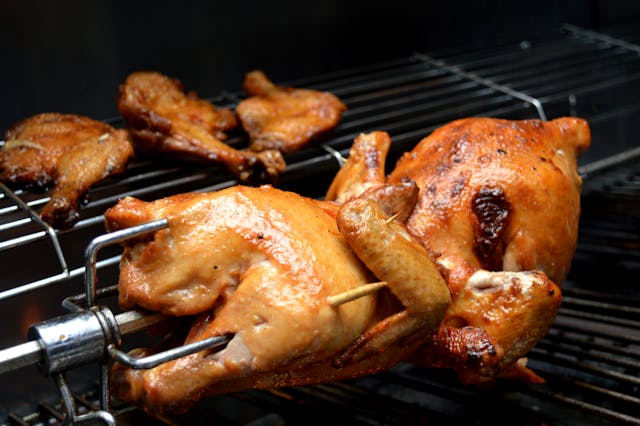
The lawsuit claims shoppers overpaid because Costco allegedly failed to disclose a Salmonella control risk tied to a Nebraska plant. Image Credit: Pexels
The new Costco rotisserie chicken lawsuit described by Reuters was filed in Seattle federal court. The named plaintiff is Lisa Taylor of Affton, Missouri. She said she routinely bought 1 or 2 rotisserie chickens a month at Costco warehouses near St. Louis. Her case focuses on economic harm. She argues shoppers paid for a product presented as safe, controlled, and honestly disclosed. She says Costco failed to disclose an alleged Salmonella contamination risk. Reuters reported she seeks compensatory damages and triple damages. The request covers people who bought Kirkland Signature rotisserie chicken. It also covers some raw chicken parts. The time window begins on January 1, 2019. She also claims Costco violated Washington consumer protection law.
The complaint frames safety as part of the bargain at checkout. It says shoppers relied on an implied promise that the chicken was safe to eat. Costco was not available for comment in the Reuters report. The poultry plant itself was not named as a defendant. Reuters said the filing cites a study tied to Farm Forward, an animal rights nonprofit. The complaint ties its claims to a processing facility in Fremont, Nebraska. Reuters wrote that the filing says the plant“consistently” fails U.S. Department of Agriculture safety standards. The lawsuit alleges more than 9.8% of whole chickens tested positive for Salmonella. It also alleges 15.4% of chicken parts tested positive. The complaint treats those numbers as evidence of weak control over time.
It argues Costco should have told shoppers about that alleged risk. The filing uses direct language that is built for jurors. The complaint includes this line: “Costco’s failure to control Salmonella in its chicken supply is not a harmless technicality”. Plaintiffs use that line to argue materiality. Materiality asks whether a reasonable shopper would care. The plaintiff also argues that silence can mislead. She claims she would have paid less with full information. She says she may not have bought the chicken at all. Those claims set up the core fight in this Costco rotisserie chicken lawsuit. Costco is likely to argue that Salmonella is a known poultry hazard. It may also be argued that the chicken is cooked and ready to eat. The plaintiff will argue that the dispute is about specific control data. Early motions will test whether the omission is actionable.
They will also test whether she can represent a broad class. If the case moves forward, discovery will matter. Discovery can cover testing records, supplier controls, and internal discussions. It can also cover what Costco knew and when. The judge may also ask how a shopper would have learned the information at checkout. The answer can shape what counts as a realistic disclosure. For now, the complaint is an allegation. The court will decide whether it proceeds. The case also raises a practical issue for proof. Many shoppers do not keep receipts for cooked chicken. Plaintiffs may rely on membership records. Costco may challenge how the class is defined. Those fights can shape the case later.
The USDA testing standards behind the allegations
The lawsuit leans on a technical system that regulators use to judge poultry plants. FSIS sets Salmonella performance standards for specific raw poultry categories. Inspectors take samples across a defined set, then compare results with benchmarks. FSIS uses what it calls a “moving window approach” for Salmonella sampling. The agency explains that the window tracks results across time, not one day. FSIS also uses categorization to sort establishments by recent performance. Public documents describe Category 1 as the strongest control group. They describe weaker categories for higher positivity rates. This system is built to push process control forward. It is not built to guarantee a bacteria-free bird. Even so, it creates measurable signals about a plant’s controls. Those signals matter for buyers with large supply chains.
They can also matter in a consumer case when a plaintiff claims a retailer hid a known weakness. Most shoppers never see these categories. They see a hot case, a low price, and a quick dinner plan. FSIS directives tell inspectors how to collect rinses and product samples. The lab reports a presence or absence result for Salmonella. Establishments can be tested again if results trigger concern. FSIS can also publish establishment performance summaries. That public posting creates accountability, even if consumers rarely read it. The complaint described by Reuters says a Fremont, Nebraska, facility repeatedly missed USDA benchmarks. It alleges that more than 9.8% of whole chickens tested positive for Salmonella. It also alleges 15.4% of chicken parts tested positive.
FSIS has used 9.8% as a performance standard for broiler carcasses in its published materials. The complaint treats the figures as proof of repeated control failures. A positive result in plant monitoring does not automatically predict illness. People get sick when live bacteria reach the mouth and multiply. Cooking, storage, and cross-contact can change that risk. Still, regulators track these numbers because Salmonella remains common. The CDC lists typical symptoms as diarrhea, fever, and stomach cramps. It also states, “Symptoms usually start 6 hours to 6 days after infection”. That delay makes consumer guesswork unreliable. It also increases the value of upstream prevention. Plaintiffs in this Costco rotisserie chicken lawsuit use the standards as a proxy for safety culture. They argue that a shopper would value that information at checkout.
Costco will likely argue that federal oversight already governs controls. It may also be argued that the rotisserie product is cooked. The court will weigh those points against disclosure duties. It will also weigh how a reasonable shopper interprets safety signals on a store shelf. If the case proceeds, experts may debate what the plant data means. They may also debate what disclosure could look like in a warehouse store. A retailer can also respond without changing the label. It can shift suppliers, change specifications, or require corrective plans. Those steps are hard for outsiders to observe. That is why plaintiffs often focus on what shoppers were told. They argue that omission itself created the financial harm. Courts will decide.
What “Salmonella risk” means for cooked rotisserie chicken at home
Rotisserie chicken is sold as cooked food, yet safety still depends on what happens next. A cooked bird can become risky if it is handled like raw poultry. Cross-contact can move bacteria from hands and surfaces to ready foods. It can happen when people carve chicken on a used board. It can happen when a lid touches a counter, then touches food. Time and temperature also matter after purchase. Hot meat left on a counter can cool through the danger zone slowly. Bacteria introduced later can multiply during that cooling. Public agencies keep their guidance direct because consumers need clear rules. FSIS states, “FSIS recommends cooking whole chicken to a safe minimum internal temperature of 165°F”. That number also applies when reheating leftovers. Many people buy the chicken and eat it in the car or at a picnic table.
That makes clean hands and utensils harder to manage. The safest move is to keep the chicken covered until serving. Use clean tongs and avoid reusing a utensil that touched raw food earlier. Leftovers are another weak spot. Slice the meat, then cool it fast in the fridge. FSIS warns that bacteria grow fastest in the temperature danger zone. A shallow container cools faster than a deep pot. When reheating, aim for even heat through the thickest pieces. A thermometer gives certainty when microwaves leave cold pockets. The Costco rotisserie chicken lawsuit does not require proof that a shopper became sick. It claims shoppers paid for trust that was not fully earned. Still, it helps to keep health facts straight because headlines can inflame fear. The CDC explains the usual course of Salmonella infection.
It says symptoms can include watery diarrhea, stomach cramps, and fever. It also says, “Symptoms usually last 4 to 7 days.” Many healthy adults recover without treatment. Some people can develop severe dehydration or bloodstream infection. Risk rises in young children and older adults. Pregnant people and immunocompromised patients can also face complications. These realities explain why regulators track Salmonella control in poultry plants. They also explain why kitchen habits still matter. Refrigerate leftovers promptly in shallow containers. Keep cutting boards clean and dry between uses. Wash your hands after touching packaging and drippings. If a household follows those steps, it reduces risk across any supply chain controversy.
If the lawsuit leads to clearer disclosures, shoppers may buy with more information. Until then, safety comes from steady routines at home. The lawsuit also highlights the gap between plant data and consumer understanding. Many shoppers hear “Salmonella” and assume the product is poisonous. Plant sampling data is more nuanced, and it is designed for trend tracking. Even so, disclosure disputes can change behavior in real life. Some shoppers may switch brands. Others may demand clearer statements on packaging. Courts can also order label changes without a finding of wrongdoing. Whatever happens, food safety agencies still recommend cooking poultry thoroughly and handling it with care. A calm approach, guided by official advice, protects families during noisy legal fights.
What happens next in court, and why the outcome could affect labels
Class actions can change a company’s messaging long before a trial. Courts first test whether a complaint states a plausible claim. If it survives, the plaintiff must seek class certification. Certification requires addressing common issues across shoppers. Costco can argue that shoppers bought the chicken for different reasons. It can also be argued that they relied on different information. Plaintiffs try to show that the same omission affected everyone the same way. In this Costco rotisserie chicken lawsuit, the alleged omission is a Salmonella control risk. That framing is designed to be uniform across buyers. The case will likely depend on economic experts. They may estimate how much shoppers overpaid. Judges also examine injury and reliance at the class stage. Many states require proof of actual financial injury.
Washington’s statute allows a court to “increase the award of damages up to” three times. The law also caps the increased award at 25,000. Plaintiffs still need a method to show actual damages first. That is where price premium models become central. They may use market data and surveys to do it. Costco may respond with its own experts. Those experts can argue that there was no measurable premium. They can also argue that shoppers value price and convenience more than plant metrics. Reuters described the 4.99 rotisserie chicken as a long-running “loss-leader” used to draw shoppers into stores. That context complicates any overpayment theory. A product priced as a traffic driver may have limited room for a price premium. Still, a premium can exist in trust, not margin. Reuters also reported a second proposed class action filed in San Diego.
Read More: Why You Should Avoid Buying Kirkland Ground Beef at Costco
That suit alleged Costco advertised “no preservatives” even though the chicken contained carrageenan and sodium phosphate. Parallel litigation can create reputational pressure. It can also push brands to adjust wording and labels. The Salmonella case is also linked to Farm Forward, an animal rights nonprofit. Reuters quoted its mission as “end factory farming by changing farming, changing policy”. That quote signals a wider agenda behind the filing. Courts will not decide animal agriculture policy in this case. They will decide consumer law elements, evidence, and remedies. If the class is certified, the case could cover purchases back to 2019. If it is not certified, the case could shrink to one shopper’s claim.
Either path can still influence how retailers talk about safety. For shoppers, the practical move is simple. Follow official cooking and storage guidance, and watch for court updates. For Costco, the pressure point is also simple. It must show strong control and communicate in plain words. Certification also affects discovery costs for both sides. A certified class can justify broader document requests. It can also invite appeals and delay. Those steps shape leverage. Shoppers should watch filings for concrete facts.
A.I. Disclaimer: This article was created with AI assistance and edited by a human for accuracy and clarity.
Read More: What Costco Doesn’t Want You to Know About Its $4.99 Chicken
Trending Products

Red Light Therapy for Body, 660nm 8...

M PAIN MANAGEMENT TECHNOLOGIES Red ...

Red Light Therapy for Body, Infrare...

Red Light Therapy Infrared Light Th...

Handheld Red Light Therapy with Sta...

Red Light Therapy Lamp 10-in-1 with...

Red Light Therapy for Face and Body...

Red Light Therapy Belt for Body, In...

Red Light Therapy for Shoulder Pain...
