
Liverpool Hospital in south-west Sydney has opened a new kind of treatment space, where doctors can see a tumour clearly and treat it in the same moment. The technique is called MRI-guided cryoablation, also known as cancer ablation therapy. Instead of a large incision, clinicians guide a slim probe through the skin and into the target, using live MRI images to confirm position and protect nearby structures. Once the probe sits where it needs to be, it cools fast and forms a controlled “ice ball” that freezes the abnormal tissue from the inside out.
Because MRI shows soft tissue in sharp detail, the team can watch the freeze zone as it expands and adjust the plan before it reaches nerves, bowel, or vital blood vessels. That live feedback can mean less collateral damage, less post-procedure pain, and a shorter recovery for carefully selected patients. The National Cancer Institute explains the core idea clearly: cryosurgery “uses extreme cold produced by liquid nitrogen or argon gas to destroy cancer cells.”
What MRI-guided cryoablation is doing differently
MRI-guided cryoablation combines two established ideas into one workflow. Cryoablation provides the destructive force, and MRI provides the map. Clinicians insert one or more probes through a small skin entry point. The probe tip cools rapidly, often using argon gas or liquid nitrogen systems. Nearby tissue freezes, blood flow slows, and cells die inside the planned zone. The National Cancer Institute describes cryosurgery, stating, “uses extreme cold produced by liquid nitrogen or argon gas to destroy cancer cells”. That action suits lesions that cause pain or pressure. It can also suit patients who face high surgical risk. Most systems use a sequence of freeze and thaw steps, because thawing can deepen cellular injury. The operator selects probe size and number based on tumour geometry. They also plan an access path that avoids bone, bowel loops, and major vessels.
Local anaesthetic and light sedation often support the procedure, depending on location and patient factors. Because the entry track is small, many patients avoid large scars and extensive muscle disruption. Yet the team still treats the case like surgery, with careful sterility and monitoring. MRI also guides the needle angle in tight spaces. That helps when bone or hardware limits access. Clear planning can reduce repeat procedures later. MRI changes the precision layer in a practical way. It shows soft tissue boundaries and vulnerable anatomy with strong contrast. Operators can see the target and track the freeze zone as it expands. In published work on MRI-guided renal cryoablation, researchers monitored ice ball formation repeatedly during freezing cycles. Technical descriptions describe scans taken during each freeze. Clinicians watch the ice ball grow near critical structures.
This repeated imaging creates a feedback loop. Teams plan a trajectory, confirm probe placement, and then start a freeze. They keep imaging, so they can pause, reposition, or add another probe when coverage looks thin. MRI also avoids ionising radiation during guidance, which can matter for staff and for patients with heavy imaging histories. A recent review in the journal Cancers notes that “real-time MRI enables monitoring of the progress of ablation”. MRI can also depict the ice ball clearly. The value is not speed. The value is controlled margins when millimetres protect nerves, bowel, bile ducts, or ureters. MRI guidance can also support thermoprotection techniques. Teams may use sterile fluid to separate organs, creating space as the ice grows.
They may monitor skin temperature when targets sit near the surface. MRI-compatible equipment is essential, so centres invest in specialised probes and patient monitoring tools. Procedure time can be longer than some ultrasound-guided cases. Imaging and positioning must stay precise throughout. Even so, clear anatomy can justify extra time when the stakes are high. Teams document margins before removing probes at the end. MRI guidance also helps when a tumour sits near blood vessels. Flow can carry heat into tissue, which affects margins. Clinicians can adapt probe placement and timing mid-procedure. Afterward, they confirm the ablation zone on imaging and plan surveillance. That follow-up matters for early detection of residual enhancement or recurrence.
Freezing tumours can also mean relieving pain
Many headlines focus on cancer, yet pain relief often drives ablation decisions. Tumours in bone or near the spine can cause severe pain through nerve irritation and mechanical pressure. When a small lesion presses on a sensitive area, a patient may face escalating medicines or major surgery. MRI-guided cryoablation offers another option for selected cases, including metastatic or benign lesions that cause symptoms. MRI shows the spinal canal and nerve roots clearly. Clinicians shape the ice ball away from structures that control movement and sensation. Clinicians can also see the ice ball itself on MRI, which helps them judge boundaries as freezing progresses. That visibility supports careful margin control in spaces where swelling can worsen symptoms. Cold can temporarily numb local nerves during the freeze, which may ease intraprocedural discomfort. Teams still use pain control and careful positioning.
After treatment, swelling can happen, so doctors watch neurological signs closely. In palliative cases, the goal can be comfort, not cure, and the plan can align with oncology care. Spine targets show why imaging guidance matters. Physics World reported MRI-guided cryoablation can destroy tumours that compress the spinal cord. It can also reduce a patient’s risk of paralysis. The operator balances tumour control with immediate neurological safety, so planning is meticulous. Liverpool Hospital’s early public story reflects this pain-first reality. 9News described 64-year-old Josephine Cordina and her severe pain. Doctors linked it to a 9 millimetre tumour pressing on her spine. She chose freezing treatment over complex spinal surgery. She said, “The next day I had no pain, it was all gone, and I’m back to normal.” Individual stories cannot predict every outcome. Yet they show what can happen when pain has one treatable focus.
Pain relief also connects to recovery. Open surgery can involve large incisions and long observation. Ablation through a percutaneous track can reduce those burdens, so many patients mobilise sooner. Some return home the same day, depending on anatomy and monitoring needs. Clinicians still arrange follow-up scans and symptom checks because pain can recur if the disease progresses. Cryoablation also does not replace radiotherapy or systemic treatment when cancer is widespread. Even so, MRI-guided cryoablation can deliver targeted symptom relief. It can also support local control for selected patients. Some centres combine ablation with stabilisation steps when the bone is weak, guided by imaging.
The decision depends on fracture risk and symptoms. Clinicians also screen for infection and bleeding risk before scheduling. If access is unsafe, they may recommend other approaches. The patient should hear clear expectations about pain timelines. Relief can be fast or gradual. Good follow-up also tracks function, since less pain only helps if walking and sleep improve. Some centres coordinate ablation timing with radiotherapy so swelling control and pain relief work together. Some patients also report better sleep within days, once pain stops waking them. That can speed up walking and appetite, which supports recovery. Clinicians may still recommend physiotherapy to rebuild confidence in movement. If pain medicines caused side effects before, dose reductions can follow. Follow-up calls often track function, not only pain scores.
Safety, limits, and what patients should ask
Minimally invasive does not mean risk-free, so safety conversations stay central. Cryoablation can injure nearby structures if the ice ball extends beyond the planned margin. That includes nerves, bowel, bile ducts, ureters, or skin. Bleeding and infection remain possible with any probe-based procedure. Teams manage these risks with imaging review, careful access planning, sterile technique, and post-procedure observation. MRI guidance supports safety by showing soft tissue boundaries and the evolving freeze zone. Even so, operator experience and patient selection still shape outcomes. The National Cancer Institute stresses that cryosurgery is a local treatment, directed to one body area. That limits its role when the disease has spread widely. MRI also helps clinicians spot early warning signs, such as unexpected ice spread toward a nerve root.
When risk rises, they can stop the freeze and allow thawing. They may also inject sterile fluid to separate the bowel from the target, creating a safer buffer. For skin-adjacent lesions, teams protect the surface with warming pads and frequent checks. Some patients can feel discomfort as tissue freezes, so clinicians adjust sedation and analgesia in real time. Afterward, bruising and temporary numbness can occur along the probe track. Serious complications are uncommon in experienced centres, yet they can include nerve injury or damage to an organ. A clear consent discussion should match the exact tumour location. Blood thinners require a tailored plan before treatment starts. Patients can improve decision quality by asking concrete questions. They can ask the team to state the goal in plain terms. They can ask why MRI guidance fits their anatomy, and what alternatives exist.
They can ask how clinicians protect nerves and organs during freezing. They can ask how the team monitors the ice margin in real time. They can ask about expected recovery time and planned follow-up imaging. It also helps to understand where evidence is strong and where it is still developing. The American Cancer Society notes, “doctors know much less about the long-term effectiveness of cryotherapy.” That caution can apply to other cancers. It depends on size and location. A practical advantage of cryoablation is visibility. RSNA press material states this. “During the initial, eight-minute freeze cycle, an ice ball forms around the tumor, killing the cancer.” Seeing the zone helps clinicians aim for complete coverage. Safety still requires honest limits and clear follow-up plans.
Follow-up often includes an MRI or CT scan at set intervals to confirm the ablation zone. If enhancement persists, clinicians may repeat treatment or change strategy. Patients should ask who reviews images and how quickly results return. They should also ask whether a biopsy confirmed the diagnosis before ablation in their case. Ask which specialists will manage complications after discharge today. They should also ask what symptoms need urgent attention after discharge. New weakness, numbness, fever, or escalating pain deserve fast review. Patients can ask for a written after-hours plan and a direct contact number. It also helps to confirm which imaging test comes next and on what date. Clear instructions reduce anxiety and prevent delayed care.
What research says about outcomes and where it is used
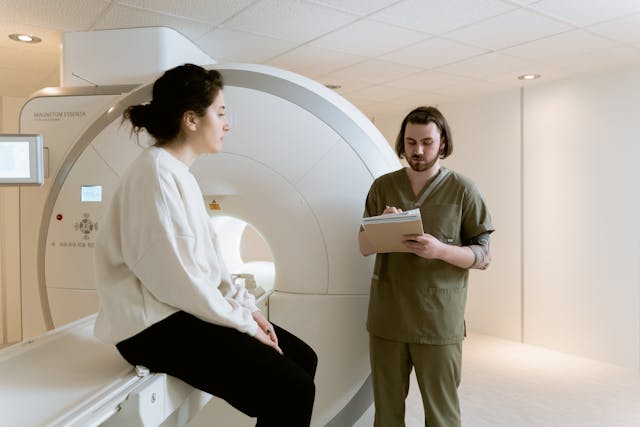
Evidence for cryoablation depends on tumour type, size, location, and patient factors. For small kidney tumours, percutaneous cryoablation has a long track record, and MRI guidance is one pathway for precise monitoring. In a 2013 study on MRI-guided cryoablation of small renal tumours, K. Ahrar and colleagues reported monitoring ice ball formation repeatedly during the procedure. The same paper described using freeze and thaw cycles, then contrast MRI afterward to evaluate the ablation zone. Those details show why MRI can support technical success. They also show why MRI-compatible tools and experienced teams matter, since clinicians work inside the scanner environment. The study context also matters, because it involved real patients treated over several years, not a simulation. MRI guidance can also help clinicians avoid excessive freeze spread near the bowel or ureter. That can reduce complications.
MRI may be useful when CT guidance struggles to show soft tissue boundaries. It can also help in patients who need fewer radiation exposures. Researchers often report technical endpoints, such as complete coverage of the lesion and adequate margins. Clinicians then track local control and kidney function over time, since preserving nephrons matters for survivors. Clinics also report kidney function to protect long-term health afterwards. For other organs, adoption grows where anatomy and imaging favour the approach. Stanford Health Care describes its programme plainly. It says, “We combine high-resolution MRI with cryoablation to freeze tumors.” In liver and kidney programmes, descriptions emphasise scans during each freeze. Clinicians watch the ice ball near critical structures. Reviews in oncology journals underline similar advantages. They note that real-time MRI improves ice ball depiction.
They also note immediate assessment without ionising radiation. Yet outcomes still depend on complete coverage of the target and a safe margin. If a viable rim remains, the tumour can persist or recur, so follow-up imaging remains essential. Research also continues in breast cancer and other settings. RSNA material on breast cryoablation describes a probe placed through a small incision. It uses local anaesthesia and an ice ball cycle to kill tumour tissue. The Society of Interventional Radiology has highlighted conference research on breast cancer. It suggests cryoablation can help patients who are not surgical candidates. At the same time, major organisations urge caution in some diseases. The American Cancer Society says modern cryotherapy is still fairly new in prostate cancer. Less is known about long-term outcomes.
Clinicians therefore match evidence to the person, including tumour biology, anatomy, and goals. Scientists also study how freezing influences the immune system. Tissue injury can release tumour antigens, which may support future combination strategies. These ideas remain under investigation, so clinics avoid overstating them. Many centres contribute to registries, tracking complications, pain scores, and imaging outcomes. Transparent reporting helps patients compare options and helps funders judge value over time. Researchers also track patient-reported outcomes, including pain and daily function. Those measures can reveal benefits that scans may miss. Some trials compare ablation against surgery or active surveillance in narrow groups. Registries also help identify rare complications across centres. Over time, shared datasets can refine selection, margins, and follow-up timing.
Why the Sydney rollout matters for health systems
Liverpool Hospital’s new capability is tied to infrastructure, not only a single device. NSW Health describes the opening of an integrated interventional radiology suite. It co-locates MRI, CT, and angiography. Patients can undergo complex combined procedures without leaving the table. That integration supports cancer ablation therapy because it reduces transfers and keeps anatomy stable during treatment. It also lets teams shift imaging modes when a case demands it. Liverpool Hospital’s leadership has framed the benefit in practical terms. In the NSW Health release, General Manager Scott McGrath spoke about recovery. He said patients “can potentially recover faster, go home quicker and have better long-term quality of life.” The same release says it can “integrate MRI, CT, and angiography within a single, co-located environment”.
That setup can support complex minimally invasive work. It can also reduce delays between imaging and treatment decisions. Co-location also changes team workflow. Radiologists, anaesthetists, and nurses can keep monitoring continuously through image switches. That reduces the chances of line dislodgement during transfers. NSW Health also quoted the hospital’s radiology head. He said, “The opening of the new IR-MACS suite represents a new era in care for Liverpool Hospital.” The suite can support combined steps in one session. That may reduce repeat admissions when a patient needs staged care. It also supports training, because teams can review imaging together. The rollout also links to growth planning in south-west Sydney. 9News reported the suite sits within the Liverpool Health and Academic Precinct redevelopment. It described the first phase as a $830 million project.
Read More: Cryotherapy Treatment Saves Nurse with Stage 4 Cancer
Public reporting also points to a planned dedicated cancer centre, expected to open in 2027. Infrastructure matters because it shapes access. When advanced ablation stays local, patients may avoid long travel for specialised care. The public story of Josephine Cordina draws attention. It shows rapid pain relief after a focused procedure. Still, the larger impact comes when pathways become routine. That means referral networks, multidisciplinary review, and clear criteria for who should receive MRI-guided cryoablation. It also means auditing outcomes, including complications, pain scores, and local control on follow-up imaging. Cancer Research UK summarises cryotherapy simply. It “uses extreme cold to destroy cancer cells.” With strong governance, Sydney’s model could widen choices. It could also shorten recovery for selected patients across Australia. For health services, shorter stays can free beds for other high-need patients.
Yet the technology is expensive, so systems must show value with data. That includes tracking who gets access, so benefits do not concentrate in one postcode. It also includes publishing outcomes, even when results disappoint. Clear communication helps patients avoid assuming every tumour is suitable. Teams should explain when surgery or radiotherapy remains the safer choice. Over time, local research can refine criteria and improve referral speed safely. Hospitals must also budget for staff training and MRI-compatible equipment maintenance over the years ahead. Workforce planning matters too. MRI-guided cases require trained staff who can work safely around the scanner. Hospitals also need reliable scheduling, since MRI time is scarce. When those pieces align, referral delays drop, and more patients can access minimally invasive care without bottlenecks.
Disclaimer: This information is not intended to be a substitute for professional medical advice, diagnosis or treatment and is for information only. Always seek the advice of your physician or another qualified health provider with any questions about your medical condition and/or current medication. Do not disregard professional medical advice or delay seeking advice or treatment because of something you have read here.
A.I. Disclaimer: This article was created with AI assistance and edited by a human for accuracy and clarity.
Read More: Recognizing Pancreatic Cancer Early: Subtle Symptoms That Matter
Trending Products

Red Light Therapy for Body, 660nm 8...

M PAIN MANAGEMENT TECHNOLOGIES Red ...

Red Light Therapy for Body, Infrare...

Red Light Therapy Infrared Light Th...

Handheld Red Light Therapy with Sta...

Red Light Therapy Lamp 10-in-1 with...

Red Light Therapy for Face and Body...

Red Light Therapy Belt for Body, In...

Red Light Therapy for Shoulder Pain...
