
A rumor online claims Earth will “lose gravity” for 7 seconds on August 12, 2026. Posts online have tied the claim to a secret NASA project and huge casualty numbers. However, gravity does not work like that, and NASA resources have explained the basics clearly. The date does match a real sky event, yet that event is a total solar eclipse. Eclipses change sunlight along a track, but they do not change Earth’s total mass. Without a mass change, there is no global change in gravitational attraction. Viral posts seem to have borrowed real astronomy dates, then attached imaginary causes and timelines. This article explains eclipses, weightlessness, and the measurements behind modern gravity science. It also explains how gravitational wave language gets distorted online.
The claim and the real event
Platforms built around short clips favor attention-grabbing claims and rapid sharing, so the story spread fast before anyone verified it. Many posts add a clock time, which can sound like a leaked briefing. Yet specific dates often come from public eclipse calendars, not secret engineering plans. NASA’s eclipse listings include August 12, 2026, because an eclipse is scheduled then. The rumor reused that date to look official, yet the context was astronomy, not geophysics. NASA’s table includes this line. “A total solar eclipse will be visible in Greenland, Iceland, Spain, Russia, and a small area of Portugal”. That is the real event linked to the date, and it is well documented. NASA’s Goddard eclipse pages explain the path limits and the central line for totality.
They note that the eclipse is longest on the central line. They also publish a point of greatest eclipse on the map. A solar eclipse is an alignment, not a suspension of forces. The Moon blocks sunlight for minutes, but gravity keeps acting on every kilogram of mass. NASA’s public Q and A pages emphasize that Earth’s gravity does not change across a day. They also note that the Moon’s influence is significant for oceans, because tides respond to it. That is the key distinction the rumor misses, since tides are a real gravity effect. NASA eclipse pages list paths, timing, and duration, but nothing about a gravity blackout. That absence is expected because the mechanism does not exist in physics. If you want to verify claims, start with what the primary sources actually say.
Gravity cannot switch off
Gravity is a consequence of mass and distance, so it cannot switch off like a light. On Earth, your weight comes from the ground pushing back on you. That push is called the normal force, and it depends on support. Remove support, and weight readings drop, even while gravity stays. Elevator drops and parabolic flights show this effect for seconds at a time. This is why amusement rides can create brief weightlessness without changing gravity. NASA explains gravity through Einstein’s framework in one direct sentence, stating, “Gravity is the curvature of space that results from a massive object.” Earth is massive, so it curves space around it all the time. That curvature guides motion, from falling objects to the orbit of the Moon.
NASA’s astrophysics educators also describe gravity using the inverse square relationship. That rule links attraction to mass and distance, which means the cause is physical and continuous. Earth’s mass stays essentially constant on human timescales, so its pull stays constant too. An eclipse changes which areas receive sunlight, but it does not remove mass from Earth. To remove gravity, Earth would need to lose mass on an extreme scale. No known process can do that in 7 seconds without destroying the planet. When a post claims a timed gravity loss, ask what removed Earth’s mass, and where it went. If the story cannot answer that, it is not physics. NASA’s eclipse tools provide maps because orbital mechanics remains predictable under stable gravity. Stable gravity is also why tide tables and eclipse paths remain consistent year after year.
Small gravity differences are normal
Earth’s gravity is steady, yet it varies slightly from place to place. The cause is mass distribution inside Earth, plus the distance from Earth’s center. Mountains add mass, dense rock adds mass, and deep basins reduce mass. Large water stores also matter, since water has mass and it moves seasonally. Earth’s rotation adds an outward effect that slightly reduces measured gravity near the equator. Height changes gravity too, because distance from Earth’s center increases. These effects are steady and well understood, so they are included in models. NASA Space Place states, “However, gravity isn’t the same everywhere on Earth.” NASA describes how GRACE satellites map these variations using orbital measurements.
Space Place notes that GRACE detects tiny changes in gravity over time. Those changes can track groundwater loss, ice melt, and shifts in sea level. They can also reveal crust changes after major earthquakes, because mass moves. Space Place also notes that areas with more underground mass have slightly stronger gravity. That is why gravity maps show patterns tied to geology and to water storage. The changes remain tiny, yet they help scientists track drought and ice loss. A hoax flips that idea and implies a dramatic collapse, which the data do not support. If gravity could drop to zero worldwide, tracking systems would detect it immediately. Instead, the record shows subtle variations that match climate and geology processes. These maps are checked against ground measurements, so they are not a single-source claim.
Tides and eclipses
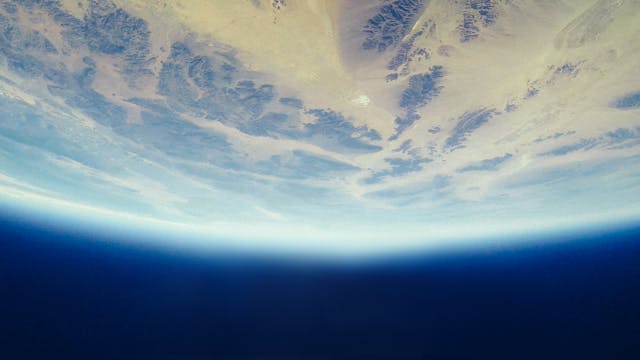
Tides show what the Moon’s gravity can do because water responds across ocean basins. NOAA explains that inertia and gravity act in opposition in the oceans, producing the bulges. The bulges stay aligned with the Moon as Earth rotates. That alignment is predictable, so tide tables work. NOAA explains the near-side effect in a single clear sentence, stating, “This attraction causes the water on this ‘near side’ of Earth to be pulled toward the moon.” A second bulge forms on the far side, because inertia competes with the weaker pull there. As Earth rotates, coastlines pass through these bulges, producing high tides and low tides. A solar eclipse happens at a new Moon, when the Moon crosses the Sun’s line from Earth.
New Moons happen monthly, so the basic alignment is common, even when no eclipse occurs. An eclipse is special because the alignment is precise enough for the Moon’s shadow to hit Earth. That shadow changes light and local temperature, but it does not create a new kind of gravity. The Sun also affects tides, because it adds its own gravitational pull. When Sun and Moon align, tides can be larger, but they remain within known ranges. NASA eclipse resources publish the path limits and the expected maximum duration. Those predictions use ephemerides and timing corrections for Earth’s rotation. If gravity could blink out, eclipse predictions and tide predictions would fail together. During an eclipse, the same gravitational pulls act because the bodies remain in place.
Microgravity is free fall
People often say “zero gravity” when they mean weightlessness. In free fall, gravity is acting, but there is no supporting force pushing up. A scale reads the force from the floor, not gravity by itself. During free fall, the floor force drops toward zero, so you feel weightless. NASA ties weightlessness to a simple situation that anyone can picture. “The condition of microgravity comes about whenever an object is in free fall.” Orbit is free fall with sideways speed. A spacecraft moves forward fast enough that it keeps missing the ground as it falls. Inside, astronauts and equipment share the same acceleration, so they float together. NASA’s student resources describe microgravity on the space station and on free-fall rides.
They describe it as a useful environment for research, not as vanished gravity. They also describe microgravity inside parabolic aircraft arcs. At the top of the arc, people and equipment are in free fall briefly. NASA drop towers do a similar job, but with hardware inside a controlled shaft. These tools let researchers test fluids, combustion, and biology without strong support forces. They do not change gravity, but they change conditions that depend on gravity. Researchers also use microgravity to study bubbles, flames, and mixtures without buoyancy. These insights support safer spacecraft systems and better models on Earth. If gravity truly vanished, free fall would stop because there would be no pull. Objects would coast, and the idea of “down” would vanish temporarily. That is why astronauts still orbit Earth, and why dropped objects still fall on Earth.
What 7 seconds would imply
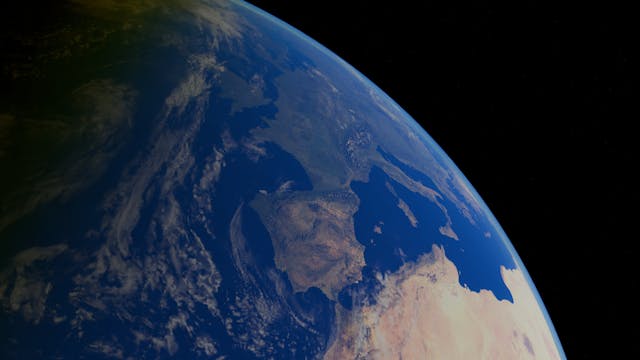
A real loss of gravity for 7 seconds would change motion everywhere, immediately. People would not rise smoothly, since their bodies already carry Earth’s rotational speed. They would drift relative to the ground, depending on latitude and their own movement. Vehicles would also behave oddly, because traction depends on the normal force from weight. Liquids would not settle into level surfaces, since there would be no downward pull. When gravity returned, impacts would depend on where objects drifted during those seconds. Buildings and bridges rely on weight loading for stability and friction. Air pressure would also shift because gravity holds denser air near the surface. Even a brief disruption would also affect ocean motion, because gravity shapes waves and tides.
The International Space Station helps separate weightlessness from gravity loss. That station stays in orbit because Earth’s gravity provides a continuous inward pull. Remove gravity, and the station would no longer follow a curved path around Earth. Satellites would fly along tangent lines, and tracking networks would notice instantly. GPS and other navigation systems depend on precise orbit modeling. A gravity blackout would produce tracking errors across many satellites. That kind of anomaly would be public because satellites are tracked by many groups. The same would show up in ground-based laser ranging and in radar tracking archives. NASA’s eclipse predictions also rely on stable gravity and stable orbits over decades. The published eclipse paths assume the Moon’s orbit stays gravitationally bound. NASA says, “the continuous free fall simulates the absence of gravity.”
Gravitational waves are not a trigger
Some posts blame black holes and gravitational waves for the supposed event. Gravitational waves are real, but they are not gravity being “turned off.” LIGO detects them with extreme precision using laser interferometers. Caltech’s LIGO Lab describes the observation, stating, “made by measuring the tiny disturbances the waves make to space and time as they pass through the earth.” That wording points to the true scale of the effect. A gravitational wave spreads out as it travels, so its effect weakens with distance. By the time it reaches Earth from far away, the distortion is extraordinarily small. A wave strong enough to change human weight would imply a violent event close by. Such a nearby event would disrupt orbits and produce obvious astronomical signals.
Read More: NASA Warns Earth Is Running Out of Oxygen, Study Predicts End Date
No observatory has issued a warning consistent with that scenario. Passing waves do not remove Earth’s mass, so they do not remove Earth’s baseline gravity. They add a transient ripple, then the baseline returns, because Earth stays massive. In the LIGO release, the team describes black holes merging and converting some mass to energy. It also describes a strong burst of waves during the final fraction of a second. That burst was still measured as tiny disturbances after traveling across space. The release also notes Nobel Prize-winning work linked to a binary system and orbital shrinkage. This is the opposite of viral certainty, because it is based on measurement and uncertainty. If waves could erase gravity, LIGO would not describe them as tiny disturbances.
What GRACE really measures
If Earth were about to lose gravity, instruments would show large warning signals first. In reality, measurable gravity changes come from water and ice moving around the planet. Satellites sense these shifts by tracking tiny changes in separation and acceleration. Space Place also notes that stronger gravity often sits over areas with more underground mass. That includes ice sheets, large aquifers, and dense rock structures. Changes in those stores change gravity slightly, so satellites can track them. NASA’s Space Place says, “GRACE detects tiny changes in gravity over time.” Scientific papers about GRACE describe how twin satellites measure distance variations linked to Earth’s gravity field. For example, Darbeheshti and colleagues described GRACE and the follow-on mission in Earth System Science Data.
They explain how precision ranging links satellite separation to the gravity field below. That technical work shows how hard it is to detect small changes. Those methods are published with noise models and uncertainties, since tiny errors matter. A global, sudden loss would be easy to spot because tracking would break instantly. Instead, the record shows stable gravity with subtle variations tied to mass redistribution. Those results are published openly, so other teams can check the conclusions. The fact that gravity science focuses on tiny changes is itself a clue to what is realistic. GRACE findings are also used with other satellites, so researchers compare signals across systems. That cross-checking reduces the chance of confusing noise with a real gravity change.
How to fact-check “lose gravity” posts
The “lose gravity” claim blends a real eclipse date with invented consequences. A date from an eclipse table gives it a hook, then fear does the rest. Physics offers a calm check because it ties gravity to mass and distance. That means you look for missing mass when someone claims gravity vanished. NASA’s Space Place summarizes the role in one clean line. “Gravity is what holds our world together.” That includes air staying bound to Earth and oceans staying on the surface. When you see a dramatic science claim, follow a verification path that favors primary sources. Look for an agency page, a university explainer, or a national lab release. Confirm any named date against known events, like eclipses, using official calendars.
NASA eclipse tools provide maps, limits, and durations because the geometry is predictable. NOAA education pages also explain gravity’s role in the oceans and the atmosphere. For gravitational waves, Caltech’s LIGO Lab publishes detailed releases and background. When sources disagree, give more weight to primary institutions and peer-reviewed work. If a claim depends on secrecy, yet offers no documents, treat it as a red flag. Science agencies publish big findings because they are accountable to the public. Credible warnings look boring and detailed because they expect scrutiny. Enjoy the eclipse if you can see it, but ignore the fear campaign attached to it. For atmosphere basics, NOAA explains why Earth can hold air and keep it from drifting into space. That simple point shows why a real gravity loss would have immediate, visible consequences.
Read More: NASA’s Recording of Eerie ‘Woman’s Voice’ in Deep Ocean Remains Unsolved After 25 Years
Trending Products

Red Light Therapy for Body, 660nm 8...

M PAIN MANAGEMENT TECHNOLOGIES Red ...

Red Light Therapy for Body, Infrare...

Red Light Therapy Infrared Light Th...

Handheld Red Light Therapy with Sta...

Red Light Therapy Lamp 10-in-1 with...

Red Light Therapy for Face and Body...

Red Light Therapy Belt for Body, In...

Red Light Therapy for Shoulder Pain...
