
A heartbreaking story of a dog in Wuhan who waited on the Yangtze Bridge, following its owner’s death, has captured the hearts of many people in China. The dog waited for 4 days on the Yangtze Bridge after the owner reportedly jumped from the bridge to his death. The incident occurred in late May and early June 2020. The animal refused food and water offered by strangers who passed by and just sat staring into the river below. Local resident Xu discovered the dog waiting on the bridge and photographed the animal. He shared images of the dog across Chinese social media platforms, touching millions across China. However, the dog ran away before rescuers could secure it and still remains missing.
Resident Discovers Dog Waiting on Bridge
Xu approached the dog on the Yangtze Bridge over a weekend in June 2020. He noticed the animal was clean, well-groomed, and could be someone’s pet. Xu realised the dog had an owner when the dog refused to accept food or water from strangers, as he was used to them. Xu noticed the animal stared, fixated on the river below. From the dog’s behaviour, Xu speculated it could be a deep attachment to someone missing. Xu attempted to touch the dog and provide comfort, but the dog backed away from his attempts to help.
Xu documented and posted these images, providing updates and descriptions of what he had witnessed on Chinese social media platforms. He urged the public to help find a new home for the dog or someone to adopt the dog. Xu hoped someone would either recognize the dog and come forward or possibly adopt the dog; however, the dog ran away shortly after Xu’s posts were made. Fortunatel,y his post soon reached animal protection organizations in Wuhan.
Animal Protection Organization Investigates Incident
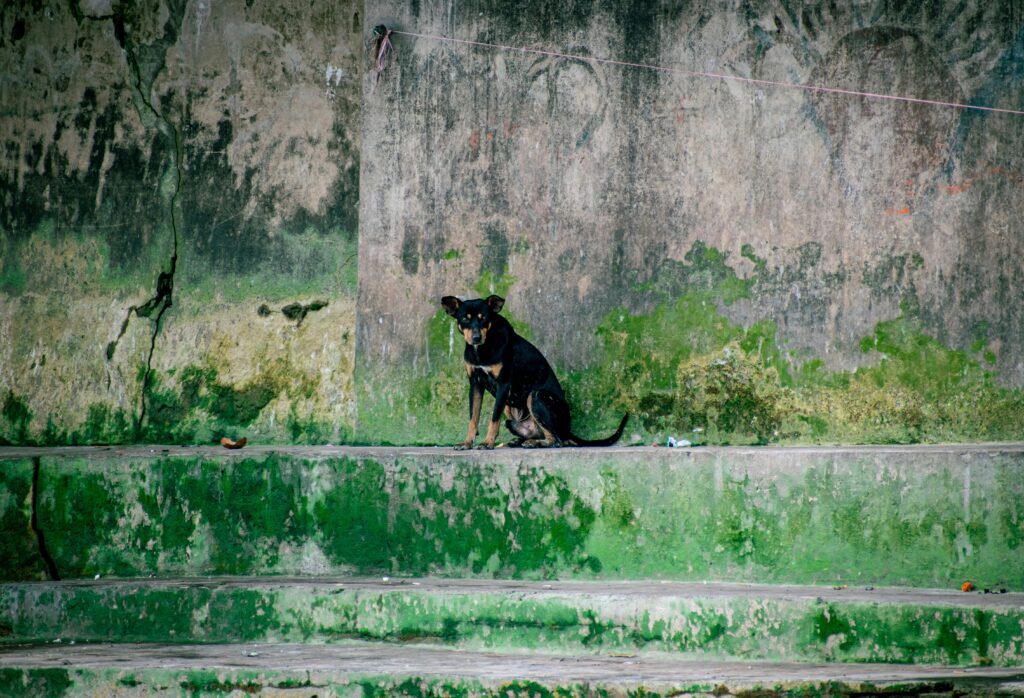
Du Fan serves as director of the Wuhan Small Animal Protection Association. He saw Xu’s social media post about the waiting dog and recognized the dog’s strange behaviour. He contacted local officials to investigate what had occurred. Bridge officers reviewed surveillance footage which showed a person who could have been the owner, walking onto the bridge. Security cameras captured the person climbing over the railing and subsequently jumping off the bridge.
“We asked the bridge officers to check what exactly happened. It was really dark, we couldn’t see much on the surveillance footage. We saw that the person jumped straight away,” Du Fan said. The dog remained on the pavement after its owner fell. Officials could not determine the owner’s gender and identity from the available footage.
Search Efforts Launch for Missing Dog
Du Fan mobilized volunteers from his organization, the Wuhan Small Animal Protection Association, and began systematic search efforts for the dog. Volunteers distributed flyers throughout neighborhoods surrounding the bridge and visited local animal shelters looking for the dog. Xu attempted to adopt the dog himself before it disappeared. He brought food to the bridge in an attempt to lure the dog and stop it from starving. However, the dog refused to accept anything from Xu. Xu eventually managed to capture the dog and bring it back to his home. However, not long after returning home, the dog escaped and ran away. Since then, the dog’s location remains unknown.
“We are still counting on finding a new owner for the dog. We think it’s too sad for such a loyal dog to stray on the streets,” Du Fan explained. He believed the animal deserved a safe life with a caring family. Du Fan emphasized his organization’s dedication to finding the dog and would not abandon the search. He also appealed to residents to report any sightings immediately.
Weibo users flooded social media platforms with responses to the story. Users shared the story repeatedly across multiple platforms, with one Weibo commenter writing: “What a loyal dog.” Another user said: “Find a home for it and never let it stray.” A third commenter added: “Dogs are much kinder than humans. I hope this one finds a new home.” Comments revealed deep emotional responses from readers.
One person wrote: “This dog waited so patiently that its owner must be such a good person.” Another commented, “This made me cry. Life is hard enough for us and dogs certainly don’t have it easy.” Users expressed sadness about both the dog and its deceased owner. Some commenters urged people to cherish their own lives. They noted that pets and loved ones depend on us. Other users focused on practical concerns about the dog’s welfare. They worried about the animal’s safety on busy streets.
The story sparked broader conversations about suicide prevention in China. Mental health advocates used the incident to raise awareness. They argued that pets provide crucial companionship for struggling individuals. Organizations called for improved mental health support services nationwide. Advocates noted that isolation and depression are widespread problems. They urged government funding for counseling and therapy programs. Suicide prevention groups shared the dog’s story across their platforms. They used the animal as an example of why life matters to others.
Similar Stories of Devoted Dogs in China
There are many stories across China and the world that reflect similar narratives to this story, where dogs demonstrate unwavering loyalty to their owners. A dog named Xiongxiong waited outside the Liziba metro station daily for its owner. The elderly dog would wait for its owner to return from work, following its owner to the station every morning. The dog would remain at the station for 12 hours each day waiting for its owner. Eventually, the dog grew in popularity, with people in the Chongqing community recognizing the faithful animal. Station staff and local shop owners watched over Xiongxiong. The dog became famous on Chinese social media platforms.
Another dog in Hohhot, Inner Mongolia, waited 80 days for its owner. This dog’s owner died in a traffic accident on August 21, 2018, yet the dog remained on the busy road where its owner was killed. It refused to leave the location for almost 3 months. A taxi driver reported seeing the dog every single day. The taxi driver said, “This owner’s relationship with her dog was very deep. After she was killed, this little dog has just stayed standing guard.” Drivers attempted to provide food to the suffering animal but whenever people came close to the dog, it would run away.
Footage of the Hohhot dog went viral on Weibo, showing the dog standing in the middle of traffic. Viewers expressed concern about the animal’s safety on the road. One Weibo user wrote: “This little dog is so loyal. My family used to have a dog and every day it would wait for me by the village school.” Another commenter said: “It is so dangerous for that doggy to stand in the middle of the road. I hope that some good people can
Historical Precedent: Hachiko’s Nine-Year Wait
The devotion of dogs has ancient precedents in global culture. Hachiko, a famous Akita in Japan, became internationally legendary. Professor Hidesaburo Ueno, who taught at the University of Tokyo’s agriculture department, adopted Hachiko in 1924. Hachiko would greet his owner at Shibuya Station and would wait for the professor to return from work every day. This routine continued until May 21, 1925. Professor Ueno suffered a cerebral hemorrhage during a lecture, dying that day and never returning to the station.
Hachiko continued waiting at Shibuya Station for 9 years after his owner’s death. The dog appeared precisely when the train was due each day. Local residents and station workers cared for Hachiko during his wait. People brought the dog food and treats regularly. Hachiko’s story gained national prominence in Japan during the early 1930s. The Asahi Shimbun newspaper published an article about Hachiko on October 4, 1932. The story emphasized the dog’s loyalty and devotion, with Hachiko becoming a national symbol of faithfulness to the Emperor and the nation.
A bronze statue of Hachiko was erected at Shibuya Station in 1934. Sculptor Teru Ando created the first statue while Hachiko was alive, who passed away on March 8, 1935. It was later determined that the dog died from terminal cancer and filaria infection. The statue is now a permanent fixture at Shibuya Station. Officials repurposed the original statue for military efforts in 1944. They used the bronze to create a steam locomotive during World War II. Teru Ando’s son, Takeshi, created a second statue in 1948. This statue still stands at Shibuya Station today.
The exact spot where Hachiko waited is marked with bronze paw prints. Text in Japanese explains his loyalty to visitors. Each year on April 8, ceremonies honor Hachiko’s devotion. Hundreds of dog lovers gather at Shibuya Station for these ceremonies. The station exit nearest the statue is named “Hachiko Exit.” The statue serves as a meeting point for people throughout Tokyo. Hachiko’s story endures because it addresses universal themes of love and loyalty.
Scientific Questions About Canine Grief and Attachment
The devotion of dogs raises philosophical questions about consciousness and emotion. Dogs do not process loss intellectually as humans do. Yet dogs clearly experience profound attachment to their owners. The bridge dog’s refusal of food demonstrated this attachment powerfully. The animal chose suffering over accepting comfort from strangers. This behavior suggests dogs understand something fundamental about loss. The dog grasped that a specific being had disappeared. It waited with hope that this being would return eventually. When the being did not return, the dog continued waiting regardless.
This behavior prompts questions about canine emotional capacity. Scientists debate whether dogs experience true grief or emotional pain. Some researchers argue dogs lack the cognitive capacity for grief. They suggest dogs simply experience confusion about behavioral routines. Other scientists point to evidence of genuine emotional suffering in dogs. The bridge dog’s actions seem to answer this debate decisively. The animal demonstrated behavior consistent with profound mourning. Its refusal of sustenance suggests psychological distress beyond simple confusion.
Read More: Losing A Pet Is More Painful Than Most People Think
Impact on Animal Welfare Awareness in Wuhan
The incident on the Yangtze Bridge changed how Wuhan residents viewed stray dogs. Community members became more attentive to abandoned animals citywide. Residents reported seeing stray dogs and attempted to help them. Local animal shelters received increased donations following the story. Volunteer support for rescue organizations grew significantly. People began adopting dogs from shelters at higher rates. Schools in Wuhan started teaching children about animal welfare. Teachers used the bridge dog’s story to teach lessons about compassion. Parents discussed the incident with their children at home.
The Wuhan Small Animal Protection Association grew substantially following widespread attention. The organization received donations from supporters across China. International donors contributed funds from other countries as well. The influx of resources allowed the organization to expand operations. They opened new shelter facilities in different parts of Wuhan. The association hired additional staff to care for rescued animals. They launched programs focused on animal rescue and rehabilitation citywide. Du Fan used his platform to advocate for stronger animal protection policies. His work gained recognition from government officials and policymakers across China.
Mystery of the Dog’s Fate Remains Unresolved
The most poignant aspect of the story remains without resolution. The bridge dog was never found and reunited with a family. The animal disappeared into the urban landscape of Wuhan. Whether the dog survived the ordeal remains unknown today. Some people believe the dog eventually found shelter with someone. Others fear the animal did not survive on the streets. The mystery of the dog’s fate captured people’s imaginations globally. Artists created visual tributes to the devoted animal. Musicians composed pieces dedicated to the bridge dog’s memory. Writers penned stories imagining what happened to the creature.
While tragic, the devoted dog on the Yangtze Bridge becomes a symbol of loyalty. It also places the spotlight on the importance of preventing suicide. The story endures because it speaks to eternal human concerns. It raises questions about the nature of grief and attachment.
Read More: Airlines That Will Allow Dogs and Cats in The Cabin
Trending Products

Red Light Therapy for Body, 660nm 8...

M PAIN MANAGEMENT TECHNOLOGIES Red ...

Red Light Therapy for Body, Infrare...

Red Light Therapy Infrared Light Th...

Handheld Red Light Therapy with Sta...

Red Light Therapy Lamp 10-in-1 with...

Red Light Therapy for Face and Body...

Red Light Therapy Belt for Body, In...

Red Light Therapy for Shoulder Pain...
