
Canned tuna is popular worldwide and often added to salads, sandwiches, or served with olives on crackers at parties. Fairly affordable and easy access to dietary protein needs, canned tuna can be found in many pantries across the globe. However, a tiny serving of the crimson red tuna at sushi restaurants is astronomically expensive. There are a few simple reasons for this, but there are also serious concerns about overfishing that must be considered to preserve marine life.
The Price Gap
Walk into any British supermarket and you will find canned tuna for as little as 45p. Head to a high-end sushi restaurant, and that same weight of tuna could cost £30 or more. While both canned tuna and expensive tuna come from tuna fish, they are derived from different species.
The species used for canned tuna are not the same as those used for expensive tuna.
The global canned tuna market was worth £26.2 billion in 2024, making canned tuna an affordable, widely available protein source. Rare bluefin tuna is so valuable that one fish sold for £1 million at Tokyo’s fish market in January 2025.
Different Tuna Species Drive Cost Differences
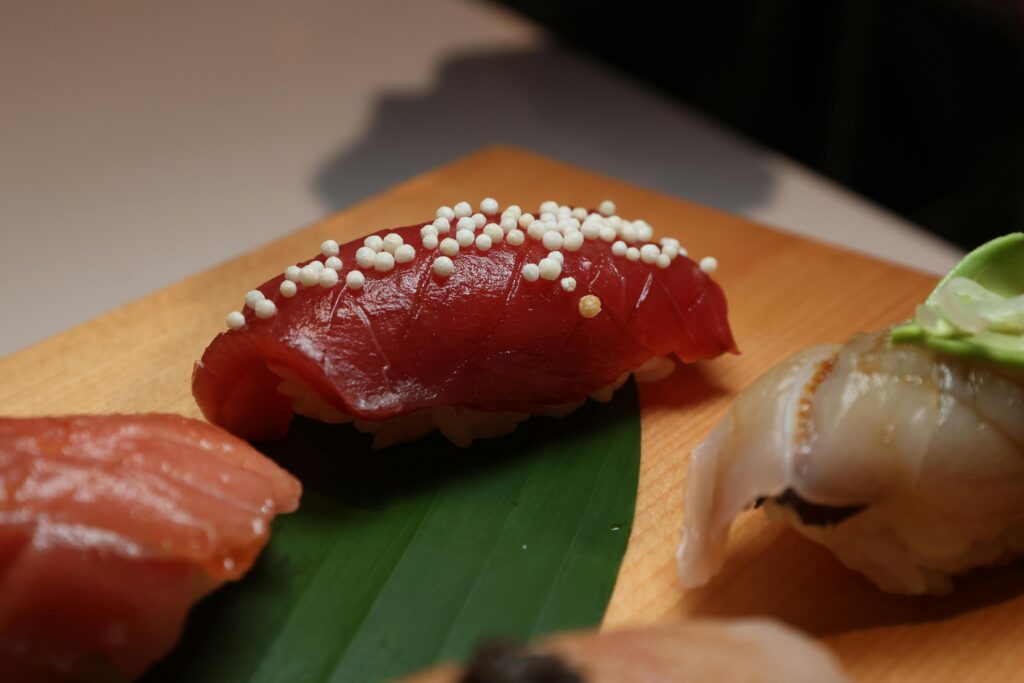
The raw, red tuna steak served at sushi restaurants is a different species from the tuna typically used in canned products. Canned tuna is sourced from smaller breeds, such as skipjack and albacore tuna, which are abundant in the ocean. They are also faster-reproducing fish that thrive in warm ocean waters and are easier to fish. These species account for over 75% of global tuna catches, with skipjack alone representing 57% of all commercial
Skipjack tuna typically weigh in at about 9-22 pounds and come in at a length of 15-30 inches. They have silvery bodies with black stripes and swim in large schools, making them easier and cheaper to farm. Albacore, known as “white meat tuna,” grows slightly larger but shares skipjack’s abundance and accessibility.
Sushi-grade tuna comes from bluefin species, which can exceed the size of 1,500 pounds and live for decades. These enormous fish are seen as a delicacy in Japanese cuisine and will fetch a hefty sum for even a pound of bluefin tuna.
Fast Growth Equals Lower Costs
Skipjack and albacore mature rapidly, only requiring 1-2 years to fully mature before harvesting. This quick turnaround allows sustainable fishing practices while maintaining abundant populations. The Western and Central Pacific’s skipjack fishery alone produces 275,000 metric tonnes yearly which is equivalent to 490 fully-fueled Airbus A380 aircraft.
Bluefin Tuna Takes Years to Mature
Its astoundingly high price is due to its rarity and how long Bluefin tuna takes to mature. Atlantic bluefin do not reach maturity until 8-15 years of age. Pacific bluefin require approximately 5 years, while Southern bluefin need 8-12 years before reproducing. With such long waiting maturity rates make bluefin tuna a delicacy, too scarce for growing demand.
It also makes bluefin tuna economically unsustainable. Because it fetches so much on the market, breaking the law can seem worthwhile. This high price attracts poachers, who often target bluefin tuna illegally for profit. However, this, along with other factors such as climate change, overfishing and habitat disturbances have pushed bluefin tuna populations to critically endangered status.
Where Bluefin Actually Goes
In 2013, a 489-pound tuna sold for $1.8 million, showing only wealthy clients can afford such rare fish. From the fisheries to Michelin-starred tables, bluefin’s journey is long and expensive. Depending on which country the bluefin is processed, the supply chain differs. In Japan, renowned for its fish, the bluefin is transferred from fisheries to cooperative parties, government auction, a wholesaler, and then finally to a restaurant.
In contrast to Japan, the U.S. the supply chain is simple. The bluefin goes from the fisheries to the distributor and then straight to the restaurant. High-end establishments pay exorbitant prices because bluefin offers a unique culinary experience. The characteristics and taste of bluefin tuna are not found in any other tuna species.
Read More: 8 Types of Canned Beans That Aren’t As Healthy As You Think
Risks of Overfishing and Conservation Efforts
The tuna market consists primarily of 4 species of tuna, which are albacore and skipjack, followed by yellowfin and bigeye. They represent 75% of tuna fishing. The bluefin, including the endangered Southern bluefin, only represents 1% of the global catch. Methods for fishing tuna have progressed but conservation and management are still catching up.
The United Nations Food and Agriculture Organization reports that most tuna stocks are already fully exploited. Some tuna populations face overexploitation, which puts them at risk of collapse. The International Seafood Sustainability Foundation states that 61% of tuna stocks remain healthy, but 13% are already overfished. Efforts to rebuild stocks have started to pay off, especially for Pacific bluefin, yet pressures from demand and illegal fishing remain high.
Mercury Concerns in Canned Tuna
Canned tuna’s affordability makes it a great and accessible source of protein. However, a recent report about levels of mercury in canned tuna reveals some worrying results. While all tuna contain mercury, levels vary by species, age, and size. Larger, older fish accumulate more mercury through bioaccumulation. Bluefin tuna are massive predators and accumulate mercury through consuming contaminated prey.
Skipjack and albacore used in canning typically contain 0.126-0.350 parts per million of mercury. UK regulations limit mercury to 1.0 mg/kg in tuna products, well above average canned tuna levels. However, health authorities recommend consumption limits, particularly for pregnant women and children. The NHS suggests a maximum consumption of 4 cans weekly or 2 tuna steaks.
Conclusion
The tuna industry generates over $42 billion annually in end-user value, making it the world’s most valuable fish commodity. Canned products dominate volume, representing 75% of global tuna consumption.
As skipjack populations remain abundant and fishing methods improve efficiency, canned tuna prices stay accessible to global consumers. Bluefin is endangered, and scarcity drives its high market prices. While a delicious delicacy, more robust conservation and management efforts need to be applied or face losing this tuna forever.
Read More: 10+ Canned Foods You May Want to Buy Less Of
Trending Products

Red Light Therapy for Body, 660nm 8...

M PAIN MANAGEMENT TECHNOLOGIES Red ...

Red Light Therapy for Body, Infrare...

Red Light Therapy Infrared Light Th...

Handheld Red Light Therapy with Sta...

Red Light Therapy Lamp 10-in-1 with...

Red Light Therapy for Face and Body...

Red Light Therapy Belt for Body, In...

Red Light Therapy for Shoulder Pain...
